Google builds its Canvas workspace directly into search results
Google is expanding access to Canvas, an interactive workspace inside AI Mode in Search. The feature first appeared in the Gemini app for creating documents and code, and it is now available to all users in the US. Canvas lets users organize plans, build tools and create documents in a separate panel next to the chat, drawing on current data from Search. Beyond travel planning, it now supports creative writing and programming tasks.
AI-processed from The Verge; edited by Hamidun News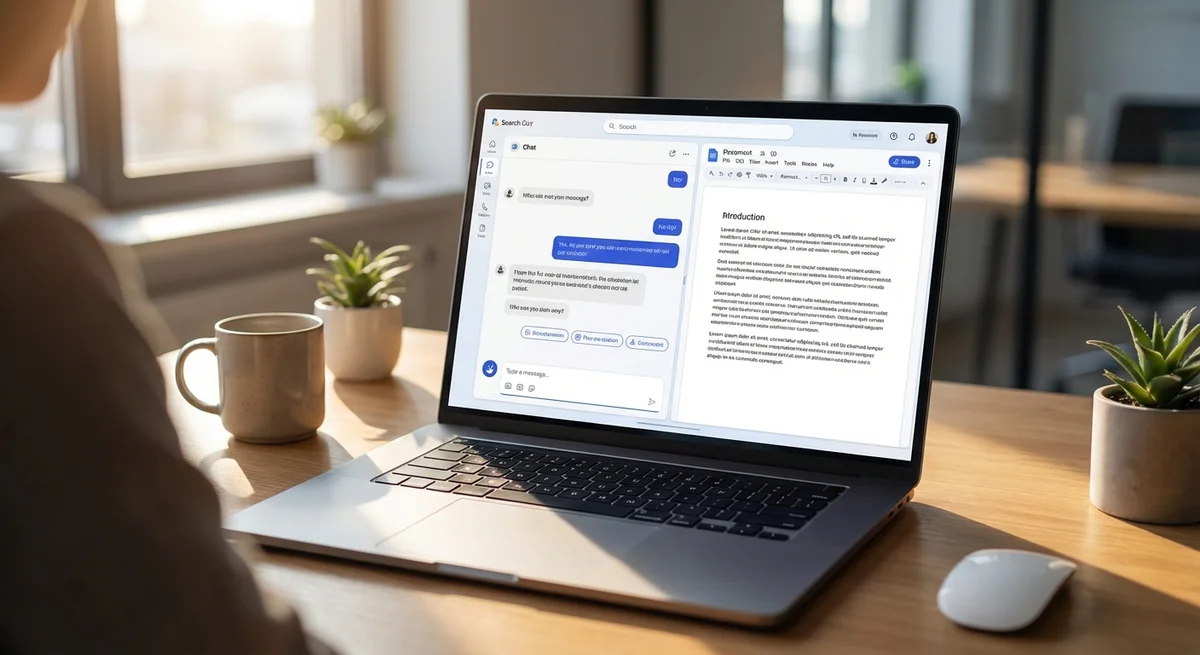
Google's search bar is gradually turning into a full-fledged work environment. The company announced that Canvas, an AI-powered interactive workspace, is now available to all AI Mode users in Search across the US. This is not just another cosmetic update: Google is effectively blurring the line between finding information and working with it, letting users do both without leaving a single browser tab.
To see why this matters, it helps to go back to the beginning. Canvas first appeared inside the Gemini app, Google's own AI assistant, as a tool for creating documents and writing code in real time. The idea was simple and elegant: instead of just receiving text answers from a language model, users could work in a full editor where the AI acted as a co-author. Google later began testing Canvas in AI Mode, an experimental search mode where users get detailed Gemini-generated answers instead of the usual links. At first, though, its capabilities were severely limited: Canvas in Search could only visualize travel plans.
Now those limits are gone. Users can apply Canvas in AI Mode to a wide range of tasks, from creative writing to programming. In practice, it works like this: you type a query into the search bar, AI Mode generates an answer, and a separate panel opens next to the chat. That panel is the workspace itself, where you can edit text, review generated code or explore an interactive dashboard of information. The key advantage over an ordinary AI chat is that Canvas uses current data from Google Search. That means the documents and plans it produces rely not only on the language model's training data but also on fresh information from the internet.
Strategically, the move fits into the large-scale transformation Google is carrying out on its core product. The search giant has spent more than a year methodically rebuilding Search around generative AI. First came AI Overviews, short neural-network-generated answers above the regular search results. Then came AI Mode, a separate mode for in-depth research queries. Now Canvas adds a productivity layer: search stops being an entry point from which users leave for other sites and becomes a place where users stay to work. For Google, this is critical at a time when ChatGPT, Perplexity and other AI tools threaten the very user behavior on which the company's advertising empire is built.
For competitors, the move raises the bar. OpenAI with ChatGPT and Microsoft with Copilot already offer document and code creation inside their interfaces, but neither has a search backend as powerful as Google's. Being able to search for current information and immediately turn it into a structured document or a work plan is a serious competitive advantage, and one that is hard to replicate without your own search infrastructure. Anthropic's Claude offers Artifacts, a conceptually similar tool for creating content next to the chat, but without search integration on this scale.
Still, it is too early to talk about a revolution. Canvas in AI Mode is available only in the US, and Google has not announced a timeline for a global rollout. For users in Russia and Europe, it remains a feature they can only read about in reviews. Open questions about quality also remain: how reliable are documents and code that AI creates from search data, and how will Google ensure accuracy in a workspace where users may mistake generated content for verified fact?
Nevertheless, the direction is clear. Google is steadily turning search from a reference tool into a working tool, and Canvas is arguably the most visible step in that direction. Where the search bar once answered the question "what?", it now takes on "do it" with growing confidence. This is a fundamental shift that in the coming years will change not only user habits but the economics of the internet itself: if people stop clicking through to websites to complete a task, all the traffic will stay inside Google's ecosystem.
- Nov 2, 2026Karpathy builds a YouTube clone with 6454 videos from Hacker News recommendations in two hours
- Nov 2, 2026Karpathy used Claude to build HackerTube from 6,454 videos recommended on Hacker News
- Nov 2, 2026Anthropic needs to grow revenue 32% a year to cover $850 billion in contracts
- Nov 2, 2026Bun creator uses Claude Code to port 750K lines from Zig to Rust in 11 days
Test Frontier LLMs & Autonomous Agents in One Workspace
Run Claude Opus 5.5, GPT-6, Gemini 3.1, and DeepSeek side-by-side in Nomad AI (nomadnet.ai) — unified model routing, deep research, and multimodal workflows under one subscription.
The AI world, distilled — once a week
Seven stories that actually mattered, hand-picked. No noise, no reposts, no press releases.
Done! Check your inbox for a confirmation.