Edge AI in video cameras: how the open-source OpenIPC project is rewriting the rules of video analytics
OpenIPC began as a specialized Linux distribution for IP cameras and has grown into a large open-source community promoting Edge AI: processing video with AI directly on the camera, without the cloud. At AI Conf 2025, reverse engineer Dmitry Ilyin presented a detailed breakdown of multi-camera arrays and multi-sensor systems. The approach's key advantages are minimal latency, independence from the internet and lower spending on server infrastructure. The trend of moving intelligence closer to the device is gaining momentum.
AI-processed from Habr AI; edited by Hamidun News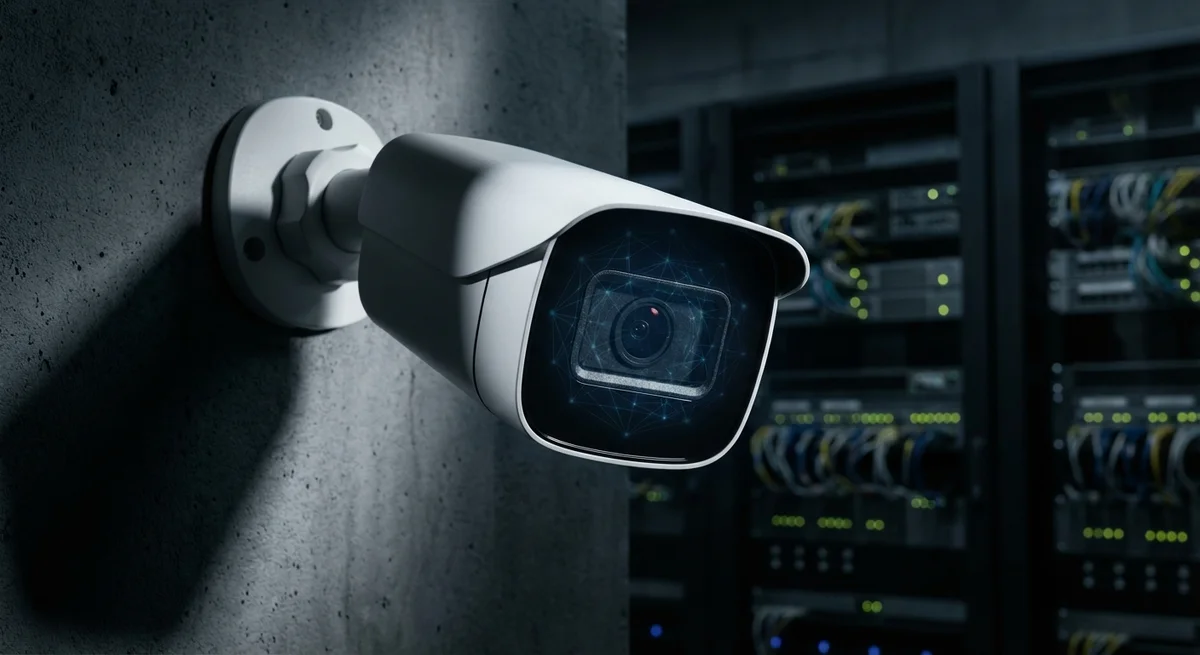
Imagine a surveillance camera that does not just record an image, but recognizes objects on its own, analyzes behavior and makes decisions, without a single call to a cloud server. Not long ago this sounded like science fiction, but the OpenIPC community is already turning the idea into a working technology available to everyone.
At the applied conference AI Conf 2025, reverse engineer Dmitry Ilyin presented the second part of an extensive talk on OpenIPC, an open Linux distribution originally built for reflashing ordinary IP cameras that has since grown into a full ecosystem for Edge AI. The abbreviation IPC simply stands for IP Camera, but behind that simplicity lies an ambitious goal: moving computational intelligence from distant data centers onto the end device.
To see why this approach matters, consider how traditional video analytics works. The camera captures a video stream and sends it to a server, local or cloud, where a neural network processes the image and returns a result. This setup requires a stable broadband connection, introduces delays and costs money for every gigabyte of traffic. Edge AI flips that architecture: all processing happens directly on the camera's chip. There is no dependence on the internet, latency is minimal, and you keep full control over your data. In the first part of the talk, Ilyin compared both approaches in detail and examined alternatives to classic GPUs: specialized neural processors built into modern surveillance-camera chipsets.
The second part focused on tasks that go beyond a single camera. Multi Camera Arrays are systems in which dozens or hundreds of devices work in coordination, exchanging metadata instead of raw video. Here Edge AI plays its strongest card: when each camera preprocesses the image and transmits only the analysis results, network load drops by orders of magnitude. For enterprises, logistics centers and city infrastructure, this means a radical cut in spending on communication channels and server hardware.
Multi-sensor cameras deserve separate attention. Modern devices increasingly pair an optical sensor with an infrared, thermal-imaging or even lidar module. When data from several sensors is combined and processed on the device itself, recognition quality improves significantly. A person can be identified in total darkness, a live operator can be told apart from a mannequin, and an object's temperature can be determined without extra equipment. It is sensor fusion at the edge that makes these scenarios practically achievable without expensive server infrastructure.
OpenIPC stands out not only for its technology but also for its development model. It is a classic open-source community in which each participant brings unique expertise: some understand the architecture of a particular chipset, some optimize neural network models for limited resources, others write drivers. This distributed knowledge lets the project support dozens of camera models from different manufacturers and adapt quickly to new hardware. In effect, OpenIPC does for video cameras what OpenWrt once did for routers: it frees the device from the limits of proprietary firmware and opens room for experimentation.
The push to move artificial intelligence closer to end devices is gaining momentum well beyond video surveillance. Major chipmakers, from HiSilicon to Ambarella and Ingenic, are expanding the neural compute blocks in their processors, and according to analysts' forecasts the Edge AI market will exceed 50 billion dollars by 2028. But while corporations build closed ecosystems, projects like OpenIPC show that powerful video analytics can be open, flexible and accessible.
Ilyin's talk clearly illustrates an important shift in the industry: the future of video analytics lies not in giant cloud clusters but in smart devices at the network edge. And the more powerful embedded neural processors become, the fewer reasons remain to send a video stream far away for processing. A camera that understands what it sees is no longer a concept but a working reality.
- Nov 2, 2026The Verge reviewer builds a $50 Meta Muse Charm alternative with Claude Code
- Nov 2, 20268 Skills for video in Claude Code: from 244 pixel effects to rough-cut editing
- Nov 1, 2026Pika Labs releases open video model H3 Flex: 6 steps instead of 50
- Nov 1, 2026Google's StreamVibe video agent beats other models by 10.7% on response timing and quality
Test Frontier LLMs & Autonomous Agents in One Workspace
Run Claude Opus 5.5, GPT-6, Gemini 3.1, and DeepSeek side-by-side in Nomad AI (nomadnet.ai) — unified model routing, deep research, and multimodal workflows under one subscription.
The AI world, distilled — once a week
Seven stories that actually mattered, hand-picked. No noise, no reposts, no press releases.
Done! Check your inbox for a confirmation.