How Neural Networks Are Improving Video Analytics in Cities
Classic video analysis is not suited to cities: occlusion, changing lighting and sparse objects get in the way. Developers showed how neural network models (YOLO, Vision Transformer) running on GPUs (Jetson, RTX), combined with a modular architecture (Docker, Kafka), make it possible to build scalable smart surveillance systems. The core problem is that traditional algorithms break down in real street conditions, where people and vehicles block one another and objects drop out of the frame.
AI-processed from Habr AI; edited by Hamidun News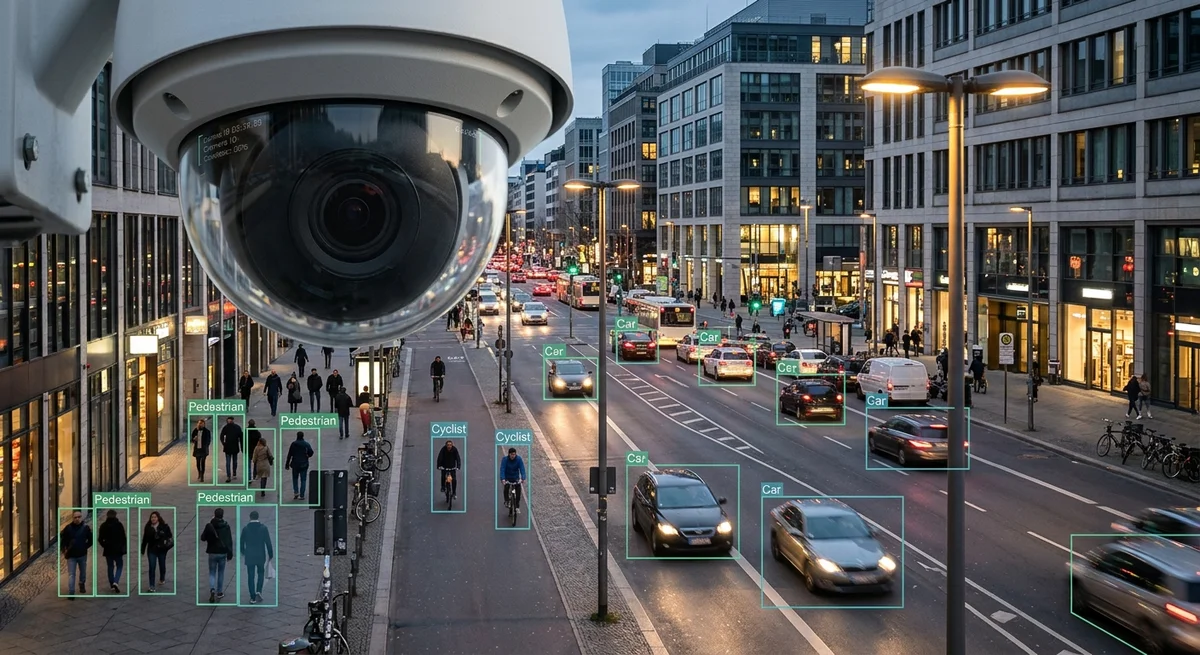
Neural networks are radically changing video analytics in cities, where classic video processing is ineffective in the face of busy streets, changing lighting and occlusion.
Why are neural networks more effective for video analytics in cities?
Classic video processing collapses when confronted with busy streets, changing lighting and occlusion, where people and vehicles block each other from view. Neural network models solve these problems.
Why does classic video processing not work in cities?
Because traditional algorithms break down under occlusion (people and vehicles blocking each other), varying lighting and objects disappearing from the frame.
- Nov 1, 2026Pika Labs releases open video model H3 Flex: 6 steps instead of 50
- Nov 1, 2026Google's StreamVibe video agent beats other models by 10.7% on response timing and quality
- Oct 31, 2026AI cartoon series: a 24-second episode built ten ways, the best cost 162 credits
- Oct 31, 2026Anthropic: Fold Subagents Back Into a Single Loop — One Customer's Tasks Ran Twice as Fast
Key Questions Answered
Why are neural networks more effective for video analytics in cities?
Classic video processing collapses when confronted with busy streets, changing lighting and occlusion, where people and vehicles block each other from view. Neural network models solve these problems.
Why does classic video processing not work in cities?
Because traditional algorithms break down under occlusion (people and vehicles blocking each other), varying lighting and objects disappearing from the frame.
Test Frontier LLMs & Autonomous Agents in One Workspace
Run Claude Opus 5.5, GPT-6, Gemini 3.1, and DeepSeek side-by-side in Nomad AI (nomadnet.ai) — unified model routing, deep research, and multimodal workflows under one subscription.
The AI world, distilled — once a week
Seven stories that actually mattered, hand-picked. No noise, no reposts, no press releases.
Done! Check your inbox for a confirmation.