Gemini learns to order food and book rides for you
Google has launched agentic Gemini features in the March update for the Pixel 10. The AI assistant can now perform tasks in third-party apps on its own, such as ordering groceries through Grubhub or calling a ride in Uber. The feature runs in the background, but the user can step in or stop the process at any moment. The technology was first shown a week earlier at Samsung Unpacked. For now, the update is available only on the Pixel 10 lineup.
AI-processed from The Verge; edited by Hamidun News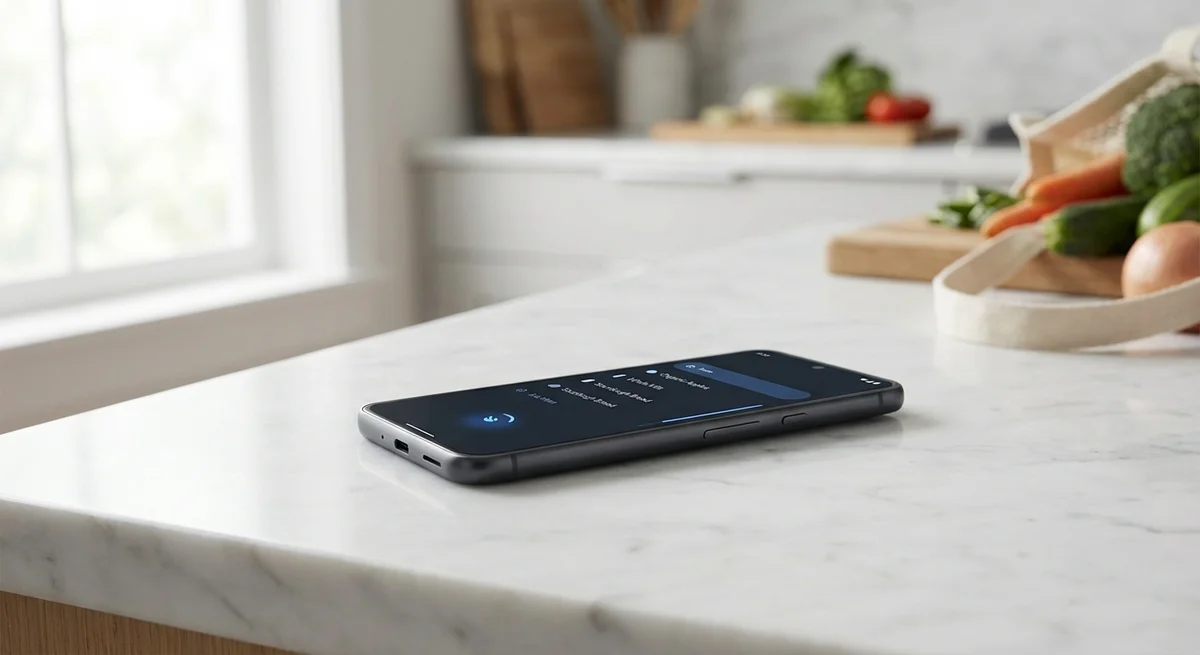
Google has done what the industry has been talking about for the past year and a half: it has turned a language model from a conversation partner into an executor. The March update for the Pixel 10 lineup gives Gemini the ability to act on its own inside apps, ordering groceries, calling a ride and handling other routine tasks without the user's constant involvement.
The idea of agentic AI, meaning a system that doesn't just answer questions but takes actions in the real world, became the main trend of 2025. OpenAI moved in this direction with Operator, Anthropic experimented with Computer Use, and Apple quietly expanded Siri's capabilities. But Google was the first to build full agentic features directly into the operating system of a mass-market smartphone. This is not a research prototype or a developer beta. It is an update arriving right now on the Pixel 10, Pixel 10 Pro and Pixel 10 Pro XL.
Technically, it works like this. The user asks Gemini to complete a task, for example to order groceries for dinner or call a car to the airport. The assistant opens the relevant app, be it Grubhub or Uber, and starts interacting with its interface: tapping buttons, filling in fields, choosing options. All of this happens in the background while the phone's owner does other things, such as scrolling a feed, replying to messages or simply putting the phone in a pocket. Google stresses that the user keeps full control: at any moment they can see what the assistant is doing, adjust its actions or stop the process entirely.
One important detail is that the list of supported apps is limited for now. Google uses the phrase "select apps," which hints at app-by-app integration rather than a universal solution. That makes sense from a security standpoint: before an AI is allowed to spend a user's real money, you need to be sure it works correctly with a specific interface. Grubhub and Uber are the first partners, but the list will obviously grow. Interestingly, Google first demonstrated the feature not at its own event but at Samsung Unpacked, which suggests the company wants to position Gemini as a platform-level solution for the entire Android ecosystem.
For the industry, this is a turning point. Until now, voice assistants on smartphones have remained essentially souped-up search engines with a set of scripted commands. Set a timer, play music, call Mom: that was the whole range. Gemini's agentic capabilities change this model fundamentally. The assistant no longer waits for precise instructions. It interprets intent and finds a way to carry it out. The difference between "find me the nearest restaurant" and "order me dinner" is the difference between a directory and a personal assistant.
Serious questions remain, though. How will the system handle errors? What happens if Gemini orders the wrong item or picks the wrong delivery address? Who is responsible for financial transactions made by an AI on a user's behalf? Google has not yet given comprehensive answers, limiting itself to assurances of full control by the device owner. In the early stages the assistant will probably ask for confirmation before making payments, but as trust grows, those barriers may come down.
There is a competitive angle too. Making the feature exclusive to the Pixel 10 is both a marketing move and a technical constraint. Agentic capabilities require serious computing resources, and the new Tensor G5 chip apparently plays a key role. But strategically, Google cannot afford to keep this feature on Pixel alone. Samsung, Xiaomi, OnePlus: all the major Android manufacturers are waiting for these capabilities to arrive through Google Play Services. It is most likely a matter of months, not years.
The March Pixel update is not just a set of new features. It is a first step toward a model of smartphone interaction in which apps stop being something the user opens and become something the AI operates. If Google manages to scale the technology and keep users' trust, we may be witnessing the biggest change in mobile UX since the arrival of app stores.
- Nov 2, 2026Bun creator uses Claude Code to port 750K lines from Zig to Rust in 11 days
- Nov 2, 2026The Verge reviewer builds a $50 Meta Muse Charm alternative with Claude Code
- Nov 1, 202616 models tested on 7 search tools: Exa averaged 10.5 out of 14, SearXNG about 3
- Nov 1, 2026Google's StreamVibe video agent beats other models by 10.7% on response timing and quality
Test Frontier LLMs & Autonomous Agents in One Workspace
Run Claude Opus 5.5, GPT-6, Gemini 3.1, and DeepSeek side-by-side in Nomad AI (nomadnet.ai) — unified model routing, deep research, and multimodal workflows under one subscription.
The AI world, distilled — once a week
Seven stories that actually mattered, hand-picked. No noise, no reposts, no press releases.
Done! Check your inbox for a confirmation.