OpenAI plans to release its first device in 2026: earbuds?
OpenAI plans to release its first hardware device in 2026. According to Chris Lehane, the company's chief global affairs officer, an announcement is expected in the second half of this year. The device is believed to be earbuds with artificial intelligence features. Details remain scarce, and the company has not confirmed the form factor.
AI-processed from TechCrunch; edited by Hamidun News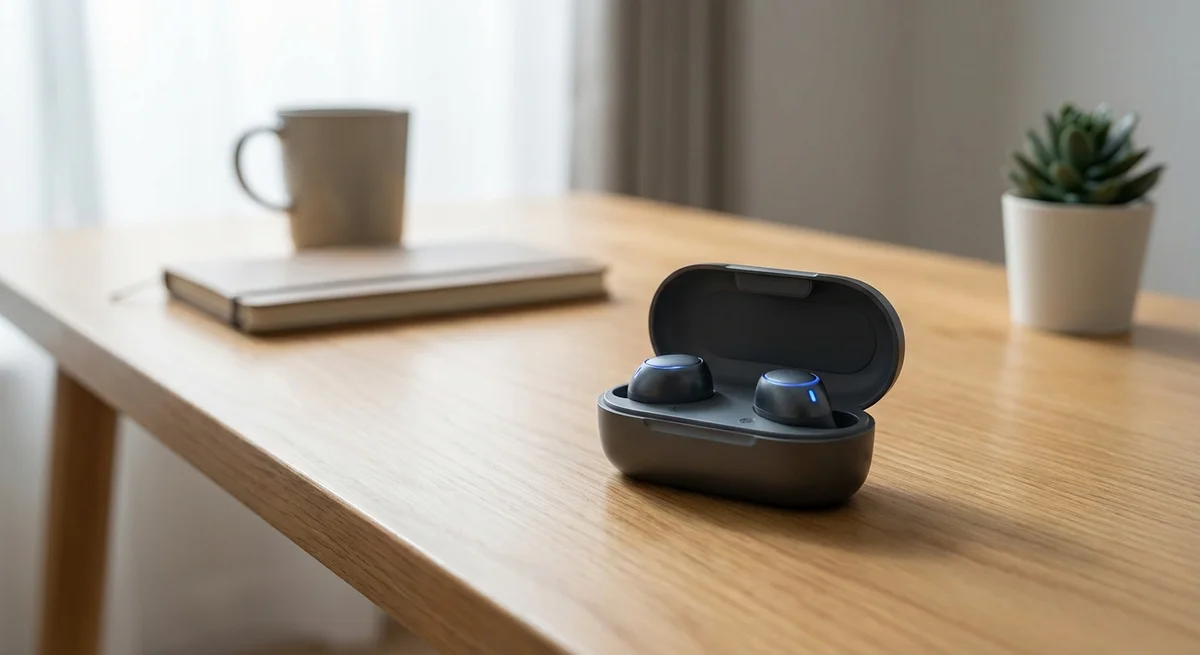
OpenAI, a leader in artificial intelligence, plans to enter the hardware market. The company's first device is expected to be unveiled in the second half of this year, with its release scheduled for 2026. According to Chris Lehane, OpenAI's chief global affairs officer, speaking in an interview at the economic forum in Davos, the company is actively working on innovative products that integrate cutting-edge AI technology.
While the specifics of the device are still kept secret, sources close to the company suggest it may be wireless earbuds with advanced artificial intelligence capabilities. Such earbuds could, for example, translate speech in real time, offer personalized recommendations based on the surrounding context, or even act as a personal AI assistant that is always within reach.
OpenAI's move into hardware is a significant step for the company. Until now, OpenAI has been known for its software products, such as the GPT language model and the DALL-E image generator. However, developing its own hardware would give the company full control over the user experience and let it integrate its AI technology more deeply.
OpenAI's decision to build its own devices may also be tied to growing competition in the AI market. Companies such as Google, Amazon and Apple are already actively developing AI technology and building it into their hardware products. Entering this market would let OpenAI carve out its own niche and strengthen its position as a leader in artificial intelligence.
For users, this means new ways of interacting with AI. AI earbuds from OpenAI could become an indispensable everyday helper, delivering personalized information, automating tasks and improving communication. However, the potential risks of using AI, such as privacy and data security concerns, should also be taken into account.
Overall, OpenAI's entry into hardware is an important event that may significantly influence the development of the AI industry. A company with cutting-edge AI technology and ambitious plans has every chance of becoming one of the key players in this market. What remains is to wait for an official announcement and see what innovative solutions OpenAI offers its users.
In short, OpenAI is not merely building artificial intelligence; it wants to weave it into everyday life through new form factors. This marks a shift from software to a comprehensive AI experience, in which hardware plays a key role.
- Nov 2, 2026Arca gives AI agents finance tasks lasting up to 10 days, but leaves the trades to humans
- Nov 2, 2026Meta's Muse assistant keeps dossiers on loved ones and gets root on Ubuntu by default
- Nov 1, 2026Local models lose to Opus and Codex: 0.21 on a MacBook versus 1.00 for Codex
- Nov 1, 2026Kimi scores 96.2% on a 1C database analytics test and emerges as a fallback if Claude access is blocked
Test Frontier LLMs & Autonomous Agents in One Workspace
Run Claude Opus 5.5, GPT-6, Gemini 3.1, and DeepSeek side-by-side in Nomad AI (nomadnet.ai) — unified model routing, deep research, and multimodal workflows under one subscription.
The AI world, distilled — once a week
Seven stories that actually mattered, hand-picked. No noise, no reposts, no press releases.
Done! Check your inbox for a confirmation.