OpenAI Dime: Instead of an 'iPhone Killer,' We Get Earbuds
OpenAI has settled on its first hardware product. The device, codenamed Dime (10 cents), is a pair of AI earbuds in the style of AirPods. The company originally aimed for a full portable computer with powerful hardware that could replace the smartphone, but the harsh reality of the semiconductor market forced it to scale back. Because of a shortage of memory chips and a high bill of materials (BOM), the "revolutionary device" project was postponed. OpenAI's tactic is now "simple first, complex later." Release is planned for 2026, and it will be a cautious first try at wearable electronics.
AI-processed from 36Kr (36氪); edited by Hamidun News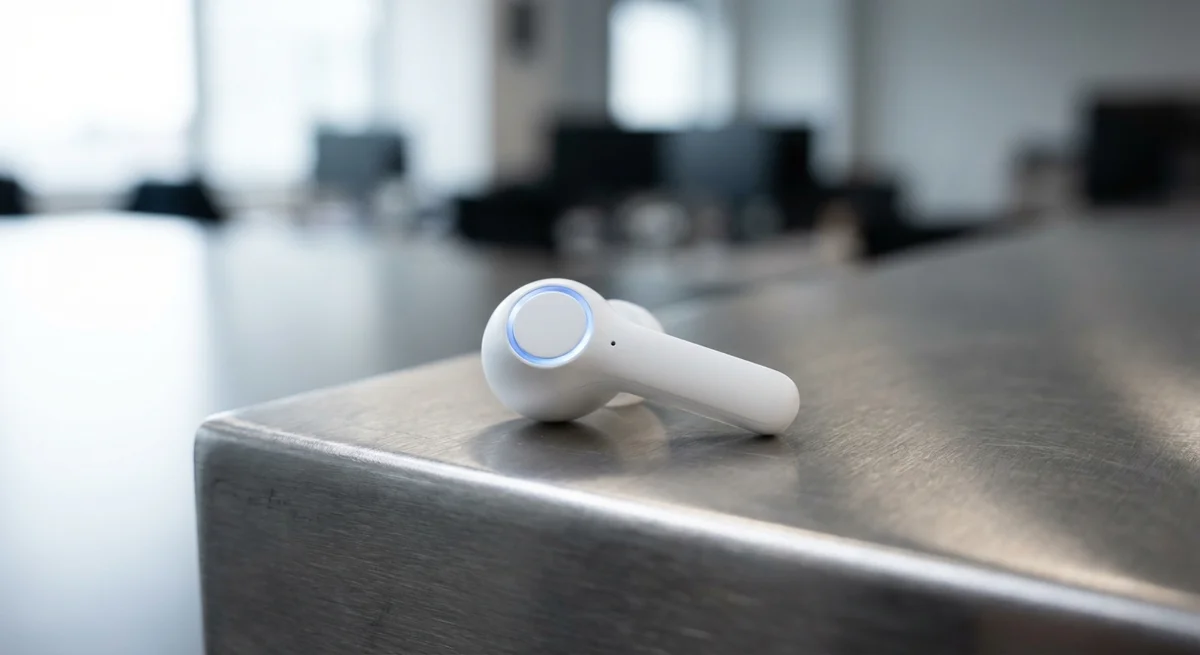
OpenAI has long outgrown the browser text box and the mobile app. Sam Altman dreams of giving his neural networks a physical form so they can accompany us everywhere. For a long time the industry buzzed with rumors of a secret project involving the legendary Jony Ive, and everyone expected nothing less than "the iPhone of the AI world." But, as so often happens in hardware, ambition crashed into component suppliers' price lists.
Today the name of the company's first product became known: Dime (10 cents), and it is nothing like the futuristic monolith we imagined. Instead of a revolutionary gadget with extraordinary computing power, OpenAI is preparing AI earbuds that are close to Apple AirPods in both form and purpose.
It is a classic strategic retreat. The engineers originally planned a device with a "smartphone-like" architecture, packed with top-tier hardware and with its own independent computing power. However, the bill of materials (BOM) turned out so high that the project would have become economic suicide. With a shortage of memory chips and general turbulence in the semiconductor market, releasing a "gold-plated" gadget without guaranteed demand is a dubious undertaking, even for Microsoft's favorites.
OpenAI now follows a "simple first, complex later" strategy. Dime will be a basic audio device with deep ChatGPT integration. In essence, the company decided not to reinvent the wheel and to enter the market through the most familiar and in-demand wearable form factor.
Earbuds are an ideal interface for a voice assistant. You don't need to pull out your phone or look at a screen; you just talk. This is exactly what Altman is training us for by rolling out the advanced voice mode in GPT-4o.
Why does this matter right now?
We have already seen other startups try to build "hardware AI." Think of the fiasco of the Humane AI Pin or the mixed reception of the Rabbit R1. Both devices tried to replace the smartphone, but turned out to be half-baked, inconvenient accessories. OpenAI, judging by this, has studied others' mistakes closely. Instead of fighting the iPhone on its home turf, it chose to complement the user's ecosystem with a familiar accessory. It is the safe path: if Dime "doesn't take off," the company won't lose billions developing a highly complex mobile platform.
There is bad news, though, for those who wanted to get their hands on OpenAI's gadget tomorrow. According to the updated plans, Dime will reach the market only in 2026. Such a delay suggests the company is still searching for a balance between price and functionality. By then Apple will almost certainly have released AirPods with full Apple Intelligence support, and OpenAI will have to compete head-on with the most experienced player in the earbud market. Whether the "10-cent" gadget can offer something more than a convenient button for summoning a chatbot is a big question.
Bottom line: OpenAI has chosen a path of cautious expansion, abandoning the ambition of a "smartphone killer" in favor of an audio accessory. Will it have the patience to wait until 2026, or will the wearable AI market be oversaturated by then?
- Nov 2, 2026Arca gives AI agents finance tasks lasting up to 10 days, but leaves the trades to humans
- Nov 2, 2026Meta's Muse assistant keeps dossiers on loved ones and gets root on Ubuntu by default
- Nov 1, 2026Local models lose to Opus and Codex: 0.21 on a MacBook versus 1.00 for Codex
- Nov 1, 2026Kimi scores 96.2% on a 1C database analytics test and emerges as a fallback if Claude access is blocked
Test Frontier LLMs & Autonomous Agents in One Workspace
Run Claude Opus 5.5, GPT-6, Gemini 3.1, and DeepSeek side-by-side in Nomad AI (nomadnet.ai) — unified model routing, deep research, and multimodal workflows under one subscription.
The AI world, distilled — once a week
Seven stories that actually mattered, hand-picked. No noise, no reposts, no press releases.
Done! Check your inbox for a confirmation.