One in Eight US Teens Turns to AI for Emotional Support
New data suggests that roughly 12% of American teenagers use general-purpose AI chatbots such as ChatGPT, Claude and Grok as a source of emotional support and life advice. Mental health specialists are seriously concerned: these systems were not designed for therapeutic purposes, are not trained to recognize crisis states, and can give potentially dangerous recommendations. The trend exposes a growing gap between teenagers' need for psychological help and the availability of real professionals.
AI-processed from TechCrunch; edited by Hamidun News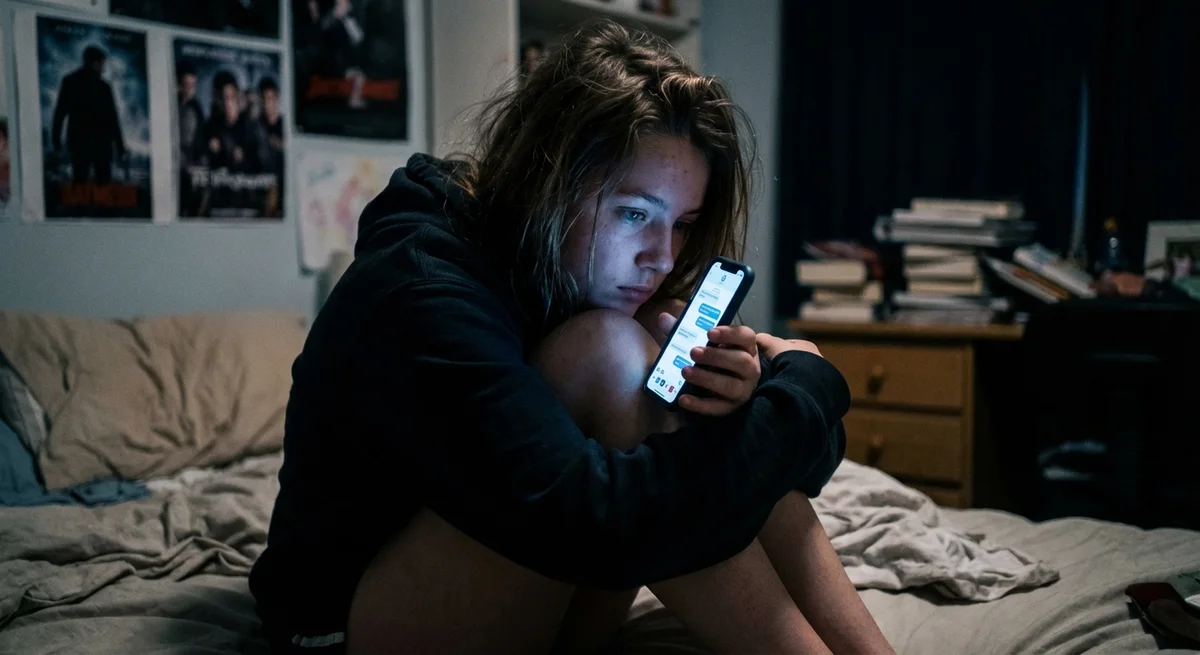
The number looks modest: just 12%. But behind it are millions of teenagers who, in moments of anxiety, loneliness or confusion, open a chatbot window instead of a messenger chat with a friend or a psychologist's office. New data published by TechCrunch shows that roughly one in eight American teenagers regularly turns to general-purpose AI systems such as ChatGPT, Claude and Grok for emotional support or life advice. And that is raising mounting concern among mental health specialists.
To grasp the scale, it helps to recall the context. The teen mental health crisis in the US is not new. Even before the pandemic, US Surgeon General Vivek Murthy called it "the defining challenge of our time." The pandemic made things many times worse: according to the CDC, in 2021 almost 45% of high school students reported persistent feelings of sadness or hopelessness. Meanwhile, access to real psychological care remains limited. Waiting lists for child therapists stretch for months, sessions cost more than many families can afford, and the stigma around seeking help, although it has weakened, has not gone away. Artificial intelligence rushed into this vacuum.
The problem is that ChatGPT, Claude and Grok are general-purpose generative language models. They are designed to be useful conversation partners across a wide range of tasks, from writing code to explaining quantum physics. But they are not therapeutic tools and have never been positioned as such.
They have no clinical training, do not follow crisis intervention protocols, cannot reliably recognize suicidal intent, and bear no responsibility for the consequences of their words. When a teenager writes to a chatbot, "I feel like nobody cares about me," the model generates a statistically likely reply that may sound empathetic but lacks any real understanding of the situation. At best, this is harmless but superficial comfort.
At worst, it is a dangerous imitation of care that delays turning to a real professional.
Psychologists and psychiatrists point to several specific risks. First, a substitution effect: a teenager who gets a feeling of "I've been heard" from an AI may decide the problem is solved and not seek real help. Second, unpredictable answers: language models can hallucinate, give factually wrong advice or abruptly change the tone of a conversation. Third, the formation of an unhealthy attachment to a non-human interlocutor that is available around the clock, never gets tired and never judges, but is also incapable of truly helping in a crisis. Finally, there is the question of privacy: teenagers share deeply personal experiences with chatbots, and those conversations are stored on technology companies' servers.
In fairness, the developers themselves recognize the problem, at least on paper. OpenAI, Anthropic and xAI include disclaimers in their usage policies saying their products do not replace professional medical care. Some models are trained to redirect users to crisis hotlines when they detect warning signs. But these mechanisms are imperfect, and teenagers typically do not read terms of service. The gap between what the tool was built for and how it is used keeps widening.
The situation poses an uncomfortable question for the industry: should developers of general-purpose AI systems be held responsible for users treating their products as makeshift therapists? Regulators have not yet given a clear answer. In Europe, the AI Act classifies systems by risk level, but general-purpose chatbots formally do not fall into the category of medical devices. In the US, the legal framework is even blurrier. Meanwhile, a market of specialized AI mental health apps, such as Woebot and Wysa, is developing in parallel; they undergo clinical validation and operate under professional supervision. But teenagers more often choose what is already installed on their phones.
Twelve percent is not just a statistic. It is a signal of a systemic failure, in which a generation raised in a digital environment instinctively looks for help where it is easiest to find: in a chat window. The question is not whether AI is good or bad as a conversation partner. The question is what will happen when millions of vulnerable teenagers rely on a system that, by definition, cannot be accountable for them. The industry, regulators and society will have to find a balance between the accessibility of technology and the safety of those who most need real, human support.
- Nov 2, 2026Meta's Muse assistant keeps dossiers on loved ones and gets root on Ubuntu by default
- Nov 1, 2026Local models lose to Opus and Codex: 0.21 on a MacBook versus 1.00 for Codex
- Nov 1, 2026Kimi scores 96.2% on a 1C database analytics test and emerges as a fallback if Claude access is blocked
- Nov 1, 2026OpenAI Rewrites GPT Behavior Rules: Five Values and a Chain of Command
Test Frontier LLMs & Autonomous Agents in One Workspace
Run Claude Opus 5.5, GPT-6, Gemini 3.1, and DeepSeek side-by-side in Nomad AI (nomadnet.ai) — unified model routing, deep research, and multimodal workflows under one subscription.
The AI world, distilled — once a week
Seven stories that actually mattered, hand-picked. No noise, no reposts, no press releases.
Done! Check your inbox for a confirmation.