Oakley Meta smart glasses beat Ray-Ban in a field test
Oakley and Meta have released the Vanguard smart glasses, aimed at athletes. Unlike the Ray-Ban Meta, the new model keeps Oakley's signature athletic design and offers a broader set of AI features. A reporter tested the glasses on a five-mile walk and came away impressed: in comfort, stability and the practicality of the AI assistant, the Vanguard outperformed its rival. The gadget is positioned as a tool for an active lifestyle, not just a fashion accessory. *Meta has been designated an extremist organization and is banned in Russia.
AI-processed from ZDNet AI; edited by Hamidun News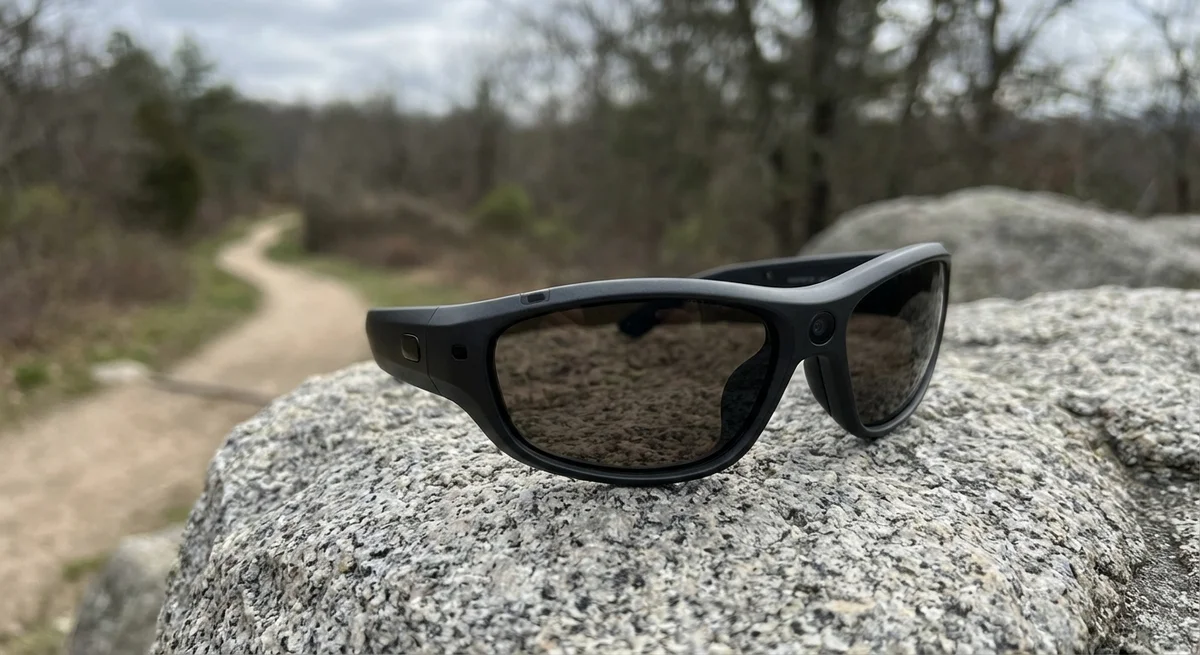
When Meta and Ray-Ban unveiled their smart glasses a few years ago, the wearables industry briefly held its breath: this was the start of a new era. The glasses turned out to be a decent product, compact and stylish, with enough features to win over a discerning buyer. But the Ray-Ban Meta had an obvious weakness: it was built for cafés and city strolls, not for people whose lives revolve around movement. Now Meta has bet on a different audience by teaming up with Oakley, and the result is convincing.
The Oakley Meta Vanguard is not a rebrand or a cosmetic refresh. The company took the DNA of its sports line, worn for decades by cyclists, triathletes and skiers, and built into it the full arsenal of AI features refined on the Ray-Ban. The aggressive frame geometry, wide temples with a secure fit and side-light protection are all still there. On top of that come built-in microphones, directional speakers and a voice AI assistant powered by Meta technology. From the outside, the Vanguard looks like ordinary Oakley sports eyewear. And that is the whole point.
A practical test on a five-mile walk set priorities better than any spec sheet. The Ray-Ban Meta looks great standing still, but in active movement its compromises start to show: the fit is a little less secure, and the shape is universal, which means it is ideal for no one in particular. The Vanguard, by contrast, sits on the face the way only glasses born for sport can: they don't slip, don't wobble and don't press on the temples after the first hour. That is not a minor detail. It is the fundamental difference between a gadget that stays in your pocket and one you actually wear.
The voice AI assistant in the Vanguard works more reliably than you would expect from a first-generation product. During the walk it handled navigation requests, answered questions in real time and did not require repeated commands even amid street noise. Meta has clearly carried over what it learned from the Ray-Ban, polishing speech recognition and response logic. For an athlete whose hands are busy with handlebars, trekking poles or simply the pace, this has practical value, not just marketing value.
It is telling that the Oakley Meta Vanguard almost deliberately avoids talking about augmented reality. There are no projections onto the lenses and no visual overlays, only sound, voice and a minimalist interface. The decision looks conservative next to rivals' claims as they chase full AR, but it is more honest technologically and more sensible for battery life. The battery isn't spent on a display, heat output is minimal and the glasses stay light. In the active-lifestyle segment, these factors matter more than any visual special effect.
For the wearables industry, the Vanguard signals an important shift in positioning. Until now, smart glasses were treated by default as a lifestyle accessory, something between headphones and a fashion item. Oakley and Meta propose an alternative model: glasses as a functional tool for a specific audience with specific needs. It is a narrower market, but a more motivated buyer, one willing to pay for real comfort rather than for a concept.
The Vanguard is not without limitations, of course. The price remains a serious barrier to mass adoption, Meta's ecosystem raises understandable privacy questions for part of the audience, and the smart glasses market is still too young to talk about mature standards. But across the criteria of fit, reliability and the practical usefulness of the AI, the Oakley Meta Vanguard convincingly shows that a well-chosen niche is worth more than universal ambition. The Ray-Ban Meta created the genre. The Vanguard shows how to make that genre truly useful.
*Meta has been designated an extremist organization and is banned in Russia.
- Nov 2, 2026Meta's Muse assistant keeps dossiers on loved ones and gets root on Ubuntu by default
- Nov 2, 2026The Verge reviewer builds a $50 Meta Muse Charm alternative with Claude Code
- Nov 1, 2026MoneyGate safety layer blocked all 42 fraudulent requests to local AI models
- Oct 31, 2026Open-source LLM gateway KTMS 1.0 plugs your own GPUs into the cloud and survives outages
Ship AI Faster with Founders, Engineers & Weekly Architecture Reviews
Inside Vibe Club (hamidun.com/club) — weekly live masterminds with Zhemal Khamidun, Tech Radar, full LMS access, and 370+ production Claude Code skills.
The AI world, distilled — once a week
Seven stories that actually mattered, hand-picked. No noise, no reposts, no press releases.
Done! Check your inbox for a confirmation.