OpenAI moves into hardware: its first gadget will be a smart speaker with a camera
OpenAI is preparing to release its first physical product: a smart speaker priced at $200–300. According to The Information, the device will have a built-in camera with face recognition and the ability to analyze its surroundings: objects on a table, people nearby, even their conversations. Face recognition is needed, among other things, to authorize purchases. In effect, OpenAI is challenging Amazon Echo and Google Nest, but with a fundamentally different level of intelligence inside. It is the company's first serious step into consumer electronics.
AI-processed from 3DNews AI; edited by Hamidun News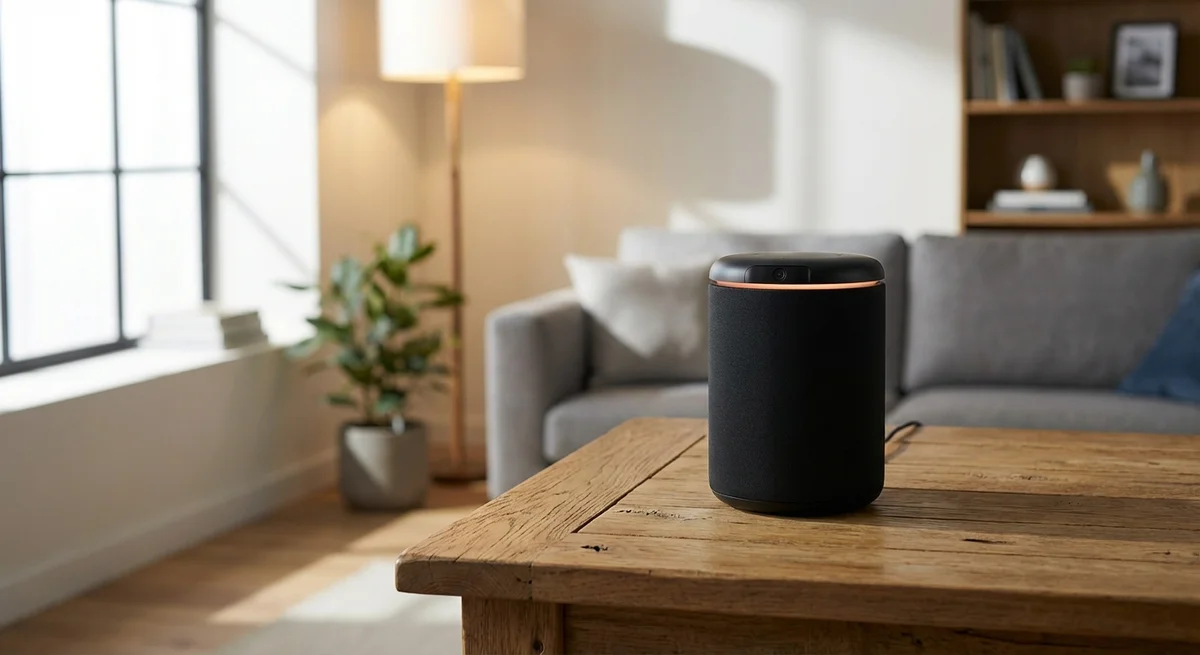
The company that changed how people think about what artificial intelligence can do now wants to move into your home, quite literally. OpenAI is preparing to release its first hardware product: a smart speaker with a camera that will cost between $200 and $300. The Information reports this, citing sources familiar with the company's plans.
At first glance it sounds like one more attempt to enter a market where Amazon Echo and Google Nest have long been firmly established. But the devil, as usual, is in the details. OpenAI's device is not just a speaker with a voice assistant. It will have a built-in camera and will be able to perceive the world around it: see objects on a table, understand the context of conversations among people nearby and, most notably, recognize its owner by face. According to the sources, that last feature is needed primarily to authorize purchases, which immediately turns the device from an entertainment gadget into a full-fledged commercial terminal.
To see why this step matters, it helps to look back. OpenAI has steadily moved from research lab to product company. First came the API for developers, then ChatGPT for the mass market, then subscription plans and enterprise offerings. But all of these products lived exclusively in the digital realm, on smartphone and computer screens. Moving into the physical world is a qualitatively new stage that changes the very nature of how people interact with AI. Instead of opening an app and typing a query, the user simply talks to a device that also sees what they see.
Technically, this became possible thanks to the multimodal capabilities of the latest-generation GPT models. ChatGPT can already analyze images and hold voice conversations, so the speaker is essentially a physical embodiment of those abilities. But it is the camera that makes the device truly interesting. When an AI not only hears you but also sees your surroundings, it reaches a fundamentally different level of contextual understanding. You can point at a flower and ask "what plant is this?", or show the contents of your fridge and ask for help with a recipe. Face recognition adds another layer: personalization. The device knows exactly who is talking to it and can tailor answers, settings and recommendations to a specific family member.
This is where the serious questions begin, though. A camera with face recognition in a living space will inevitably provoke privacy debates. Amazon has already been through similar scandals with Echo Show and Ring, and Google faced a wave of criticism after putting cameras in its Nest devices. OpenAI, which is already under close scrutiny from regulators around the world, risks landing at the center of a new round of debate over the limits of acceptable surveillance. How will biometric data be stored and processed? Will the video stream be sent to the company's servers or analyzed locally? These questions remain unanswered for now, but whether consumers embrace or reject the new gadget depends heavily on them.
The $200–300 price range also deserves attention. It is noticeably higher than the base models of Echo and Nest, but comparable to their premium versions. OpenAI is clearly not aiming at the budget segment but at an audience willing to pay for a smarter device. Given that the company has already got millions of users used to paying $20 a month for ChatGPT Plus, it has a loyal base that is highly likely to be interested in a physical product. The question is whether the speaker will require a separate subscription for full functionality, and if so, which one.
For the industry as a whole, this announcement signals the start of a new round of competition. Amazon and Google have dominated the smart speaker market for years, but their assistants, Alexa and Google Assistant, increasingly look outdated next to modern language models. A device from OpenAI may push both giants to speed up the integration of cutting-edge AI models into their products. Apple, which still cannot decide what to do with Siri, will also come under pressure.
OpenAI is making a bet that could shape the company's future for years. If the speaker succeeds, it will open the way to a whole ecosystem of physical devices with built-in AI, from home assistants to wearables. If it fails, it will be an expensive lesson that building hardware and building software are two fundamentally different skills. One thing is certain: the era when AI existed only on a screen is coming to an end.
- Nov 2, 2026Я устроил допрос 6 нейросетям про себя и своё ИП глазами заказчика: как ИИ выдумал мне бизнес на Amazon в США и слил смету из закрытого КП
- Nov 2, 2026TJ Digital: 23% of AI-cited pages open with a direct answer, versus 14% of uncited ones
- Nov 2, 2026Arca gives AI agents finance tasks lasting up to 10 days, but leaves the trades to humans
- Nov 2, 2026Meta's Muse assistant keeps dossiers on loved ones and gets root on Ubuntu by default
Ship AI Faster with Founders, Engineers & Weekly Architecture Reviews
Inside Vibe Club (hamidun.com/club) — weekly live masterminds with Zhemal Khamidun, Tech Radar, full LMS access, and 370+ production Claude Code skills.
The AI world, distilled — once a week
Seven stories that actually mattered, hand-picked. No noise, no reposts, no press releases.
Done! Check your inbox for a confirmation.