Build It Yourself: Assembling a Xiaozhi Robot from Off-the-Shelf Parts
The Xiaozhi project is drawing attention from robotics hobbyists because it is affordable and simple to build. The author shares their experience assembling the device themselves and says that ordering the parts and putting them together poses no serious difficulties. The case illustrates a broader trend toward democratizing technology: complex robotic systems are no longer the exclusive domain of big labs. With open architectures and accessible parts, building a personal robot is becoming realistic for home developers, which encourages innovation in consumer robotics.
AI-processed from Habr AI; edited by Hamidun News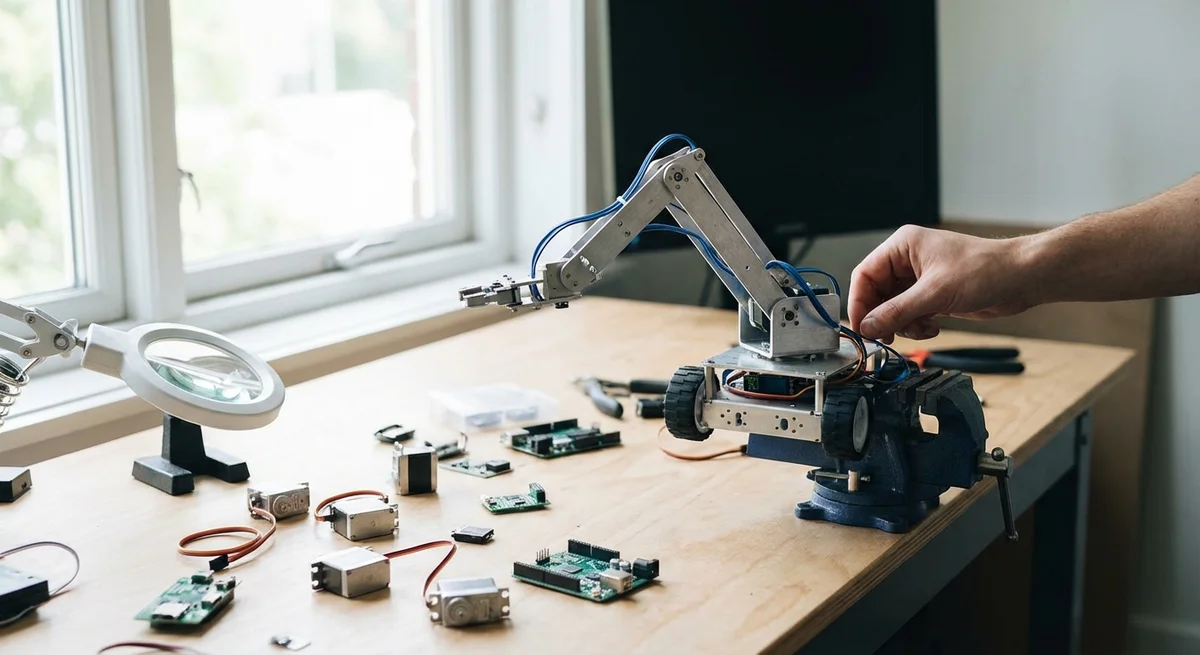
Build It Yourself: Assembling a Xiaozhi Robot from Off-the-Shelf Parts
The Xiaozhi project, conceived as a platform for two robots to communicate with each other, is quickly gaining popularity among robotics enthusiasts. Its appeal lies not only in the concept but also in how accessible and easy it is to build. The author shares their experience assembling this unusual device themselves, stressing that ordering the necessary components and putting them together presents no serious technical or logistical difficulties. The case is a clear example of the global trend toward democratizing technology, as complex robotic systems cease to be the exclusive preserve of large research labs and corporations.
The world is moving toward open architectures and accessible components, which makes building personal robots realistic for home developers and hobbyists. Xiaozhi illustrates this trend well. Originally conceived as a way to demonstrate interaction between autonomous agents, it turned out to be surprisingly easy to build. The author notes that finding and ordering the necessary parts, which are often standard components widely available on the market, did not take long. According to the author, assembly requires no specialized skills or expensive equipment, so it is within reach of a wide range of enthusiasts, even those just starting out in robotics. This encourages innovation in consumer robotics, letting more people experiment and create their own projects.
Looking at the build in more detail, the Xiaozhi robot is based on relatively inexpensive, widely available electronic components. These may include microcontrollers such as Arduino or Raspberry Pi, servos for movement, sensors for spatial orientation and, of course, enclosure parts that can often be made with 3D printing. The project's openness implies detailed documentation, schematics and source code, which considerably simplifies assembly and setup.
The author stresses that even when questions arise, the Xiaozhi user community is ready to help by sharing experience and solutions. This approach spreads knowledge quickly and helps the project develop, since every new participant can contribute and improve the existing design. The ability to modify the robot and extend its functionality makes it an attractive platform for learning and experimentation.
The implications of this trend for the industry and society as a whole are considerable. Democratizing robotics means innovation can come not only from big market players but also from small teams or even individual enthusiasts. This may lead to new, unexpected uses of robots in everyday life, from personal assistants to educational tools. Being accessible and easy to understand, Xiaozhi is a good example of how technology can get closer to people. It opens the door for those who always dreamed of building their own robot but lacked access to expensive components or specialized knowledge. This helps shape a new generation of engineers and inventors who will push robotics forward.
In conclusion, Xiaozhi shows that building a functional robot is more accessible today than ever before. Simple assembly, low component costs and the support of an open community make it an ideal choice for anyone who wants to get a taste of robotics. The example is inspiring and shows that a future in which robots are an integral part of our lives is being built not only in labs but also on enthusiasts' workbenches around the world, quite literally by hand.
- Nov 2, 2026DeepSeek Open-Sources Super-agent Prototype: p95 Task Time Drops from 29.5 to 15.7 Minutes
- Nov 2, 2026LLM Agent Built a Gearbox in KOMPAS-3D, but Scored Only 50 out of 100 on the Specification
- Nov 2, 2026Agents ignored the prompt to read memory in 7 of 7 sessions: an analysis of 13 thousand logs
- Nov 2, 2026Karpathy Built HackerTube, a Catalog of 6,454 Videos, in Two Hours with Claude Code
Test Frontier LLMs & Autonomous Agents in One Workspace
Run Claude Opus 5.5, GPT-6, Gemini 3.1, and DeepSeek side-by-side in Nomad AI (nomadnet.ai) — unified model routing, deep research, and multimodal workflows under one subscription.
The AI world, distilled — once a week
Seven stories that actually mattered, hand-picked. No noise, no reposts, no press releases.
Done! Check your inbox for a confirmation.