OpenAI unveils ultrafast coding model that sidesteps Nvidia chips
OpenAI has announced GPT-5.3-Codex-Spark, a specialized language model for writing code that shows a 15x performance gain. The key achievement is an architecture optimized for unconventional, plate-sized chips. The move lets the company speed up code generation significantly while reducing its critical dependence on scarce Nvidia GPUs. The work highlights a trend toward vertical integration of software and hardware inside the world's largest AI labs.
AI-processed from Ars Technica; edited by Hamidun News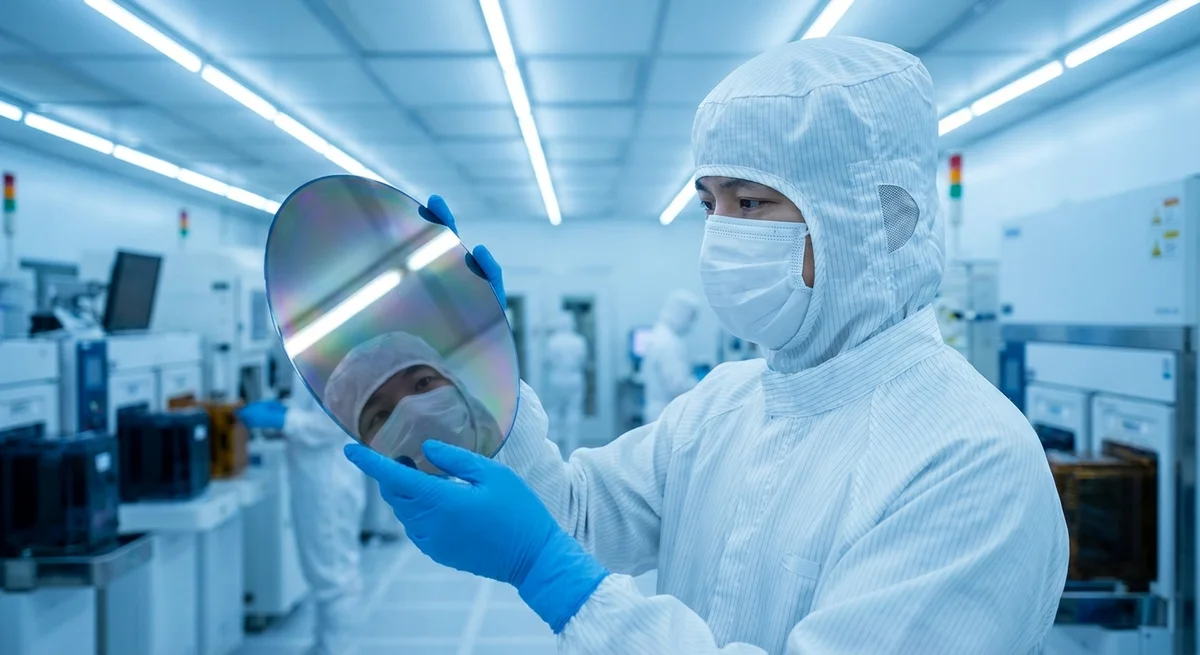
OpenAI has unveiled GPT-5.3-Codex-Spark, a specialized code-generation model that runs 15 times faster than the previous version. But the real news is less the speed than how it was achieved: the company optimized the architecture for unconventional, plate-sized chips, effectively bypassing its critical dependence on scarce Nvidia GPUs. The move shows OpenAI's drive to control the entire stack, from software to physical hardware, and underlines the growing competition in the market for specialized AI processors.
Over the past two years, Nvidia has become something of a bottleneck for every major AI company. The H100 and A100 GPUs, which became the standard for training large language models, are in huge demand while supply lags behind. Prices bite, deliveries are delayed, and geopolitical restrictions complicate everything. OpenAI, Meta*, Google: all of them are looking for ways either to reduce their dependence on Nvidia or to make better use of the resources they have. Elon Musk's company x.AI recently announced its own chip, Apple does the same with its Neural Engine, and Amazon is investing in Trainium and Inferentia processors. The market is fragmenting, and OpenAI has decided not to fall behind.
GPT-5.3-Codex-Spark is a purpose-built project. General-purpose models such as GPT-4o have to handle many tasks, while Codex focuses on one: writing code as fast and as accurately as possible. That allowed OpenAI's engineers to optimize substantially. They reworked the architecture for the specifics of coding, removed redundant computational layers and restructured tensor operations. The result is the same output quality at much lower computational cost. But the main change was at the hardware layer. OpenAI developed, or reworked for its own needs, unconventional chips that run this architecture natively. These processors are more compact than standard GPUs, easier to integrate, and need less power and cooling, all of which makes data centers cheaper and more resilient to failures.
The 15x performance gain is impressive, but the figure needs context. Most likely, it does not mean the model performs raw computation 15 times faster. It refers to end-to-end code generation time, from the user's request to the finished output. The improvements stack here: an optimized architecture, specialized chips and a reworked processing pipeline. It is a typical approach for the AI industry: the most efficient algorithm on the most efficient hardware gives the best result.
For the industry, this means several things at once. First, the pressure on Nvidia grows. If other companies start successfully using their own chips, demand for GPUs may fall. Second, it reinforces the trend toward vertical integration in AI labs. Apple, Google, Meta* and now OpenAI are all developing their own chips. Third, it is good news for developers: a faster and cheaper code generator may lower API costs and make AI assistants more affordable.
But OpenAI will not break free of Nvidia entirely. General-purpose models still require powerful GPUs for training. OpenAI's own chips appear to be optimized specifically for inference, running already-trained models. That makes sense: training happens rarely, while user requests arrive constantly. OpenAI found a way to take control of exactly the layer where scale can be monetized. And that is the right strategic move.
*Meta has been designated an extremist organization and is banned in Russia.
- Nov 2, 2026Meta's Muse assistant keeps dossiers on loved ones and gets root on Ubuntu by default
- Nov 1, 2026Local models lose to Opus and Codex: 0.21 on a MacBook versus 1.00 for Codex
- Nov 1, 2026Kimi scores 96.2% on a 1C database analytics test and emerges as a fallback if Claude access is blocked
- Nov 1, 2026OpenAI Rewrites GPT Behavior Rules: Five Values and a Chain of Command
Build & Ship Production AI Agents Without Boilerplate Code
Start your free 72-hour trial at Hamidun Academy (academy.hamidun.com) — interactive lessons on Claude Code & Cursor, live Tech Radar, and production agent templates.
The AI world, distilled — once a week
Seven stories that actually mattered, hand-picked. No noise, no reposts, no press releases.
Done! Check your inbox for a confirmation.