OpenAI unveils its first AI model built for Cerebras chips
OpenAI has officially unveiled GPT-5.3-Codex-Spark, its first model to run on hardware from the startup Cerebras Systems. It is an optimized, faster version of Codex, the company's system for automating code writing. The release marks the start of OpenAI's effort to diversify its hardware away from the dominant Nvidia. The model is meant to strengthen the company's position against Google and Anthropic in AI assistants for developers, offering high speed while keeping code generation accurate.
AI-processed from 36Kr (36氪); edited by Hamidun News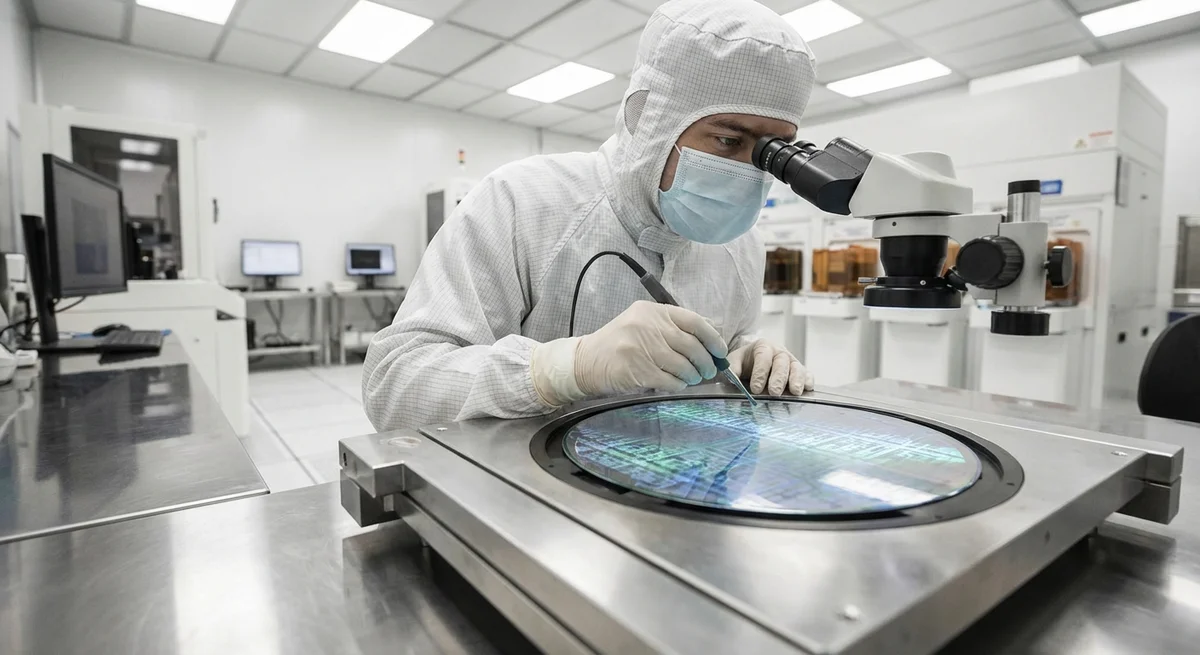
OpenAI has made a strategic move toward technological independence: the company has unveiled GPT-5.3-Codex-Spark, the first AI model designed specifically to run on Cerebras Systems chips. It is not just a new product but a signal that OpenAI is ready to diversify its hardware partnerships and reduce its dependence on Nvidia, which dominates the AI accelerator market. Codex-Spark is positioned as an optimized version of the well-known Codex code-writing tool: on one hand lighter to run, on the other considerably faster at completing tasks. The launch coincides with intensifying competition among AI assistants for developers, where OpenAI faces Google Gemini and Anthropic's Claude.
The decision stems from growing systemic constraints OpenAI has run into. The company buys up Nvidia GPUs worldwide, but that creates a vulnerability: at any moment supplies could be restricted, prices could rise, and Nvidia could impose its own terms. Cerebras Systems offers an alternative with its own architecture, the WSE (Wafer Scale Engine), a chip designed differently that strikes a different balance between throughput and energy efficiency. For OpenAI this is a strategic necessity: more sources of compute mean a more resilient market position and less exposure to outside factors.
GPT-5.3-Codex-Spark is not an entirely new model but an optimized version of Codex, adapted specifically to the quirks of Cerebras chips. That is an important technical choice: different architectures demand different approaches to memory allocation, parallelization of computation and data caching. OpenAI engineers reworked the model's structure so that it makes the most efficient use of Cerebras's specific topology. The result is a noticeable speedup without any loss of accuracy in code generation. For developers this means a faster feedback loop: code autocompletion requests will run with minimal latency, which is critical for the IDE ecosystem and continuous development.
The model's size and weight also played a role in this optimization. Codex-Spark is positioned as a "lightweight" version, which lets the model load into memory faster and lowers network bandwidth requirements. In a world where every millisecond of latency affects user experience, that matters. It matters especially given the competition: Google Gemini and Claude already offer built-in coding tools, but developers often criticize their speed. Codex-Spark could win over part of that audience if it really is faster while keeping its suggestions highly accurate.
This move reflects a broader industry trend: Nvidia's GPU monopoly is unsustainable, and all the big players are starting to look for alternatives. Apple developed its Neural Engine, Google invested in TPUs, and Amazon is building Trainium and Inferentia. OpenAI, as a model developer rather than a chip maker, chose a different path: partnering with Cerebras lets it stay flexible and avoid being tied to a single supplier.
The launch of Codex-Spark marks the start of a new stage in OpenAI's strategy: not only building better models, but also making them run on diverse hardware. That complicates life for competitors that still depend on standard hardware, and strengthens OpenAI's position in AI tools for developers. The question now is how well this strategy will work in practice, and whether Cerebras can scale its chips fast enough to meet growing demand.
- Nov 2, 2026Meta's Muse assistant keeps dossiers on loved ones and gets root on Ubuntu by default
- Nov 1, 2026Local models lose to Opus and Codex: 0.21 on a MacBook versus 1.00 for Codex
- Nov 1, 2026Kimi scores 96.2% on a 1C database analytics test and emerges as a fallback if Claude access is blocked
- Nov 1, 2026OpenAI Rewrites GPT Behavior Rules: Five Values and a Chain of Command
Build & Ship Production AI Agents Without Boilerplate Code
Start your free 72-hour trial at Hamidun Academy (academy.hamidun.com) — interactive lessons on Claude Code & Cursor, live Tech Radar, and production agent templates.
The AI world, distilled — once a week
Seven stories that actually mattered, hand-picked. No noise, no reposts, no press releases.
Done! Check your inbox for a confirmation.