AI5 Chip Is Ready: Is Musk's Dojo 3 Back?
Tesla has worked through its difficulties with the AI5 chip and is resuming development of the Dojo 3 supercomputer, built to train the neural networks behind Autopilot. It is an important step for a company pursuing full autonomy for its cars. Dojo 3 is meant to deliver a substantial increase in computing power over earlier versions, but Tesla faces growing competition in autonomous driving.
AI-processed from Jiqizhixin (机器之心); edited by Hamidun News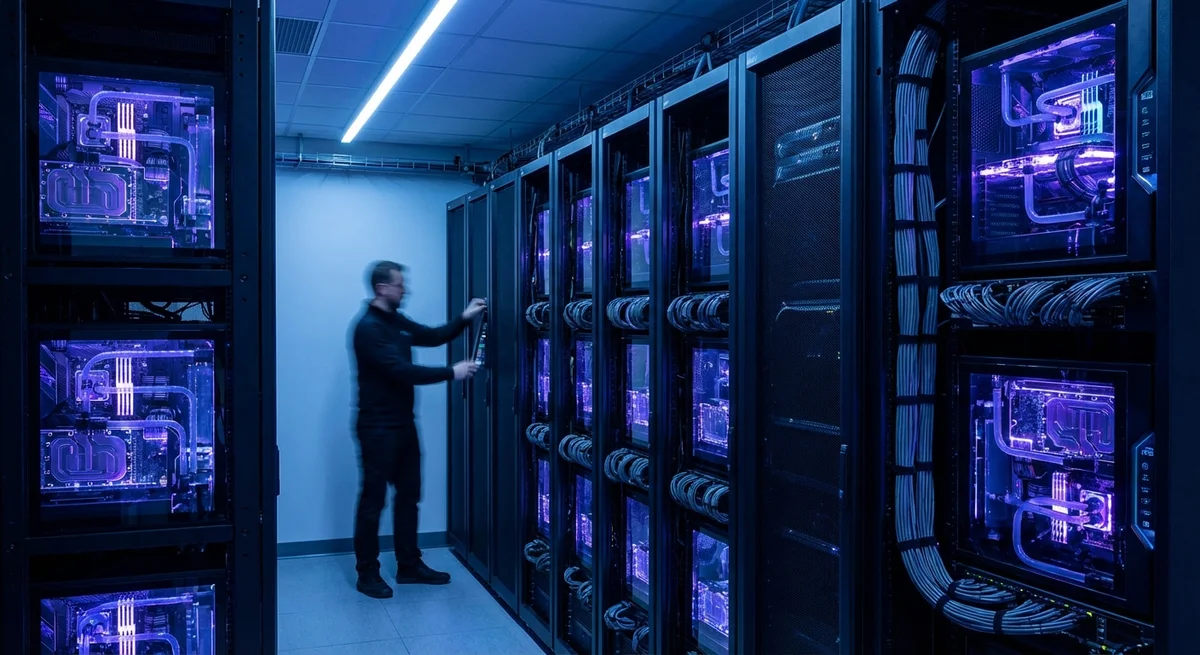
News that Tesla is resuming development of the Dojo 3 supercomputer, equipped with the new AI5 chip, has drawn considerable interest in the tech community. After a period of uncertainty caused by technical difficulties, Elon Musk's company appears to have returned to an ambitious project that could radically change the future of Autopilot and of Tesla as a whole.
The Dojo supercomputer is not just a computing machine but a complex system Tesla built to train the neural networks underlying its autonomous driving technology. Dojo is designed to process huge volumes of data collected by Tesla's fleet around the world, which allows the company to improve its Autopilot algorithms continuously. Dojo 3 is the next stage in the development of this system and is expected to bring a significant increase in computing power compared with previous versions.
The key element of Dojo 3 is the AI5 chip, a specialized processor Tesla developed for machine learning tasks. Difficulties with developing this chip temporarily held the project back.
It is hard to overstate how important Dojo is to Tesla. The company sees full autonomy as a key competitive advantage that will set it apart from other electric-vehicle makers and traditional automakers. Unlike many competitors that rely on off-the-shelf Autopilot solutions, Tesla develops its own technology, which gives it full control over the process and lets it optimize the system for its needs. Dojo is central to this strategy, providing the computing power needed to train complex neural networks.
The resumption of Dojo 3 development with the AI5 chip means Tesla has managed to overcome the technical problems and move forward in building its own machine-learning infrastructure. This may speed up the development of new Autopilot features and improve its reliability and safety. In the longer term, it may also let Tesla enter new markets such as robotaxis and autonomous delivery.
However, competition in autonomous driving keeps growing. Many companies, including Waymo, Cruise and others, are also actively developing their own technology and investing in powerful computing systems. Tesla's success in this area will depend not only on how well Dojo is implemented technically, but also on the company's ability to make effective use of the data it gathers and to quickly bring new developments to its cars.
The return of Dojo 3 is therefore an important signal for the whole industry. It confirms Tesla's drive for leadership in autonomous driving and its willingness to invest significant resources in its own technology. In the coming years we will likely see a marked acceleration in the development of Tesla's Autopilot, which may have a substantial effect on the future of the auto industry and of transportation as a whole.
- Nov 2, 2026DeepSeek Open-Sources Super-agent Prototype: p95 Task Time Drops from 29.5 to 15.7 Minutes
- Nov 2, 2026LLM Agent Built a Gearbox in KOMPAS-3D, but Scored Only 50 out of 100 on the Specification
- Nov 2, 2026Agents ignored the prompt to read memory in 7 of 7 sessions: an analysis of 13 thousand logs
- Nov 2, 2026Karpathy Built HackerTube, a Catalog of 6,454 Videos, in Two Hours with Claude Code
Ship AI Faster with Founders, Engineers & Weekly Architecture Reviews
Inside Vibe Club (hamidun.com/club) — weekly live masterminds with Zhemal Khamidun, Tech Radar, full LMS access, and 370+ production Claude Code skills.
The AI world, distilled — once a week
Seven stories that actually mattered, hand-picked. No noise, no reposts, no press releases.
Done! Check your inbox for a confirmation.