EU launches NanoIC, a pilot line for next-generation chips
The European Commission has announced the launch of NanoIC, Europe's largest pilot chip production line, based at IMEC in Belgium. Total investment comes to 2.5 billion euros, of which 700 million euros is EU funding. NanoIC will focus on designing and manufacturing chips on process nodes below 2 nm, using advanced EUV equipment.
AI-processed from 36Kr (36氪); edited by Hamidun News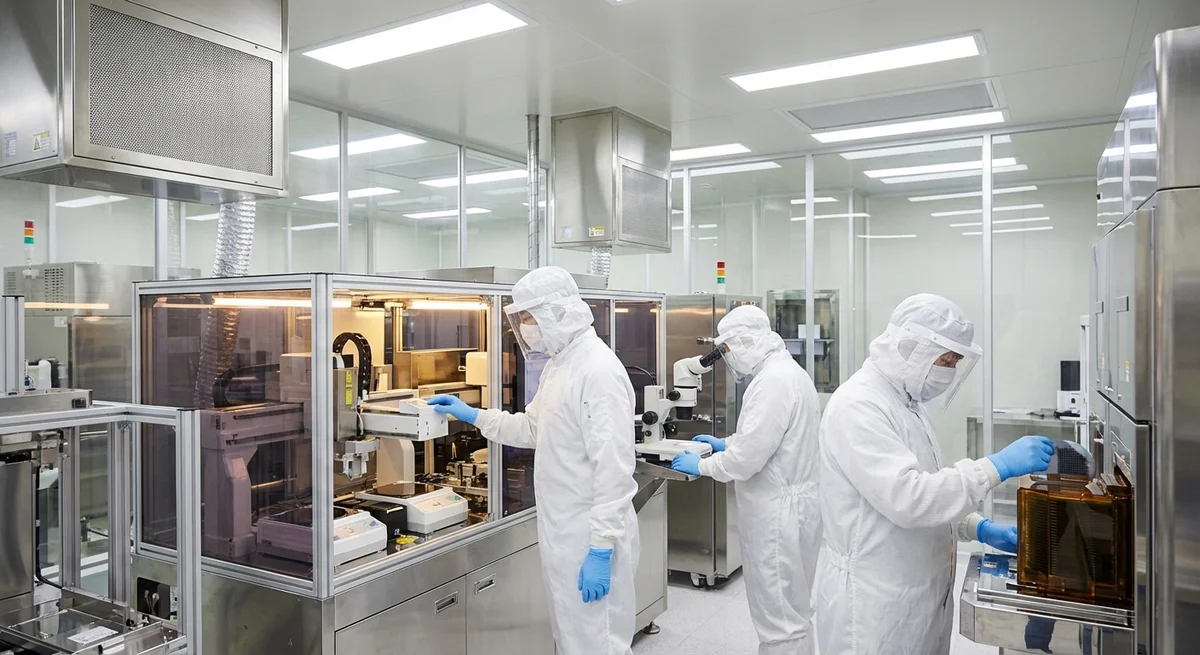
The European Union is making a serious bet on strengthening its position in the global semiconductor industry. On 9 February, the European Commission announced the launch of NanoIC, a large-scale pilot production line based at the IMEC research center in Belgium. The project, funded under the European Chips Act, is meant to become a key element in the development of European microelectronics and to reduce dependence on Asian manufacturers.
Total investment in NanoIC stands at a hefty 2.5 billion euros. The European Union provided a significant share of that, 700 million euros. Another 700 million euros came from governments of various countries and regions. Industrial partners supplied the rest, including the Dutch company ASML, a leader in lithography equipment. ASML plays a key role in the project, since NanoIC will be the first site in Europe to install the most advanced extreme ultraviolet (EUV) lithography equipment.
NanoIC's main task is to develop and manufacture chips on leading-edge process nodes, with feature sizes below 2 nanometers. This opens the way to more powerful and more energy-efficient chips for a wide range of uses, from mobile devices and computers to the automotive industry and AI systems. Locating NanoIC at IMEC is no accident. IMEC is one of the world's leading microelectronics research centers, with vast experience and expertise.
The launch of NanoIC has far-reaching implications for the European economy and technological independence. In recent years, Europe has faced a serious semiconductor shortage that hurt many industries. Building its own production capacity should let Europe reduce its dependence on chip imports from Asia and strengthen its competitiveness in the global market. NanoIC should also become a magnet for talented engineers and scientists, which will help drive innovation in microelectronics.
However, NanoIC's success is not guaranteed. Competition in the semiconductor industry is fierce, and Europe will have to make a significant effort to catch up with market leaders such as TSMC and Samsung. The project also needs stable funding, and conditions that attract investment must be created. Still, the launch of NanoIC is an important step in the right direction and could change the landscape of European microelectronics.
In conclusion, the launch of the NanoIC pilot line marks significant progress in Europe's push to become a key player in the global semiconductor industry. Investing in advanced technology and building domestic production capacity are necessary conditions for technological independence and a stronger economy. NanoIC's success will depend on continued support from government and industry, and on Europe's ability to attract and retain talented specialists.
Test Frontier LLMs & Autonomous Agents in One Workspace
Run Claude Opus 5.5, GPT-6, Gemini 3.1, and DeepSeek side-by-side in Nomad AI (nomadnet.ai) — unified model routing, deep research, and multimodal workflows under one subscription.
The AI world, distilled — once a week
Seven stories that actually mattered, hand-picked. No noise, no reposts, no press releases.
Done! Check your inbox for a confirmation.