Tea Worth Millions: Inside Alibaba's Qianwen AI Experiment
Alibaba ran a large-scale free tea giveaway through its Qianwen AI assistant and was hit by an unexpected flood of orders and system outages. The campaign showed Alibaba's drive to lead in AI commerce, but also exposed an infrastructure not ready for heavy loads. The company plans to expand the integration of AI into consumer scenarios.
AI-processed from 36Kr (36氪); edited by Hamidun News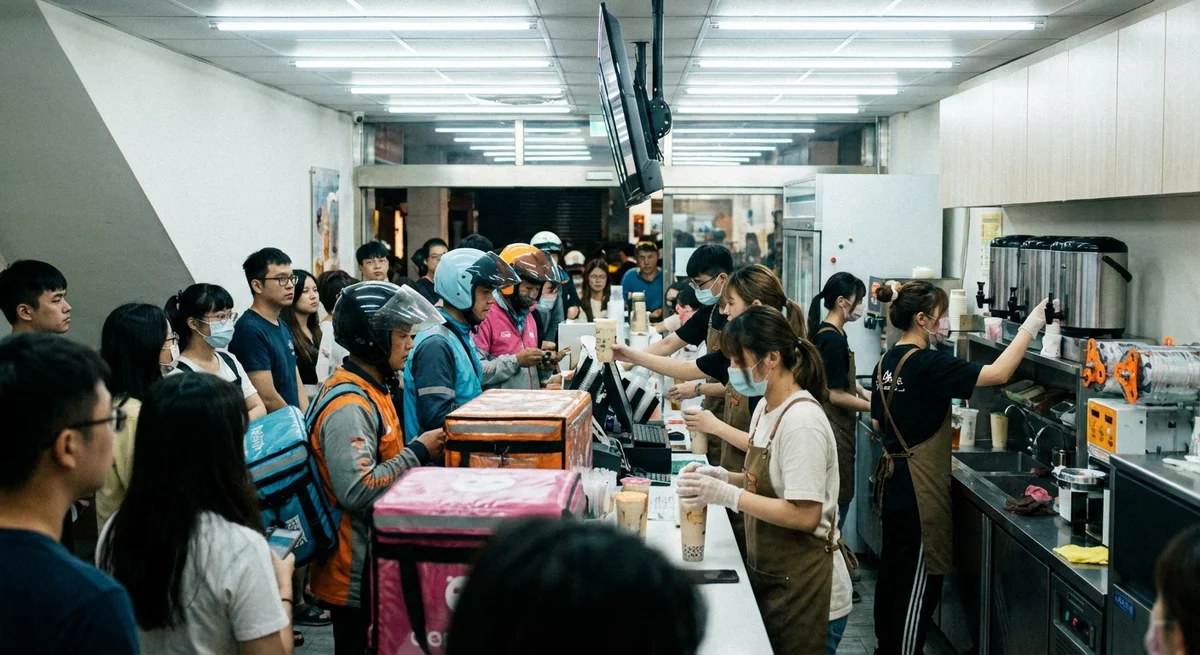
February 6 brought an unexpected rush for owners of tea brands connected to Alibaba's instant-purchase system. From early morning, a wave of free-tea orders placed through the Qianwen AI assistant swamped their sales systems. By noon, order volume peaked, filling the space around the counters with ready-made bags and forcing some outlets to temporarily stop accepting online orders.
Ordinary users saw the other side of the coin. After receiving free-tea links from friends, many found that Qianwen was running unreliably. App pages loaded slowly and then displayed a message saying that "a large language model has no physical hands and feet and cannot connect to real payment systems and delivery platforms." Users were told to place orders themselves via Meituan or Taobao.
The outages were caused by an avalanche of more than 2 million orders. Experts explain that AI agents need enormous computing power to process requests, analyze needs, compare prices and make payments. The existing server resources were not ready for such a load. Moreover, unlike sales events such as "Double 11", effective traffic-distribution models for AI marketing have not yet been developed. The servers were originally sized for only a third of the projected peak, which led to the system's collapse.
Despite the chaos, Qianwen reported the same day more than 10 million orders under the "3 billion yuan for free gifts for Chinese New Year" campaign. Some large tea brands reported daily sales growth of more than 200%. Alibaba wants to integrate Qianwen into every area of users' lives, from online conversations to everyday tasks. The company sees a chance to build a single entry point for all consumer scenarios. For now, however, this ambitious plan is being carried out with good old customer-acquisition methods: discounts, bonuses and free gifts.
After the campaign began, downloads of the Qianwen app jumped, even overtaking Yuanbao. The stock market reacted too: shares of some tea brands that took part in the campaign rose slightly. However, Alibaba shares in Hong Kong fell 2.88%, prompting ironic comments online: "The money they lost went to treating us to tea."
Inside Alibaba, Qianwen holds a special place. The project team was placed in a dedicated building where work on the project is intense. Developers who arrived from different cities work 12 hours a day to attract as many users as possible in the shortest time. Analysts say Alibaba is trying to repeat the success of the "blitzkrieg" previously run by Taobao Flash Sale to win back share of the food-delivery market.
Overall, the Qianwen campaign demonstrated Alibaba's ambitions in AI commerce, but also revealed a number of problems that must be solved. The company has serious work ahead to improve its infrastructure, optimize logistics and develop more effective traffic-distribution models. It is also important to understand how durable user interest in AI shopping will be once the period of discounts and special offers ends. Will Alibaba be able to turn Qianwen into a genuinely useful assistant, or will it remain merely a marketing tool?
Test Frontier LLMs & Autonomous Agents in One Workspace
Run Claude Opus 5.5, GPT-6, Gemini 3.1, and DeepSeek side-by-side in Nomad AI (nomadnet.ai) — unified model routing, deep research, and multimodal workflows under one subscription.
The AI world, distilled — once a week
Seven stories that actually mattered, hand-picked. No noise, no reposts, no press releases.
Done! Check your inbox for a confirmation.