Milan Olympics Get an Official AI Model Built on Alibaba Qwen
The International Olympic Committee (IOC) has announced the first official large language model (LLM) for the Olympic Games, built on Alibaba Qwen. The model will be used at the Milan Winter Olympics to support staff and will later be made available to the general public. The IOC calls it the most intelligent Olympics in history.
AI-processed from 36Kr (36氪); edited by Hamidun News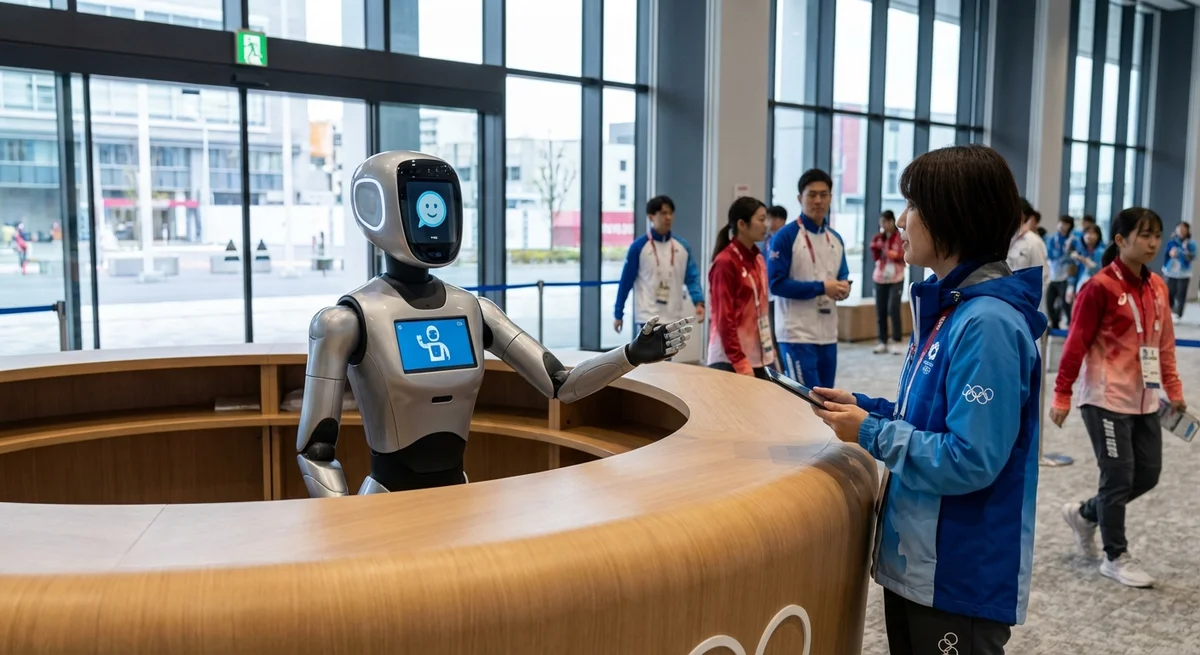
The Milan Winter Olympics promise to be not only a thrilling sporting event but also a showcase of cutting-edge technology. The International Olympic Committee (IOC) has officially unveiled the first large language model (LLM) in Olympic history, built on the Alibaba Qwen platform. The move marks an important step in bringing artificial intelligence into world-class sporting events.
The Olympic AI model responds to a growing need for fast, efficient information processing and multilingual support. The Olympic Games are a complex undertaking that requires coordinating huge numbers of people, processes and data. An LLM can automate many routine tasks, freeing resources for more important strategic decisions.
Alibaba Qwen is a powerful language model developed by the Chinese company Alibaba Group. It can understand and generate text in different languages, answer questions, provide information and handle other tasks that involve natural language processing. Integrating Qwen into the Games' infrastructure will make it possible to create an intelligent assistant available to organizing committee staff, athletes and, eventually, spectators.
At first, the model will support staff of various National Olympic Committees. It will offer them multilingual help, answering questions and providing information on the competition schedule, rules and other important aspects of running the Games. The plan is to expand the model's functionality later and open it to the general public, so spectators can get personalized information and support.
Deploying an LLM at the Olympics opens up new ways to improve the experience of participants and spectators. Artificial intelligence can help with a wide range of tasks, from automatic translation to personalized recommendations. It may also make the organization of the Games more efficient and cut costs.
However, the potential risks of using AI must also be considered. Data security must be ensured, bias in the model's answers must be prevented, and the technology must be used responsibly and ethically. The IOC needs to draw up clear rules and standards for AI use at the Olympics to avoid negative consequences.
The Milan Winter Olympics will be an important test for the new AI model. A successful rollout could set a precedent for other major sporting events and encourage further development of artificial intelligence in the sports industry. In the future, we may see AI used to improve athletes' results, create new kinds of training and boost spectator engagement.
- Nov 2, 2026DeepSeek open-sources Super-agent prototype: p95 task completion time of 15.7 minutes vs. 29.5
- Nov 2, 2026TensorFold 1.2.0 boosts Qwen3.8-27B throughput on M3 Ultra by 44.2% at 16 streams
- Nov 1, 2026Adobe's EditAgent judge picks a usable edit 81.3% of the time, versus 74.8% for EditScore
- Nov 1, 202616 models tested on 7 search tools: Exa averaged 10.5 out of 14, SearXNG about 3
Test Frontier LLMs & Autonomous Agents in One Workspace
Run Claude Opus 5.5, GPT-6, Gemini 3.1, and DeepSeek side-by-side in Nomad AI (nomadnet.ai) — unified model routing, deep research, and multimodal workflows under one subscription.
The AI world, distilled — once a week
Seven stories that actually mattered, hand-picked. No noise, no reposts, no press releases.
Done! Check your inbox for a confirmation.