Musk calls for a large-scale return to the Moon
Elon Musk has called for a large-scale push to explore the Moon. SpaceX is reportedly hiring engineers in Austin and Seattle to develop satellites with artificial intelligence (AI) and data centers in space. Musk confirmed the information.
AI-processed from 36Kr (36氪); edited by Hamidun News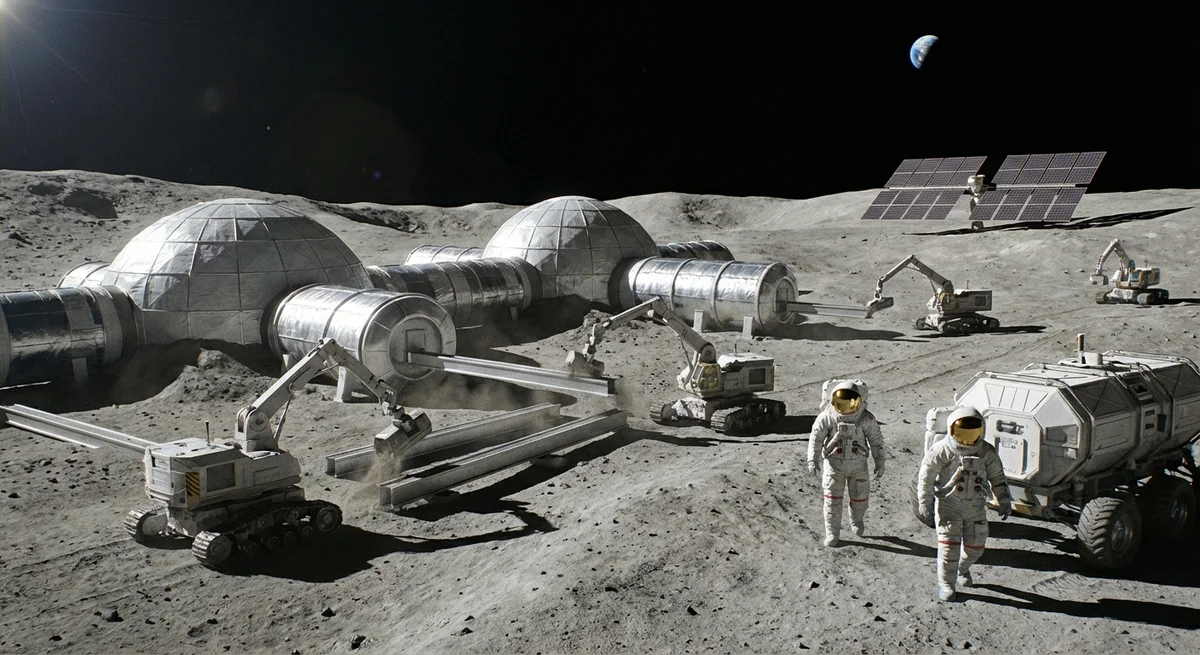
Elon Musk has turned his attention to the Moon again, writing on the social network X that a large-scale return to Earth's natural satellite is needed. The statement comes amid reports that SpaceX is actively hiring engineers in Austin and Seattle for forward-looking projects tied to artificial intelligence (AI) and space infrastructure.
Specifically, the work involves developing satellites equipped with AI systems, as well as building data centers located directly in space. Musk confirmed the information by replying to a post about it. The move may become an important step in SpaceX's long-term plans to colonize Mars and explore deep space. Placing computing capacity in space would reduce data transmission delays and make AI systems built for space tasks more efficient.
Developing AI satellites means building spacecraft that can analyze data from onboard sensors on their own and make decisions in real time. This matters most for Earth observation, monitoring of the space environment and managing satellite constellations. Space data centers, in turn, would process the large volumes of data generated by satellites and other spacecraft without sending that data to Earth. That would ease the load on communication channels and improve data security.
Musk's statement and SpaceX's plans have far-reaching implications for the whole space industry. They suggest the company sees artificial intelligence and space infrastructure as key elements for the further development of space technology. Deploying AI satellites and space data centers will require significant investment and new technologies, but in the long run could create fundamentally new possibilities in space communications, navigation, Earth observation and space exploration.
For users, this means they may eventually get access to better and more reliable services based on space technology. For example, satellite connectivity would become faster and more accessible, and navigation systems more accurate. In addition, the development of space infrastructure would make it possible to build new applications and services for environmental monitoring, weather forecasting and resource management.
Ultimately, SpaceX's initiative could catalyze a new space race, in which not only government space agencies but also private companies would compete. That would speed up the development of space technology and lower the cost of access to space. The large-scale return to the Moon that Musk is talking about would be an important step toward exploring deep space and building a sustainable space civilization.
In short, Elon Musk's call for a large-scale return to the Moon, backed by SpaceX's plans for AI satellites and space data centers, is a landmark event that may change the future of the space industry and open new horizons for humanity in space exploration.
Test Frontier LLMs & Autonomous Agents in One Workspace
Run Claude Opus 5.5, GPT-6, Gemini 3.1, and DeepSeek side-by-side in Nomad AI (nomadnet.ai) — unified model routing, deep research, and multimodal workflows under one subscription.
The AI world, distilled — once a week
Seven stories that actually mattered, hand-picked. No noise, no reposts, no press releases.
Done! Check your inbox for a confirmation.