AMI Labs: Yann LeCun Is Finally Building the AI He Has Argued For Years
Yann LeCun, who has spent years criticizing today's LLMs for lacking "common sense," is moving from words to action. His new startup, AMI Labs, will focus on building "World Models", an attempt to move beyond simply predicting the next word toward understanding physical reality. It is already pulling top engineers from Meta and DeepMind. Investors are lining up even though there is no product yet. If LeCun is right, chatbots as we know them may be nearing the end of their era of dominance. *Meta is recognized as an extremist organization and banned in Russia.
AI-processed from TechCrunch; edited by Hamidun News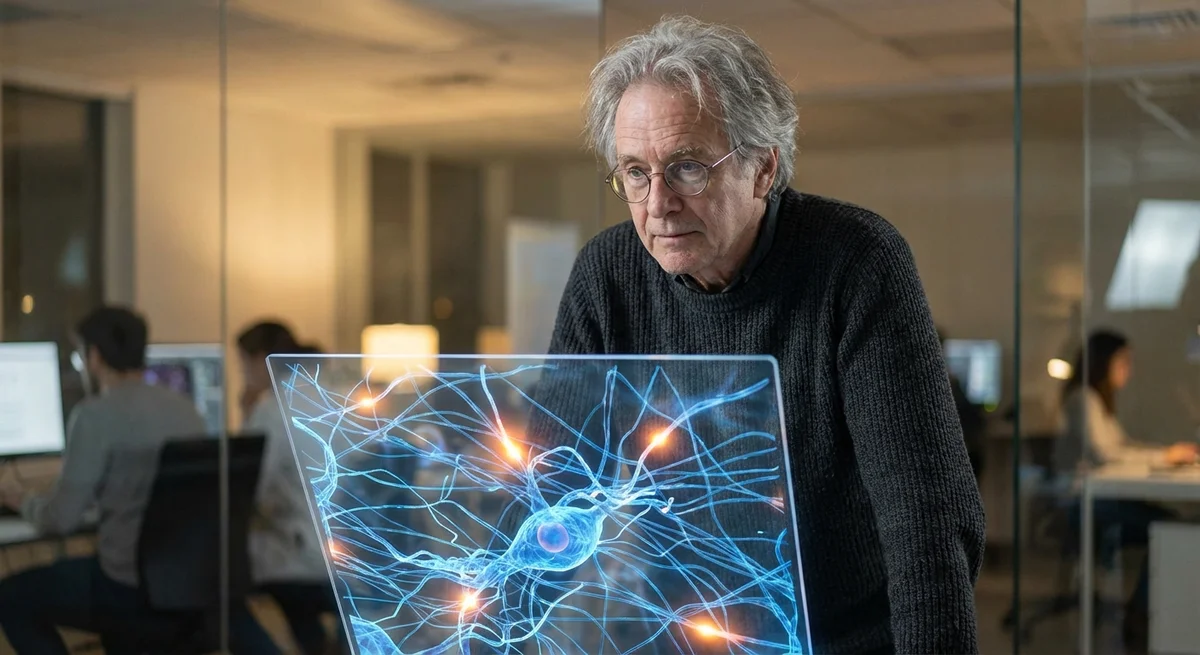
Yann LeCun has long been the loudest and most authoritative dissident in the world of large language models. While all of Silicon Valley marveled at ChatGPT writing poems and code, LeCun kept reminding his social media followers, with a world-weary tone, that these systems do not understand basic things. They do not know how gravity works, why you should not put a cat in a microwave, or what happens if you push a glass off a table.
Now Meta's chief AI scientist has decided that public criticism on Twitter is not enough. AMI Labs is not just another startup in an overheated niche. It is a direct attempt to prove that for the last five years the AI industry has been going down a dead end.
AMI Labs stands for Autonomous Machine Intelligence. It is a direct reference to the architecture LeCun has preached in his research papers in recent years. His pet idea is so-called "World Models". Instead of feeding neural networks endless terabytes of text from the internet, he wants to teach them to observe reality and build internal representations of physical laws. At Meta he tried to pursue this through the V-JEPA project, but apparently corporate constraints and the need to support Llama development held back real radicalism. At his own startup his hands are untied, and that scares competitors.
Who stands behind LeCun in this ambitious undertaking? Rumors and the first personnel moves point to a strong contingent from FAIR (Fundamental AI Research), the Meta division LeCun built and nurtured for a decade. It is a classic Valley scenario: when a visionary of this stature goes independent, the best minds follow, those tired of optimizing ad algorithms or endlessly "aligning" chatbot behavior to meet censorship demands. The names of researchers specializing in computer vision and reinforcement learning keep surfacing among potential participants, which clearly hints at a physical embodiment of their future AI.
Investor interest in AMI Labs borders on mild madness. Although the company does not yet have even a closed demo, its preliminary valuation is already in the billions of dollars. That is easy to explain: the market has an acute shortage of alternative ideas. Almost all current players build variations on the transformer architecture, but nobody knows what to do when quality training data on the internet runs out. LeCun proposes a fundamentally different way out: learning from video and sensory data, just as children or animals do. If his approach works, AMI Labs will become the foundation for the next generation of robotics.
LeCun's move into the founder role also raises questions about Mark Zuckerberg's long-term AI strategy. Meta has long been a unique "safe harbor" for fundamental science, letting researchers publish papers and share code without worrying about immediate profit. The departure of its frontman may signal a shift toward more applied, commercial products. Zuckerberg wants to sell augmented reality glasses and AI assistants today, while LeCun is aiming at the fundamental puzzle of intelligence, which may take years to solve.
Of course, the risk of AMI Labs failing is enormous. The "World Models" concept looks flawless on paper and in conference presentations, but it has not yet shown the explosive scalability of plain language models. LeCun will have to face staggering compute costs and invent entirely new methods for optimizing neural networks. Still, if anyone can make a machine truly understand the physics of our world, it is the man who taught computers to "see" back in the late 1980s.
Bottom line: AMI Labs is a global bet that text is not the pinnacle of AI evolution. If LeCun manages to build a working "world model", today's chatbots could overnight become amusing but useless digital artifacts of the past.
*Meta is recognized as an extremist organization and banned in Russia.
- Nov 2, 2026Meta's Muse assistant keeps dossiers on loved ones and gets root on Ubuntu by default
- Nov 1, 2026Local models lose to Opus and Codex: 0.21 on a MacBook versus 1.00 for Codex
- Nov 1, 2026Kimi scores 96.2% on a 1C database analytics test and emerges as a fallback if Claude access is blocked
- Nov 1, 2026OpenAI Rewrites GPT Behavior Rules: Five Values and a Chain of Command
Test Frontier LLMs & Autonomous Agents in One Workspace
Run Claude Opus 5.5, GPT-6, Gemini 3.1, and DeepSeek side-by-side in Nomad AI (nomadnet.ai) — unified model routing, deep research, and multimodal workflows under one subscription.
The AI world, distilled — once a week
Seven stories that actually mattered, hand-picked. No noise, no reposts, no press releases.
Done! Check your inbox for a confirmation.