Logical Intelligence: Yann LeCun Is Building AGI Without Hallucinations or LLMs
While the industry fixates on predicting the next token, startup Logical Intelligence is taking the world-model route. The company, closely tied to Yann LeCun, is trying to reproduce the human ability to reason and plan. Instead of feeding algorithms the entire internet, it teaches AI to understand cause and effect. This is a direct challenge to the approach taken by OpenAI and Anthropic. If LeCun is right and today's LLMs are an evolutionary dead end, then we may be looking at a future leader in the race for true superintelligence.
AI-processed from Wired; edited by Hamidun News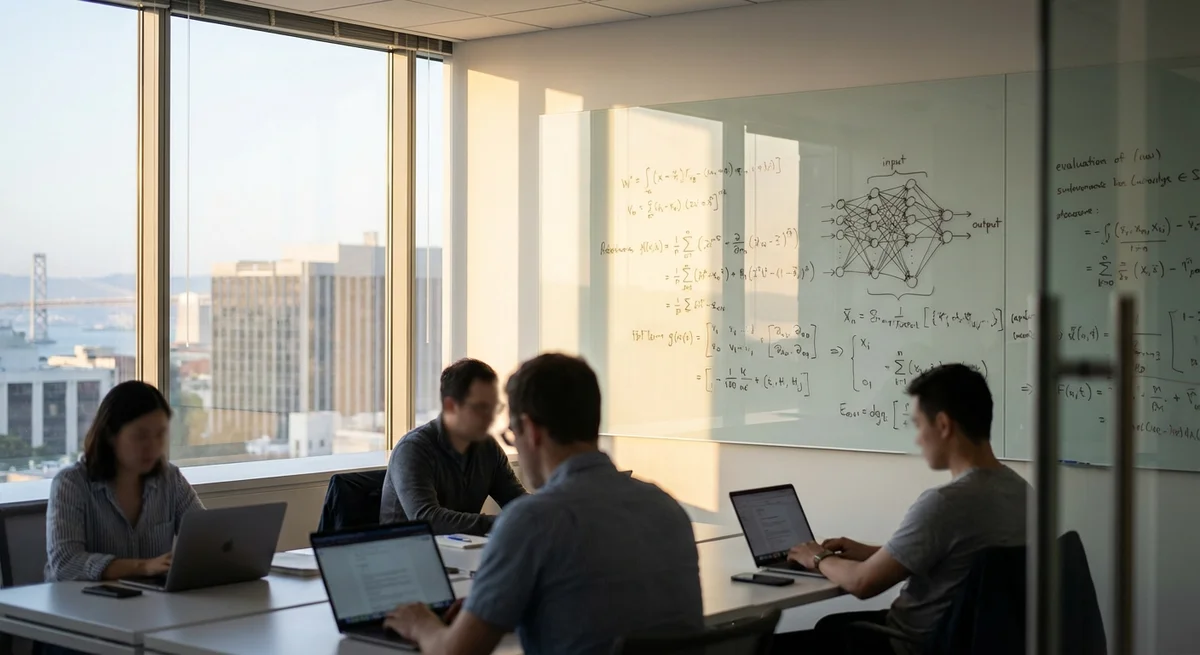
The global race for superintelligence has turned into a contest of wallets and electricity consumption. While Microsoft and Google build data centers worth tens of billions of dollars to feed neural networks even more text from the internet, San Francisco startup Logical Intelligence has decided to swim against the current. It is convinced that the path the market leaders are following leads to a technological dead end, where behind the bright facade of chatbots lies a lack of real understanding of how things work.
Behind Logical Intelligence stands Yann LeCun, Meta's chief AI scientist and one of the three godfathers of modern deep learning. For several years, LeCun has methodically taken apart the current approach to building large language models, on social media and at conferences. His main argument is simple and ironic: an ordinary house cat is smarter than any GPT-4 today, because it has a model of the world. A cat understands gravity, senses space and can plan its actions, while a neural network simply guesses the next most probable word in a sentence.
Logical Intelligence is trying to put the world-model concept into practice. Instead of endlessly predicting the next token, its architecture learns to predict the consequences of actions in reality. This is a fundamental shift in development thinking. We are used to modern AI being a very advanced T9 that has read every book in the world. But LeCun and his team want to build a system that can plan and reason based on internal logic and an understanding of physics, not on the statistical probability of letters appearing.
Why does this matter right now? The industry is starting to hit a ceiling. High-quality training data in the public domain is running out, while model hallucinations, when they lie with confidence, are not going away. Logical Intelligence is betting that real intelligence does not need to read all of Wikipedia to grasp simple truths. A child only needs to see a cup fall to learn the basics of mechanics for good. If the startup manages to carry this biological principle over into code, we will not need personal nuclear reactors to power servers: digital intelligence will become compact, fast and, above all, reliable.
Of course, skeptics in the scaling camp will point out that LeCun's pure mathematics is so far losing to the brute force of huge GPU clusters. But the history of technology is full of examples where an elegant engineering solution eventually beat a bulky giant. Logical Intelligence is now in the same position OpenAI was in seven or eight years ago: a bold idea, a limited budget and the backing of a person who has already radically changed the world once.
If this experiment pays off, we will see the end of the era of classic LLMs. We will stop discussing how politely a chatbot answered a silly question and start talking about systems that can autonomously run complex production lines or make scientific discoveries without the risk of hallucinating a false formula. The industry has been waiting for an alternative, and it seems to be taking concrete shape in the offices of San Francisco.
The bottom line: Will LeCun's approach become a lifeline for the industry or remain a beautiful theory? If Logical Intelligence delivers results, the transformer architecture will go to the museum faster than we can get used to GPT-5.
*Meta has been designated an extremist organization and is banned in Russia.
- Nov 2, 2026Meta's Muse assistant keeps dossiers on loved ones and gets root on Ubuntu by default
- Nov 1, 2026Local models lose to Opus and Codex: 0.21 on a MacBook versus 1.00 for Codex
- Nov 1, 2026Kimi scores 96.2% on a 1C database analytics test and emerges as a fallback if Claude access is blocked
- Nov 1, 2026OpenAI Rewrites GPT Behavior Rules: Five Values and a Chain of Command
Test Frontier LLMs & Autonomous Agents in One Workspace
Run Claude Opus 5.5, GPT-6, Gemini 3.1, and DeepSeek side-by-side in Nomad AI (nomadnet.ai) — unified model routing, deep research, and multimodal workflows under one subscription.
The AI world, distilled — once a week
Seven stories that actually mattered, hand-picked. No noise, no reposts, no press releases.
Done! Check your inbox for a confirmation.