Cerebras vs. everyone: why Benchmark put $225 million behind a single player
Benchmark Capital, usually conservative about how it structures its funds, has taken a rare step: it raised $225 million specifically for Cerebras. The startup makes chips the size of an entire silicon wafer and is aiming at Nvidia's throne. Investors are confident enough that they created a separate vehicle to build up their stake ahead of a likely IPO. In a world where the H100 shortage shapes the policy of governments, Cerebras remains the only company offering a fundamentally different architecture. This is more than an investment: it is a bet that Jensen Huang's monopoly is not permanent.
AI-processed from TechCrunch; edited by Hamidun News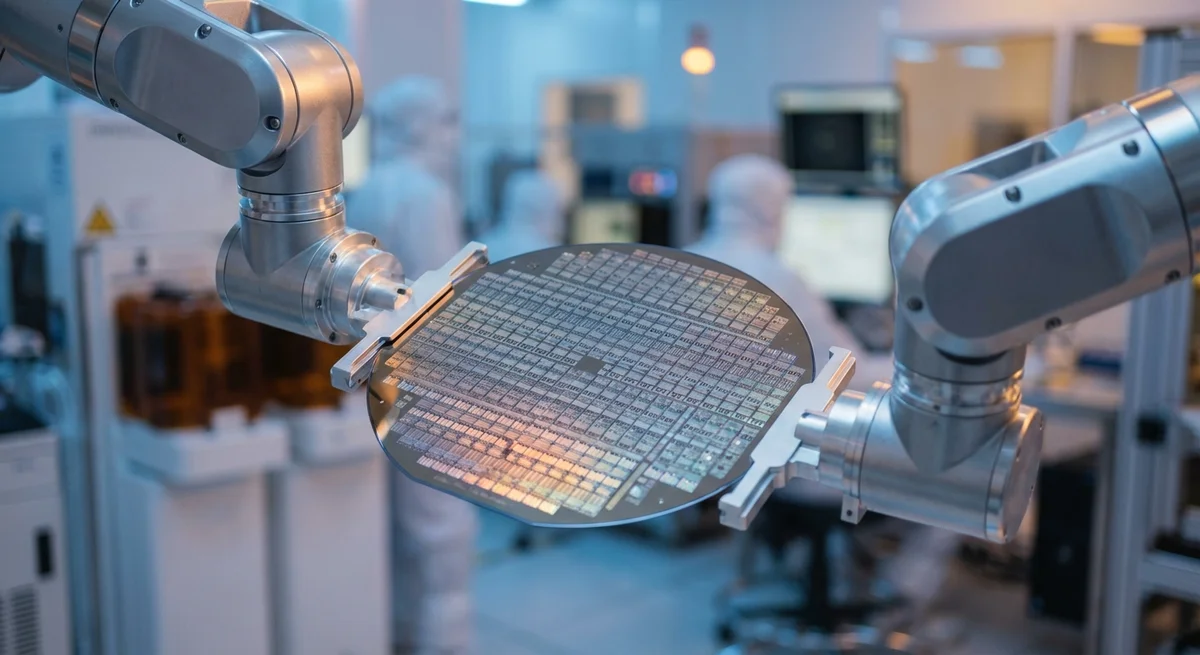
While everyone else is trying to simply buy more Nvidia chips, Benchmark Capital has decided it is time to double down on those who want to replace them. The venture giant has raised a special $225 million fund for a single purpose: pouring even more money into Cerebras Systems. The move looks curious, to say the least, given that Benchmark has historically avoided such "targeted" vehicles in favor of classic funds.
But when the stake is a chance to shake Jensen Huang's dominance, the rules of the game suddenly change. Context matters more than the amount itself: Benchmark has backed Cerebras since 2016, and this new tranche is a clear signal that the company is entering the home stretch before something truly big.
To understand why investors are so excited, it helps to recall what Cerebras actually does. While the rest of the world assembles supercomputers from thousands of small graphics processors linked by a complex web of cables, Cerebras went the way of gigantism. Its flagship product, the Wafer-Scale Engine, is literally one giant chip the size of an entire silicon wafer.
This avoids the main problem of modern computing: latency when moving data between separate chips. In theory, that makes its hardware orders of magnitude more efficient for training huge language models. For a long time, however, theory ran into the harsh reality of manufacturing: printing chips this large without defects is incredibly difficult and expensive.
But judging by Benchmark's activity, the technical barriers are now behind it.
This funding round comes at a critical moment for the whole AI industry. The market is gradually tiring of a single-supplier monopoly. Large cloud providers and sovereign states are looking for alternatives not only because of price, but because of plain scarcity. Cerebras has already landed high-profile deals, including a contract with G42 of the UAE to build one of the most powerful supercomputers in the world. For Benchmark, this is not just support for an old portfolio company but a strategic maneuver. Creating a special-purpose vehicle (SPV) lets it increase its stake in the company right before it goes public or is acquired by one of the big tech firms.
The move also says something about the current venture landscape. This is no time for cautious experiments with pizza-ordering software. Money is flowing to where the foundation of the new economy is being built: hardware. If Cerebras can prove that its architecture scales better than classic GPU clusters, we will see a tectonic shift in how data centers are built. While Nvidia rests on its laurels with a three-trillion-dollar market capitalization, smaller players (by comparison) with a radically different approach are becoming the main hope for preserving competition. Benchmark clearly does not want to stand aside when this bubble, or new reality, finally takes shape.
Ultimately, $225 million is not just cash for operating expenses. It is a front-row ticket to the main show of the decade: the battle over the architecture that will run the superintelligence of the future. Cerebras was long considered an outsider with a crazy idea, but now that idea is backed by nine-figure checks. If its IPO happens within the next twelve months, Benchmark's move will be called brilliant foresight. If Nvidia keeps eating the entire market, it will become an expensive epitaph for attempts to do things differently. But in technology, those who win are the ones willing to bet on "crazy" ideas while everyone else simply follows the crowd.
The bottom line: Benchmark is not just handing over money, it is signaling to the market that Cerebras is ready for the big game. Can one giant chip stop an army of small GPUs?
- Nov 2, 2026Anthropic needs to grow revenue 32% a year to cover $850 billion in contracts
- Nov 2, 2026TensorFold 1.2.0 boosts Qwen3.8-27B throughput on M3 Ultra by 44.2% at 16 streams
- Nov 1, 2026Local models lose to Opus and Codex: 0.21 on a MacBook versus 1.00 for Codex
- Nov 1, 2026Habr author fine-tunes YOLOv8l on dental X-rays and pushes mAP50 to 0.642
Ship AI Faster with Founders, Engineers & Weekly Architecture Reviews
Inside Vibe Club (hamidun.com/club) — weekly live masterminds with Zhemal Khamidun, Tech Radar, full LMS access, and 370+ production Claude Code skills.
The AI world, distilled — once a week
Seven stories that actually mattered, hand-picked. No noise, no reposts, no press releases.
Done! Check your inbox for a confirmation.