Tokyo Electron: Even a Profit Miss Doesn't Shake Its Faith in the AI Boom
Tokyo Electron has raised its full-year forecast even though quarterly profit fell short of expectations. It is an important signal for the market: chipmakers are ready to spend billions on equipment so they don't miss the AI train. While skeptics guess when the bubble will burst, the Japanese company is booking real orders. That confirms that the shortage of capacity for training large language models remains the industry's main problem, and that memory makers (HBM) are becoming the market's new favorites.
AI-processed from Bloomberg Tech; edited by Hamidun News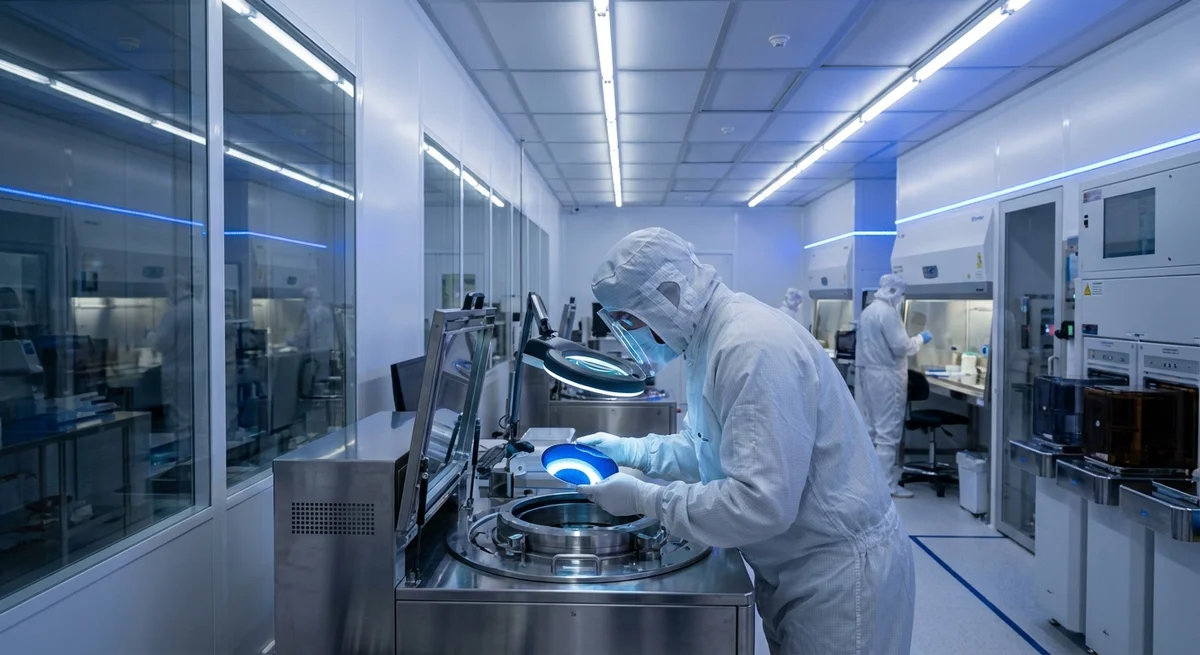
Imagine you sell shovels during a gold rush. Last month's sales fell slightly short of plan because of logistics, but you can see a line forming at your counter: people with suitcases full of cash, demanding the most expensive and durable tools. What do you do?
Right: you tell investors the year will be simply fantastic. That is exactly what is happening now at Japanese giant Tokyo Electron. The company, one of the pillars of global semiconductor equipment manufacturing, recently published a report that might have upset an inexperienced analyst.
Quarterly profit came in below expectations. In ordinary times, the shares of such a company would have plunged. But we live in the age of AI, where the usual rules of economics apply only loosely.
Instead of sprinkling ashes on their heads, Tokyo Electron's management raised its full-year forecast. And the market believed them.
To see why this matters, you need to understand Tokyo Electron's place in the technology food chain. It does not make chips itself. It makes the machines without which giants such as TSMC, Intel or Samsung cannot etch a single transistor into silicon. If Tokyo Electron sees a surge in interest, the whole industry is preparing for a large-scale capacity expansion. It is a leading indicator that tells us more about the future than any presentation from a software startup or any promise to put AI into every toaster. While Apple and other electronics makers wrestle with volatile smartphone demand, the hardware people in Tokyo view the situation with Olympic calm.
Interestingly, the growth driver is not the mass market for gadgets, where some stagnation persists. All the momentum comes from the AI server segment. Memory chipmakers are desperately short of equipment for producing HBM, the high-bandwidth memory that is vital for NVIDIA's graphics processors. Tokyo Electron is the main supplier of tools for the complex three-dimensional "packaging" of these chips. This is a technological frontier where margins are sky-high and the competitors can be counted on one hand. It is this shift from simple microchips to complex multilayer structures that lets the Japanese company look ahead with such optimism.
Many experts outside the industry like to argue that AI is just another bubble about to burst. Tokyo Electron's numbers say otherwise. Bubbles are usually built on expectations and aggressive marketing, but here we see real capital investment in physical equipment. Companies are ready to spend billions of dollars on machines that will take years to pay off. That does not look like the behavior of people expecting the market to crash in six months. It looks more like a large-scale rearmament ahead of a big battle for dominance in the digital space. While NVIDIA draws revenue charts, Tokyo Electron builds the foundation those charts stand on.
The geopolitical context also deserves attention. Japan is actively trying to regain its status as a semiconductor superpower, pouring enormous subsidies into new fabs. Tokyo Electron finds itself at the center of this national revival. Even strict export restrictions on China have not knocked the company off course, because demand from the rest of the world for specialized "AI hardware" more than offsets any losses. Ultimately, the situation confirms an old truth: in any technological revolution, those who supply the infrastructure earn first and most. While LLM developers fight for user attention, Japanese engineers simply keep shipping extremely sophisticated equipment. And judging by their forecasts, the pace of this race will only accelerate.
Key takeaway: If a chip equipment supplier raises its forecasts despite weak current profit, the industry is preparing for an even larger phase of AI buildout. Are we ready for the world's computing capacity to soon be many times greater than it is now?
- Nov 2, 2026TensorFold 1.2.0 boosts Qwen3.8-27B throughput on M3 Ultra by 44.2% at 16 streams
- Nov 1, 2026Local models lose to Opus and Codex: 0.21 on a MacBook versus 1.00 for Codex
- Oct 29, 2026Claude Code Edits Video From a Transcript: How the video-use Skill With 30 000 Stars Works
- Oct 29, 2026Stanford AI tool verifies part of Signal's code in half a day for under $500, versus five months of expert work
Ship AI Faster with Founders, Engineers & Weekly Architecture Reviews
Inside Vibe Club (hamidun.com/club) — weekly live masterminds with Zhemal Khamidun, Tech Radar, full LMS access, and 370+ production Claude Code skills.
The AI world, distilled — once a week
Seven stories that actually mattered, hand-picked. No noise, no reposts, no press releases.
Done! Check your inbox for a confirmation.