GPT-5 in a lab coat: how OpenAI cut protein synthesis costs by 40%
OpenAI has found a better use for GPT-5 than answering silly questions. An autonomous lab run by the new model cut the cost of protein synthesis by 40%. This is not just math on paper: the model controls robots and reagents in real time. While the industry spends billions on R&D, the AI optimizes reaction chains, removing the human factor and unnecessary tests. If the technology moves beyond closed tests, drug development could become more affordable. The key point: OpenAI is aiming at a market that is far more profitable and important than chatbot subscriptions.
AI-processed from Jiqizhixin (机器之心); edited by Hamidun News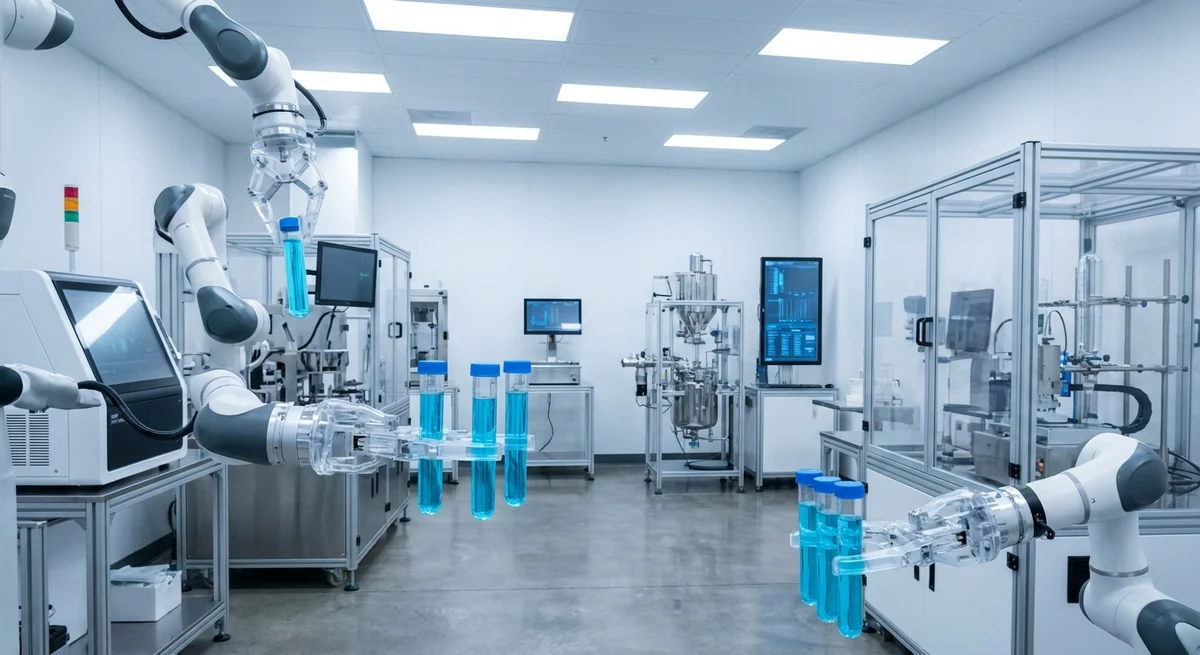
While we were lazily arguing in the comments about when Sam Altman will deign to release GPT-5 to the masses, the people at OpenAI found their new model a job more serious than writing school essays. They sent the neural network into a "wet" lab. The result has biotech giants nervously recalculating their budgets: the cost of protein synthesis fell by a hefty 40%. And this is not just about the AI getting faster at calculations. It began to genuinely run the process.
Protein synthesis has always come down to two things: monstrous complexity and even more monstrous cost. Traditionally it meant an endless series of trials and errors, where every iteration required expensive specialists and even more expensive reagents. One mistake in a single step, and weeks of work go in the trash along with tens of thousands of dollars. OpenAI decided that human intuition gets in the way here more than it helps, and handed the reins of an autonomous lab to its most powerful model.
In this scenario GPT-5 acts not as a reference book but as the operating system of the entire scientific process. It plans experiments, analyzes intermediate data and, most importantly, adjusts the robots' actions on the fly. That helps avoid the dead ends human scientists can spend months on. The model understands process chemistry well enough to predict side reactions before they ruin an entire batch. That predictive accuracy is what produced the 40% saving, through sharply reduced waste and equipment run time.
Why does OpenAI want this? The answer is simple: money and data. The biotechnology and drug development market is measured in trillions, and if you can make the entry ticket to that business half as expensive, you become its master. Moreover, working with the physical world is the best way for AI to escape the "text prison." When a neural network learns to control a manipulator in a lab, it gains an understanding of physics and cause and effect that cannot be extracted from simply reading the internet.
Of course, safety is a concern. Autonomous protein synthesis is not only a cure for cancer but also potentially dangerous pathogens. But judging by everything, OpenAI is currently more concerned with proving the superiority of its architecture over competitors. While Google boasts of AlphaFold's success in predicting structures, OpenAI is taking the next step: it physically creates those structures, and does so faster and cheaper than anyone on the planet.
This case shows clearly that the era of "just chatbots" is coming to an end. We are entering a phase in which AI becomes a physical force able to change the material world. Today it is protein synthesis; tomorrow, new materials for batteries or superconductors. The irony is that while we wait for GPT-5 to get better at jokes, it is already reshaping the foundations of modern medicine, without asking our opinion.
The key point: OpenAI is turning GPT-5 into a universal scientific brain. Will classic pharmaceutical companies be able to compete with a software giant that has simply "hacked" their economics?
- Nov 2, 2026Meta's Muse assistant keeps dossiers on loved ones and gets root on Ubuntu by default
- Nov 1, 2026Local models lose to Opus and Codex: 0.21 on a MacBook versus 1.00 for Codex
- Nov 1, 2026Kimi scores 96.2% on a 1C database analytics test and emerges as a fallback if Claude access is blocked
- Nov 1, 2026OpenAI Rewrites GPT Behavior Rules: Five Values and a Chain of Command
Test Frontier LLMs & Autonomous Agents in One Workspace
Run Claude Opus 5.5, GPT-6, Gemini 3.1, and DeepSeek side-by-side in Nomad AI (nomadnet.ai) — unified model routing, deep research, and multimodal workflows under one subscription.
The AI world, distilled — once a week
Seven stories that actually mattered, hand-picked. No noise, no reposts, no press releases.
Done! Check your inbox for a confirmation.