Google NAI: The Interface That Finally Stops Getting in Your Way
Google has decided it's time to stop tormenting people with standard interfaces. Its new framework, NAI (Natively Adaptive Interfaces), uses AI to change an app's design in real time to fit specific needs. If a user has poor eyesight, or simply can't find the function they need in a maze of settings, the neural network rebuilds everything around them. This is not just a "dark mode" but a deep adaptation of structure. For the industry, this means the end of the static UX era. Software will now be as flexible as the language models themselves. The main question: will designers still have a job?
AI-processed from Google AI Blog; edited by Hamidun News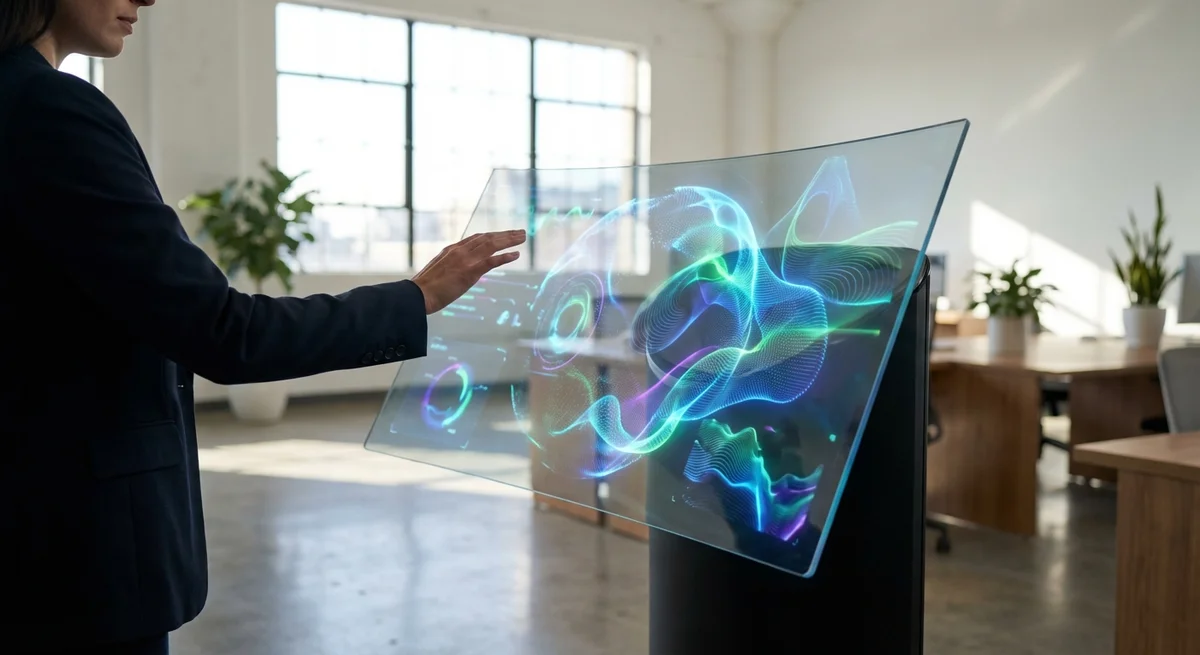
For decades we have lived in a world of rigid grids and fixed buttons. Designers drew mockups, developers built them out, and we, the users, suffered while trying to get used to someone else's vision of "convenience." Have you ever wondered why professional video editing software looks identical to a pro with ten years of experience and to a beginner opening it for the first time? It is an archaism, and Google, it seems, has finally admitted as much. The Natively Adaptive Interfaces (NAI) framework is an attempt to turn a static interface into a "liquid" substance that takes the shape of your needs.
The core idea of NAI is a smart layer between the app's code and the user's eyes. It does not just change the font size; it analyzes context. If the system sees that you keep looking for the same function in a third-level submenu, it moves that function to the main screen. If your finger movements on the screen become unsteady because of fatigue or external conditions, the buttons get bigger and the interface gets cleaner. This is the concept of a "ghost interface" that adjusts to a person's cognitive load at a given moment.
Google puts particular emphasis on accessibility. Previously, developers had to script scenarios by hand for people with visual or motor impairments. That is expensive, slow, and often treated as an afterthought. NAI automates the process. The neural network works out for itself how to rearrange the visual layout so it stays readable and functional. But let's be honest: this is useful for more than inclusivity. It helps all of us when we try to use a map in bright sunlight or control a music player while running.
From a technical standpoint, this is a huge shift. We are moving from Human-Computer Interaction to AI-Mediated Interaction. The developer no longer dictates the final look of the product. They set the rules of the game and supply a set of components, while the AI acts as conductor. This will, of course, horrify brand managers who spent years measuring every pixel of a logo. How do you preserve brand identity if the neural network decides to recolor everything in high-contrast colors and throw out half the decorative elements for the sake of usability?
Interestingly, NAI could be a lifeline for overloaded enterprise systems. Modern CRM and ERP systems look like the control panel of a spaceship, where 90% of the functions are not needed by the average employee. An adaptive interface could hide the excess "noise" and leave only the tools required for the current task. That is not just a time saver; it reduces the stress of working with technology. We would finally stop feeling stupid just because we can't find the "Save" button.
Of course, for now this looks more like an ambitious framework and a set of principles than a finished solution for every Android build. Google has plenty of problems to solve, from performance (having a neural network constantly render the interface eats resources) to predictability. If buttons keep "running away" or changing position, the result can backfire: user disorientation. But the direction is right: software should serve people, not force people to serve its instructions.
The bottom line: the era of universal interfaces "for everyone" is coming to an end. Are designers ready to become curators of the rules by which AI reassembles their work, rather than people who draw buttons?
- Nov 2, 2026Bun creator uses Claude Code to port 750K lines from Zig to Rust in 11 days
- Nov 2, 2026The Verge reviewer builds a $50 Meta Muse Charm alternative with Claude Code
- Nov 1, 202616 models tested on 7 search tools: Exa averaged 10.5 out of 14, SearXNG about 3
- Nov 1, 2026Google's StreamVibe video agent beats other models by 10.7% on response timing and quality
Test Frontier LLMs & Autonomous Agents in One Workspace
Run Claude Opus 5.5, GPT-6, Gemini 3.1, and DeepSeek side-by-side in Nomad AI (nomadnet.ai) — unified model routing, deep research, and multimodal workflows under one subscription.
The AI world, distilled — once a week
Seven stories that actually mattered, hand-picked. No noise, no reposts, no press releases.
Done! Check your inbox for a confirmation.