Digital Fatigue: Hollywood Discovers Audiences Don't Like AI
Hollywood has run into an unexpected problem: "AI fatigue." Over the past year, projects that lean heavily on generative models, or that exploit the machine-uprising theme, have performed poorly. Audiences either don't buy the "sterile" imagery or are tired of predictable plots. After the writers' strikes, studios hoped to save money on content, but the market has its own rules. Technical polish turns out not to replace sincerity, and the "uncanny valley" still unsettles mainstream viewers. The industry will have to rethink its approach to innovation if it wants to avoid losing its audience for good.
AI-processed from Wired; edited by Hamidun News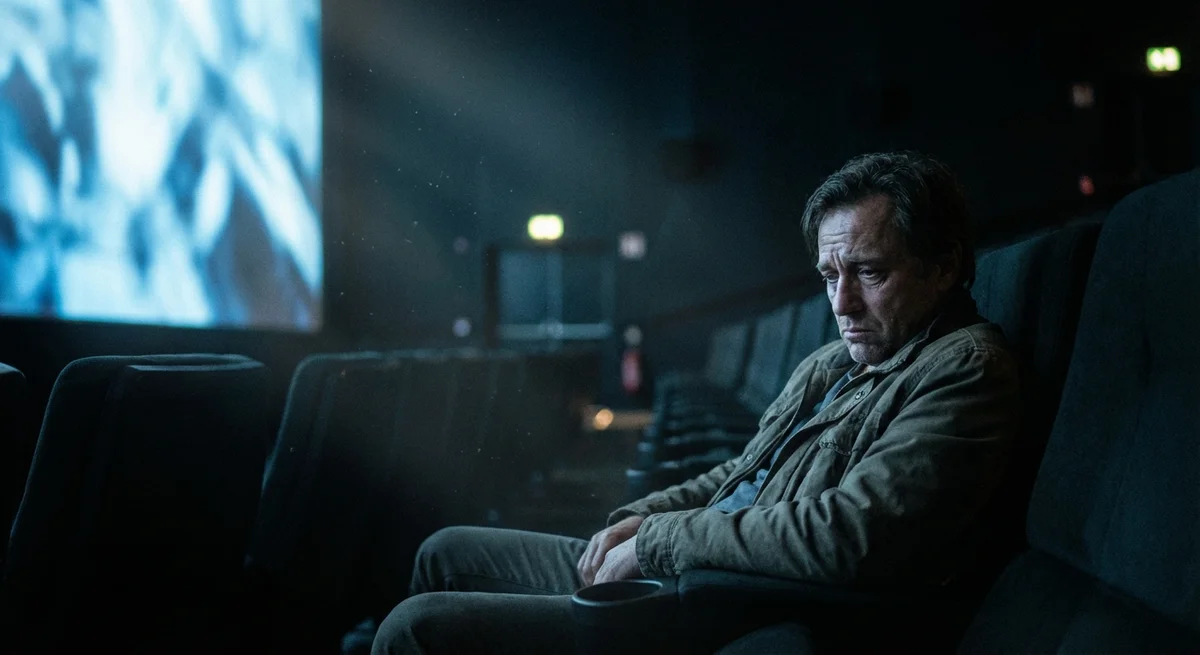
Remember how we were promised that neural networks would make filmmaking cheaper, faster and perhaps even better? A year ago, every other producer in Los Angeles was dreaming of generative models replacing expensive graphics departments and, who knows, temperamental screenwriters. Reality, as it often does, turned out to be far more ironic. Instead of a triumph for technology, we are seeing a phenomenon already dubbed "AI fatigue." Viewers have simply stopped "buying" the digital substitute, and that is becoming a serious problem for an industry already in poor shape after protracted strikes and the pandemic crisis.
The root of the problem lies not only in image quality but in how the product feels. After social media feeds filled up with "flawless" images from Midjourney and videos from Runway, the average viewer's eye grew numb. What once looked like magic now reads as cheap visual noise. When a moviegoer sees a frame that suspiciously resembles neural-network output, the magic of cinema evaporates instantly. We are facing a new form of the "uncanny valley," one that has nothing to do with jerky character movements and everything to do with the emotional emptiness of what is on screen.
Context plays a key role here. All last year, Hollywood was shaken by protests from writers and actors fighting to protect their rights from the expansion of algorithms. The public sided with the people in that conflict. As a result, any mention of AI in the making of a film is now seen not as a technological breakthrough but as an attempt by the studio to save money on human talent. This has created a negative halo around projects that might have succeeded but fell victim to anti-AI sentiment. Marketers who once proudly announced their use of neural networks are now frantically trying to hide it to avoid provoking a boycott.
The story side has suffered too. The theme of artificial intelligence in film has been done to death over the past couple of years. Audiences are tired of formulaic stories about self-aware robots or sinister algorithms taking over the world. With real news about OpenAI or Anthropic breaking every day, Hollywood scripts start to look either too naive or hopelessly outdated. The entertainment industry simply can't keep up with the pace of real technology, and ends up serving a product like yesterday's salad: technically edible, but not appetizing.
What does this mean for the future? Most likely, we are headed for a rollback to "craft" cinema. Just as viewers came to value practical effects in the spirit of Christopher Nolan during the age of CGI overload, the time of "made by humans" marketing is arriving. Studios will begin to highlight the absence of AI in their projects as a mark of quality and exclusivity. The technology isn't going anywhere; it will stay in the toolkit of editors and colorists, but it will stop being the face of advertising campaigns. Audiences again want a human being, with all his mistakes and imperfections, because that is what makes a story feel alive.
The bottom line: Hollywood will have to accept that AI is just a sophisticated hammer, not a replacement for the carpenter. Will studios be able to win back the audience's trust, or will "human cinema" become an expensive delicacy for the chosen few?
- Nov 2, 2026NC State's AICG Framework Cuts MAE by 50.3% on Math Answer Grading
- Nov 2, 2026We Audited 929 Automations at Alpina: What Corporate AI Training Should Look Like in 2026
- Nov 2, 2026I Interrogated 6 AI Models About Myself Through a Procurement Manager's Eyes: Amazon, Esoterica, 'Telo Hudelo' and 5 Holes We Closed in a Day
- Nov 2, 2026TJ Digital: 23% of AI-cited pages open with a direct answer, versus 14% of uncited ones
Test Frontier LLMs & Autonomous Agents in One Workspace
Run Claude Opus 5.5, GPT-6, Gemini 3.1, and DeepSeek side-by-side in Nomad AI (nomadnet.ai) — unified model routing, deep research, and multimodal workflows under one subscription.
The AI world, distilled — once a week
Seven stories that actually mattered, hand-picked. No noise, no reposts, no press releases.
Done! Check your inbox for a confirmation.