ChatGPT in the Oncologist's Office: How AI Helps People Make Life-and-Death Decisions
AI in medicine is moving out of theory and becoming a survival tool. A family in the US used ChatGPT to make sense of a complex cancer treatment plan for their son. Instead of drowning in medical jargon, they used the chatbot as a translator from doctor-speak into plain language. It is not a replacement for doctors but a way to prepare for critically important conversations. OpenAI is actively promoting this case to show the humanitarian side of the technology. The key point: AI does not make a diagnosis, but it helps patients ask the right questions, shifting the balance of power in healthcare and making the patient an informed participant in the process.
AI-processed from OpenAI Blog; edited by Hamidun News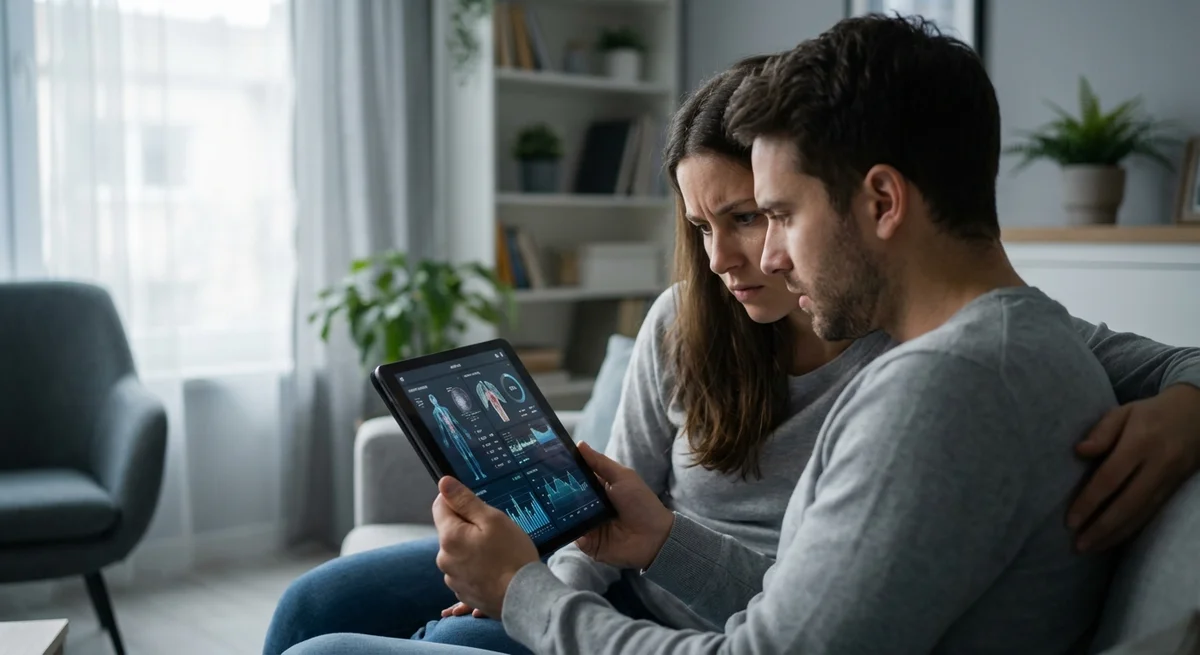
We have all been there: you feel a strange pain in your side, and your hand reaches for the search bar on its own. Five minutes of reading dubious forums later, you are mentally picking out a coffin. But the era of "Dr. Google" is slowly fading. "Dr. GPT" is taking its place, and it is a lot more serious than it looks at first glance. The recent story of a family who faced cancer in their child, which OpenAI is now actively highlighting, forces a fresh look at why we need these huge language models at all, given that they sometimes cannot correctly count the letters in a word.
When your child receives a grave diagnosis, the world shrinks to the size of a treatment room. Doctors speak in Latin and complex abbreviations, while the parents' heads are full of white noise. In this situation, ChatGPT worked not as a replacement for the oncologist but as a highly skilled translator. The family used the chatbot to fight their way through dense scientific papers and treatment protocols. They fed the model discharge summaries and asked it to explain what a particular blood marker meant. That let them arrive at appointments not as victims of circumstance but as prepared partners, with clear, tough questions written in a notebook.
Let's be honest: OpenAI badly needs stories like this right now. Amid endless copyright lawsuits and alarming forecasts about neural networks taking our jobs, a story about saving a life looks like the perfect PR shield. Yet behind the marketing facade lies a real tectonic shift. We are watching the birth of the "patient 2.0." Deep medical knowledge used to be a monopoly of people in white coats. Now anyone with a twenty-dollar subscription gets access to an analytical tool that has read almost the entire medical library of the world and can synthesize that data in seconds.
Of course, there is a huge catch that cannot go unmentioned. AI hallucinations about which font to pick for a presentation are amusing. Hallucinations about chemotherapy dosage are a catastrophe. OpenAI carefully stresses that ChatGPT only helped the family prepare for the conversation with the doctor and did not prescribe treatment on its own. But we understand that the line is very thin. The temptation to fully trust an algorithm that speaks confidently and calmly is enormous in moments of panic. For now, regulators such as the FDA watch this with quiet horror, unsure how to certify software that can give different answers to the same query every day.
Nevertheless, this case opens a new chapter in the history of healthcare. Doctors often complain about lack of time: they have fifteen minutes per patient, and half of that goes to filling out tedious paperwork. If AI takes on the role of educator, explaining the basics of a patient's condition and treatment options, it could relieve the system. We are heading toward a future where everyone has a personal medical assistant that knows your genetic map and medical history better than your general practitioner, who sees you once a year for a routine checkup.
The only question is whether we are ready for this transparency. When a patient knows as much about their illness as the doctor, the familiar hierarchy collapses. That demands a new level of empathy and professionalism from medics, and the strictest control over data accuracy from AI developers. This family's story is only the first swallow. Soon, using ChatGPT in a hospital will be as natural as using a thermometer or a stethoscope. We are entering an era where access to information stops being a barrier, but responsibility for decisions still rests with the human.
The bottom line: AI will not replace the doctor in the coming years, but a patient with an AI assistant will quickly push out the passive patient of the old school. Are you ready to argue with your doctor with the power of a supercomputer behind you?
- Nov 2, 2026Arca gives AI agents finance tasks lasting up to 10 days, but leaves the trades to humans
- Nov 2, 2026Meta's Muse assistant keeps dossiers on loved ones and gets root on Ubuntu by default
- Nov 1, 2026Local models lose to Opus and Codex: 0.21 on a MacBook versus 1.00 for Codex
- Nov 1, 2026Kimi scores 96.2% on a 1C database analytics test and emerges as a fallback if Claude access is blocked
Test Frontier LLMs & Autonomous Agents in One Workspace
Run Claude Opus 5.5, GPT-6, Gemini 3.1, and DeepSeek side-by-side in Nomad AI (nomadnet.ai) — unified model routing, deep research, and multimodal workflows under one subscription.
The AI world, distilled — once a week
Seven stories that actually mattered, hand-picked. No noise, no reposts, no press releases.
Done! Check your inbox for a confirmation.