MIT AI Ethics: Philosopher Brian Hedden Will Try to Instill a Conscience in Algorithms
MIT has named philosophy professor Brian Hedden associate dean for the Social and Ethical Responsibilities of Computing (SERC). Working alongside Nikos Trichakis, he will build ethics into the core of how technical students are taught. It is an attempt by MIT to move away from "code for code's sake" and get future developers to think about the consequences of their algorithms at the design stage. In a world where AI affects everything from medicine to court rulings, this dose of common sense looks like a critical necessity, not just a nod to fashion.
AI-processed from MIT News; edited by Hamidun News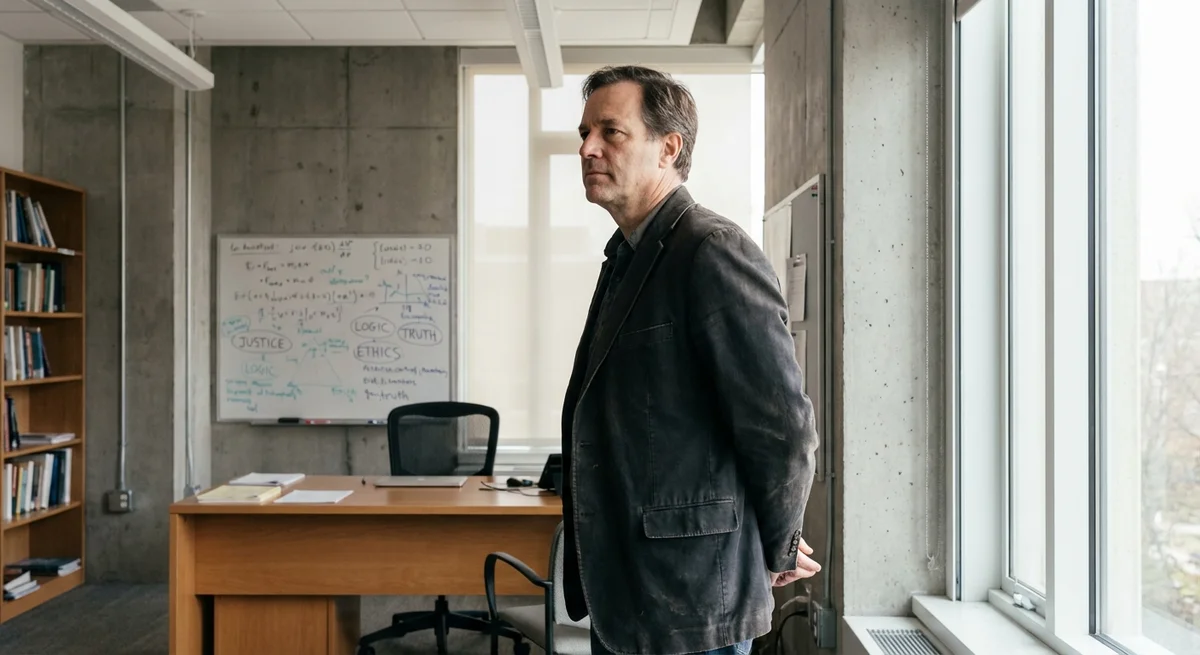
While Silicon Valley races ahead under the motto "break everything you see," MIT has decided it is time to add a little adult judgment to the mix. Brian Hedden's appointment as associate dean for ethics and social responsibility at the Schwarzman College of Computing is not just another line in the staffing table. It is an official acknowledgment that pure code without a moral compass is becoming a tool with unpredictable consequences. Hedden, a professional philosopher, joins SERC (Social and Ethical Responsibilities of Computing) to bring order to how technology interacts with society.
For a long time, ethics in IT was something like an elective: a nice but optional add-on to a course on data structures or processor architecture. Programmers were taught to optimize loops, but rarely asked to consider whether their face recognition model discriminates against certain groups of people. Now the rules of the game have changed. After algorithms began to directly influence political processes, medical diagnoses and even whether a person gets a loan, ignoring the "human factor" has become simply dangerous. MIT Schwarzman College, created in 2018 with money from billionaire Stephen Schwarzman, was meant from the start to take an interdisciplinary approach, and Hedden's appointment is a logical continuation of that strategy.
Brian Hedden specializes in epistemology and rationality. That may sound like something from dusty textbooks, but it is exactly what is needed to debug modern neural networks. How do we make decisions? What is objectivity in a world where data is biased from the start? How do you build a system that is not just "efficient" but also fair? MIT has realized that these questions cannot be answered with patches and Python library updates alone. The thinking of the people who create those libraries has to change.
Together with his colleague Nikos Trichakis, Hedden will embed ethics modules directly into technical disciplines. The idea is simple and ambitious at once: make sure a student writing code for an autonomous drone or a scoring system sees the red flags right away. It is an attempt to raise a new generation of engineers who stop shrugging and saying, "I just write code, I'm not responsible for how it's used." Hedden will have to explain to technical people why "performance" is not the only KPI that matters in the modern world, and far from the most important one.
The whole world is now watching the arms race between giants like OpenAI and Google. In this rush, ethical considerations are often sacrificed to release speed and investor appeal. Putting a philosopher in a leadership role at the planet's leading technical university sends a strong signal to the whole industry. MIT wants to be the benchmark not only for the power of its computing clusters, but for how that power will serve people rather than harm them. If the world's best technical university is betting on philosophy, the era of irresponsible techno-optimism is officially coming to an end.
Of course, one can skeptically note that a single philosopher in the dean's office will not stop corporate appetites and will not solve the "black box" problem of AI. Still, MIT's systemic approach may set an important precedent. If large companies start requiring their employees to have not only knowledge of algorithms but also an understanding of social responsibility, the development landscape will change for good. We may see more transparency and less blind faith in the infallibility of machines.
The key question: will ethics become a real filter for dangerous technologies, or remain a pretty storefront for regulators?
- Nov 2, 2026Meta's Muse assistant keeps dossiers on loved ones and gets root on Ubuntu by default
- Nov 1, 2026Local models lose to Opus and Codex: 0.21 on a MacBook versus 1.00 for Codex
- Nov 1, 2026Kimi scores 96.2% on a 1C database analytics test and emerges as a fallback if Claude access is blocked
- Nov 1, 2026OpenAI Rewrites GPT Behavior Rules: Five Values and a Chain of Command
Test Frontier LLMs & Autonomous Agents in One Workspace
Run Claude Opus 5.5, GPT-6, Gemini 3.1, and DeepSeek side-by-side in Nomad AI (nomadnet.ai) — unified model routing, deep research, and multimodal workflows under one subscription.
The AI world, distilled — once a week
Seven stories that actually mattered, hand-picked. No noise, no reposts, no press releases.
Done! Check your inbox for a confirmation.