ACM Fellows 2025: Antonio Torralba and MIT's Big Showing in the IT Hall of Fame
The ACM Fellows award is something like an Oscar for computer science: it goes not to one successful project but to a contribution that changed the industry. In 2025, MIT professor Antonio Torralba joined the list alongside three distinguished MIT graduates. Torralba taught neural networks to see the world not as a set of pixels but as a structured space. His work on computer vision and human perception underpins almost every modern system, from self-driving cars to image generators. Having four people from MIT on the list confirms that academic foundations still matter more than Silicon Valley marketing presentations.
AI-processed from MIT News; edited by Hamidun News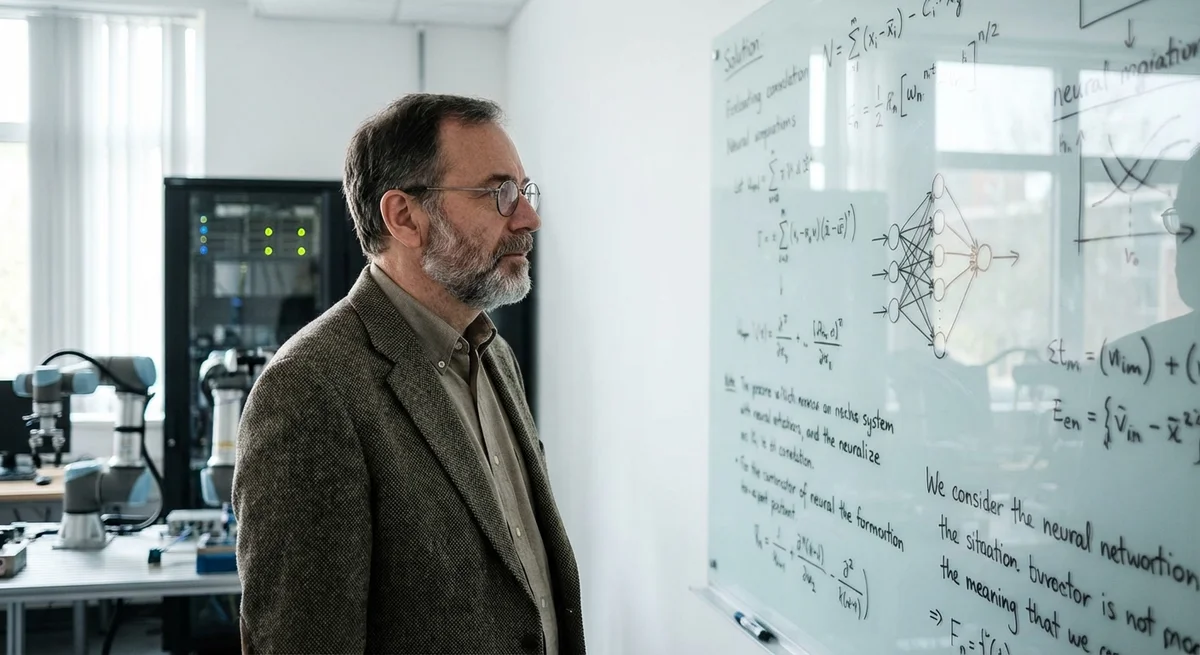
In a world where AI news updates faster than you can finish your morning coffee, it is sometimes worth stopping to look at the people who build the foundation of this madness. The Association for Computing Machinery (ACM) has published its list of new 2025 fellows. If you do not follow academic honors, here is the short version: becoming an ACM Fellow is like getting a named star on the Hollywood Walk of Fame, except instead of handprints you leave behind algorithms that all of humanity will use. This year's central figure is Antonio Torralba of MIT, and the recognition looks entirely logical, even a little overdue.
Antonio Torralba is a legend in narrow circles. While most researchers in the early 2010s were simply trying to get a computer to tell a cat from a dog, Torralba dug deeper. He was interested in how humans perceive visual context. Why do we understand that a chair is a chair even if it is upside down or partly hidden by a table? He combined machine learning with cognitive science, building the basis for what we now call modern computer vision. If your smartphone recognizes your face in the dark or at an angle, know that a piece of Torralba's thinking is in there.
But this triumph was not a solo one. Three MIT graduates made the list alongside the professor, turning the ACM announcement into a real showcase for the Boston school. That is an important signal for the industry. We are used to thinking that everything interesting happens in the closed labs of OpenAI or Google DeepMind. Yet the list of new Fellows reminds us that the brains now driving corporate commercial products came out of the same university lecture halls. Pushmeet Kohli of DeepMind, who also made the list, is a vivid example. His path from fundamental research to overseeing the safety of the world's most powerful models shows how academic thinking turns into real power.
Why does this matter to you and me? Because ACM awards are the best indicator of where investment will flow over the next five years. The recognition of Torralba and his colleagues says that the era of "simple" deep learning is ending. The industry needs more complex systems that understand the physics of the world and the logic of human behavior. We are moving toward robotics and autonomous systems that must do more than process data: they need something like common sense. And the work of this year's honorees serves as the blueprint for those systems.
The mild irony is that, amid endless arguments over whether AI will replace humans, ACM keeps honoring people whose work shows that we are still trying to copy the human brain and are infinitely far from doing it. Torralba has always stressed that computer vision is not only mathematics but also psychology. Until we understand how our own consciousness works, we will only build very complex but still limited imitations. Recognizing such scientists takes us back to the roots and reminds us that behind every "revolutionary" model lie decades of work with datasets and hypotheses that looks boring at first glance.
Ultimately, the 2025 ACM Fellows list is not about the past but about the future. It confirms that MIT continues to hold intellectual leadership despite the colossal budgets of the tech giants. For us, that means the next AI breakthroughs will most likely come not from simply adding more GPUs to a data center, but from new ways of understanding how information turns into knowledge. Antonio Torralba and his colleagues have already marked out that path; all we can do is watch how fast the industry manages to follow it.
The takeaway: The dominance of MIT graduates on the ACM Fellows list shows that fundamental science still dictates the rules of the game. Will corporations be able to keep up their pace of innovation without constant input from academia?
- Nov 2, 2026Meta's Muse assistant keeps dossiers on loved ones and gets root on Ubuntu by default
- Nov 1, 2026Local models lose to Opus and Codex: 0.21 on a MacBook versus 1.00 for Codex
- Nov 1, 2026Kimi scores 96.2% on a 1C database analytics test and emerges as a fallback if Claude access is blocked
- Nov 1, 2026OpenAI Rewrites GPT Behavior Rules: Five Values and a Chain of Command
Test Frontier LLMs & Autonomous Agents in One Workspace
Run Claude Opus 5.5, GPT-6, Gemini 3.1, and DeepSeek side-by-side in Nomad AI (nomadnet.ai) — unified model routing, deep research, and multimodal workflows under one subscription.
The AI world, distilled — once a week
Seven stories that actually mattered, hand-picked. No noise, no reposts, no press releases.
Done! Check your inbox for a confirmation.