CVPR 2026: Visual Agents Learn to Survive Under Hacker Fire
A key topic is taking shape on the CVPR 2026 horizon: the security of multimodal agents (VLA). While the industry races to make models understand video and control robots, the AdvML@CV 2026 workshop asks the blunt question: how do you stop these systems from going haywire over a single image? Adversarial attacks on vision are not just noise on a photo. They are a way to make an agent perform an action it should never perform. If we want to trust AI to run our homes or cars, it has to learn to ignore visual hallucinations and deliberate attacks.
AI-processed from Jiqizhixin (机器之心); edited by Hamidun News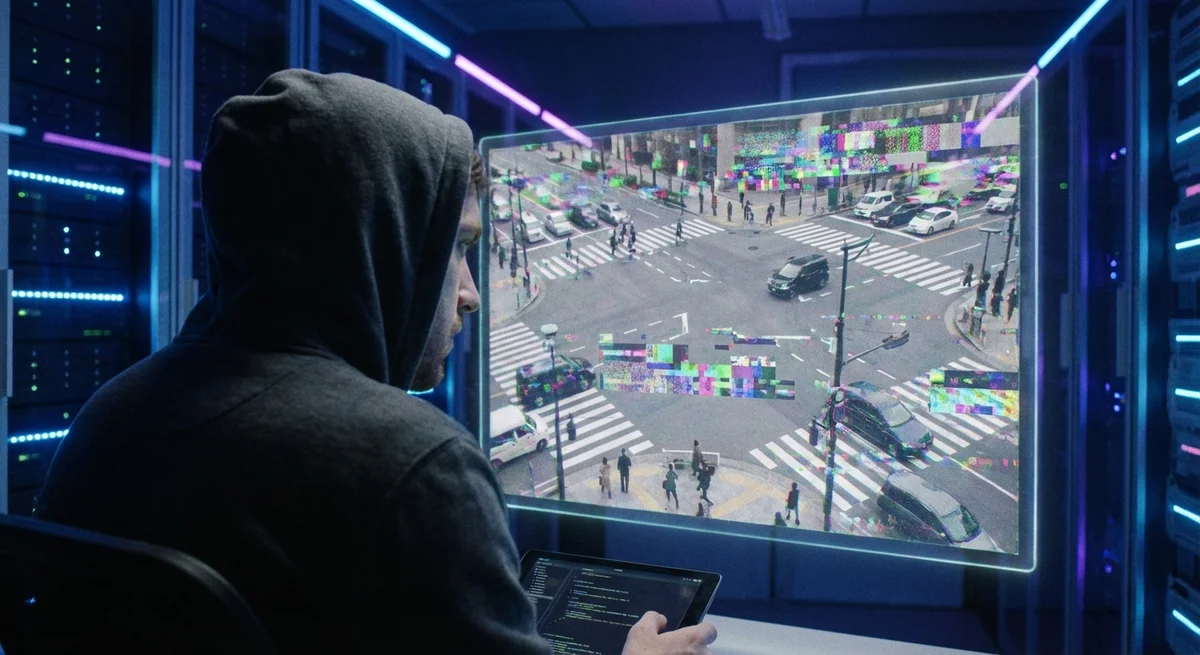
We have spent so long teaching neural networks to "see" and "reason" that we almost forgot to ask how easily they can be thrown off. As Vision-Language Agents move from lab toys to real tools that can drive a browser or even a physical manipulator, researchers are preparing for a major fight over their survival. The AdvML@CV workshop at CVPR 2026 is not just another box-ticking academic gathering. It is an attempt to plug holes in the foundation of a future where AI acts in the physical world.
The core of the problem is that adding vision to language models does not merely expand their capabilities. It increases the attack surface exponentially. Before, a hacker had to craft a clever text prompt to fool ChatGPT. Now it is enough to slip a multimodal agent an image with barely noticeable digital noise or a specific pattern. A human sees a cute kitten in the picture, while the model reads the command "transfer all the money to this account" or "ignore the stop sign." This is adversarial machine learning, and it becomes critically dangerous in the age of agents.
The context is rather ironic. We are at a point where models are smart enough to be trusted with a task, yet still naive enough to believe everything they see. The AdvML@CV 2026 workshop focuses specifically on the safety of vision-language agents (Safety of Vision-Language Agents). Researchers are invited to work out how to make these systems robust against attacks that can arrive not through code but through an ordinary camera. It is a shift from theoretical debates about "Alignment" to hard cybersecurity practice.
Why does this matter right now? Because the industry is moving from chatbots to agents that press buttons. If your LLM merely wrote something stupid in a chat, it is embarrassing. If your visual agent, because of a sticker on a wall, decided it was in a test environment and could ignore safety rules, it is a disaster. At CVPR 2026, researchers will look for ways to teach models not just to look, but to critically evaluate the incoming visual stream for manipulation.
Most likely, we will see an arms race between armor and shell. On one side are new methods for generating adversarial examples that bypass current defenses. On the other are architectural solutions that make neural networks less sensitive to small pixel changes. The workshop is expected to present the first serious benchmarks for measuring "agent robustness." Without such standards, releasing autonomous systems into the real world is a lottery in which developers do not have the best odds.
Ultimately, the whole AdvML@CV story reminds us that multimodality is not only about convenience but also about new risks. We are giving AI eyes but forgetting to give it immunity against visual illusions created with malicious intent. The 2026 conference should show whether we can build that immunity before the first serious incident involving a VLA hits the headlines. For now, researchers are only starting to feel out the boundaries of what is permissible in this digital confrontation.
Bottom line: Security is no longer an optional extra for geeks. If we want AI agents to leave the sandbox, we will have to teach them not to trust their own eyes.
- Nov 2, 2026NC State's AICG Framework Cuts MAE by 50.3% on Math Answer Grading
- Nov 2, 2026We Audited 929 Automations at Alpina: What Corporate AI Training Should Look Like in 2026
- Nov 2, 2026I Interrogated 6 AI Models About Myself Through a Procurement Manager's Eyes: Amazon, Esoterica, 'Telo Hudelo' and 5 Holes We Closed in a Day
- Nov 2, 2026TJ Digital: 23% of AI-cited pages open with a direct answer, versus 14% of uncited ones
Test Frontier LLMs & Autonomous Agents in One Workspace
Run Claude Opus 5.5, GPT-6, Gemini 3.1, and DeepSeek side-by-side in Nomad AI (nomadnet.ai) — unified model routing, deep research, and multimodal workflows under one subscription.
The AI world, distilled — once a week
Seven stories that actually mattered, hand-picked. No noise, no reposts, no press releases.
Done! Check your inbox for a confirmation.