Waymo: $16 Billion to Make You Forget About Drivers for Good
Waymo has raised $16 billion at a $126 billion valuation. While rivals like Cruise try to recover from scandals and Tesla is still preparing Cybercab presentations, Alphabet is moving into a phase of aggressive scaling. Waymo's driverless cars now complete more than 100,000 paid rides a week in several US cities. The money will go toward expanding the fleet and launching the service in new regions. It sends the market a clear signal: the era of experiments is over, and the fight for real share of a multibillion-dollar passenger transport business has begun. The entry ticket to the industry, it seems, is now measured in tens of billions.
AI-processed from Bloomberg Tech; edited by Hamidun News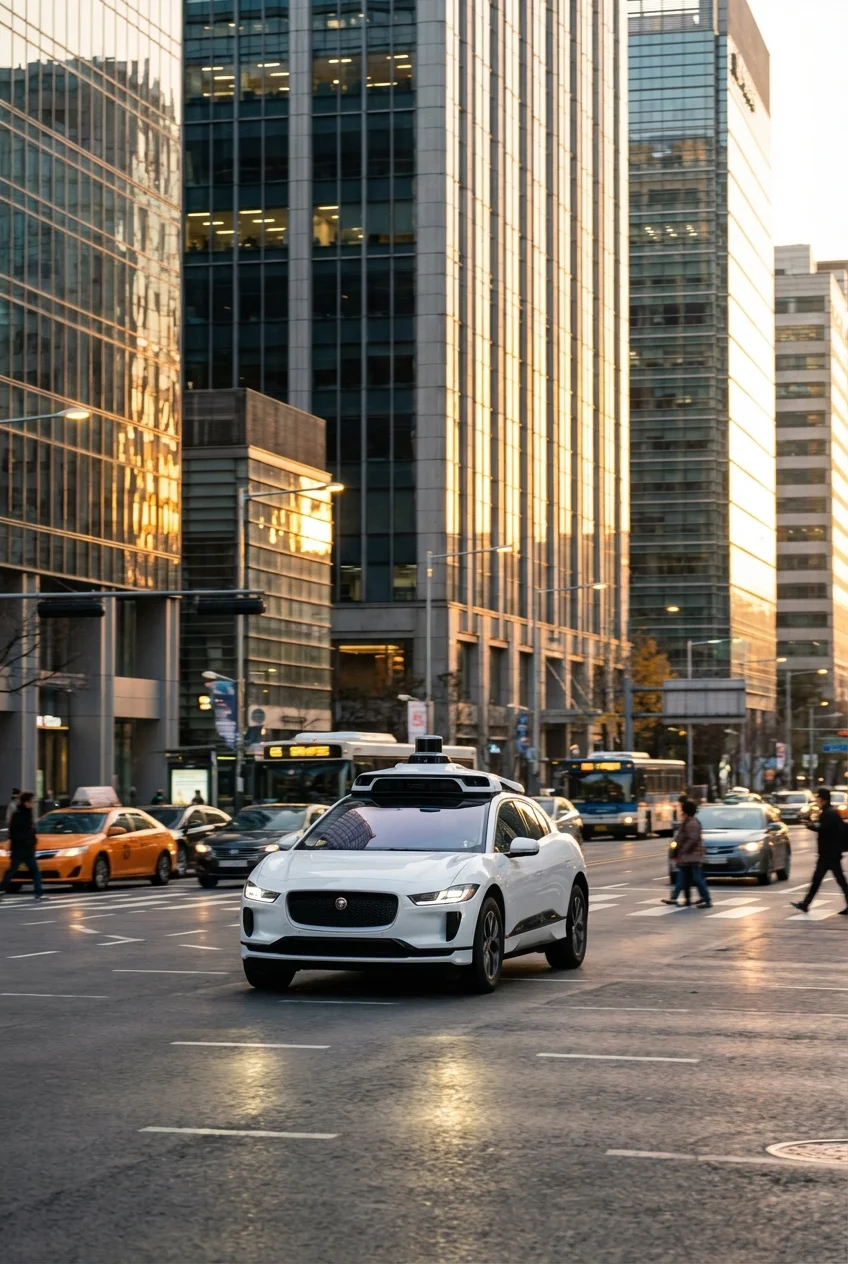
While Elon Musk feeds his audience promises of an imminent triumph for the Vision-only approach, Waymo is methodically taking the market. Its latest funding round of $16 billion at a $126 billion valuation is not just dry financial reporting. It is a moment of truth for the entire autonomous vehicle industry. Alphabet and outside investors have effectively acknowledged that the technology is ready and it is time to scale. Waymo is now worth more than Ford and General Motors combined, an ironic verdict on the traditional auto industry.
For a long time, Waymo was seen as Google's "expensive toy." While Uber panicked and sold off its autonomous driving unit, and Ford and Volkswagen shut down the ambitious Argo AI, Alphabet kept methodically burning billions in the furnace of R&D. The "slow and steady wins the race" strategy worked. Today, white crossovers with lidars on the roof are a familiar part of the landscape in Phoenix, San Francisco and Los Angeles. These are no longer prototypes with engineers in the front seat but a full commercial service that completes more than 100,000 rides every week. People trust algorithms with their lives and, more important to investors, they pay for it.
Why did Alphabet decide to bring in outside money right now? The answer lies in the need to expand. Maintaining a fleet of thousands of high-tech vehicles and developing the software demand colossal spending. Raising $16 billion lets the company do more than survive: it can dictate terms. Waymo can now afford to push aggressively into new cities, undercut prices and squeeze out traditional ride-hailing aggregators. This is a long game, and the winner will be whoever has the resources to last until the cost per mile of a driverless car drops below the cost of a bus ride.
Comparison with competitors only underlines Waymo's dominance. Cruise, GM's subsidiary, is still trying to recover from the incident in which it struck a pedestrian and the subsequent revocation of its license. Tesla keeps insisting that cameras will replace lidars, but it has still not launched a full robotaxi service without human supervision. Against this backdrop, Waymo looks like the only adult in the room. The company has shown that a combination of lidars, radars and highly complex neural networks delivers the necessary level of safety, and large funds such as Silver Lake and Fidelity are ready to bet on it.
For the whole AI industry, this round signals a shift. We are moving from discussing "smart chatbots" to deploying artificial intelligence in the physical world at industrial scale. Autonomous transport is arguably the hardest exam for AI, and Waymo is heading for the gold medal. But a reasonable question arises: are we creating a monster that will eventually monopolize all urban traffic? If the entry price for the business is $100 billion, there is practically no room left for competition in the future.
Bottom line: Alphabet is turning Waymo into the Amazon of the transport world. Will anyone else manage to jump onto this departing train, or are we watching the birth of an absolute monopolist?
- Nov 2, 2026Bun creator uses Claude Code to port 750K lines from Zig to Rust in 11 days
- Nov 2, 2026The Verge reviewer builds a $50 Meta Muse Charm alternative with Claude Code
- Nov 1, 202616 models tested on 7 search tools: Exa averaged 10.5 out of 14, SearXNG about 3
- Nov 1, 2026Google's StreamVibe video agent beats other models by 10.7% on response timing and quality
Ship AI Faster with Founders, Engineers & Weekly Architecture Reviews
Inside Vibe Club (hamidun.com/club) — weekly live masterminds with Zhemal Khamidun, Tech Radar, full LMS access, and 370+ production Claude Code skills.
The AI world, distilled — once a week
Seven stories that actually mattered, hand-picked. No noise, no reposts, no press releases.
Done! Check your inbox for a confirmation.