Picasso in Your Pocket: How Doubao Is Changing the Rules in Museums
ByteDance has turned its flagship AI, Doubao, into the official guide of the Shanghai Art Museum (MAP). The app, with more than 100 million daily active users (DAU), no longer just generates text: it leads full tours of the Picasso and Louvre exhibitions. Powered by the multimodal model Seed1.8, the service recognizes artifacts in real time through a smartphone camera, accounting for lighting and context. This is the first time an AI has officially replaced traditional audio guides in a project of this scale. For ByteDance, it is not merely an image move, but a way to make elite art accessible to a mass audience through an "empathetic" interface.
AI-processed from 36Kr (36氪); edited by Hamidun News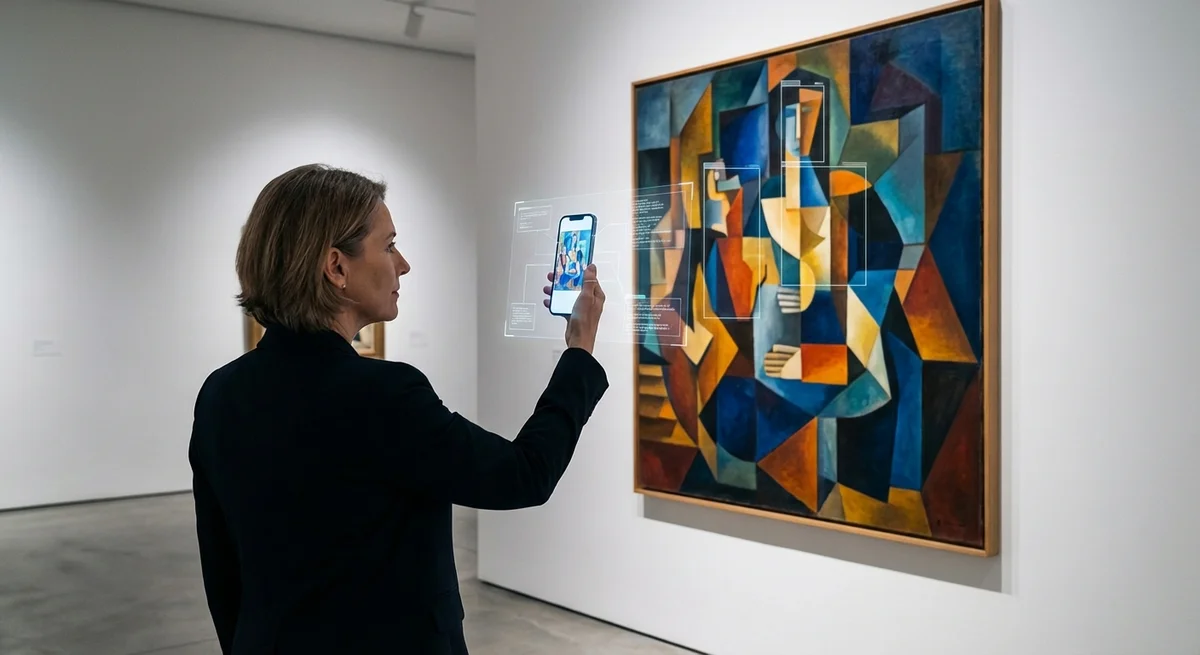
The Pudong branch of the Shanghai Art Museum is unusually noisy right now, but the sound isn't coming from tour groups. Visitors stand frozen in front of Picasso's masterpieces, pointing their smartphones at them and holding quiet conversations. On the other end is Doubao, the main AI asset of the ByteDance empire. While Western corporations polish their models in labs, the Chinese tech giant has taken a product with 100 million daily active users (DAU) straight into museum halls. The project is now the official digital guide for two large exhibitions: a collection from the Louvre and a retrospective of Pablo Picasso.
The art industry has long needed a shake-up. The problem has always been the same: a shortage of quality interpretation. Professional guides are scarce, their services are expensive, and audio guides from the last century only bore visitors with their monotone drone. ByteDance saw an ideal niche to show off the power of its algorithms. Now the AI does not just pull a reference from a database; it enters an "empathetic dialogue," helping viewers connect personal experience with the brushstrokes on the canvas. It is an attempt to turn elite knowledge into a digital product available to everyone.
The technical core of this transformation is the Seed1.8 model. Its developers claim it has reached SOTA (State-of-the-Art) in perceiving and understanding video streams. Unlike older systems that required you to take a photo and wait for an answer, Doubao works in streaming interaction mode. It understands what you are looking at even if your hands shake and the lights in the gallery are dimmed. The AI distinguishes subtle differences between 15th-century Iranian ceramics and Ming dynasty Chinese porcelain, relying on visual nuances that often escape a non-specialist's eye.
ByteDance Vice President Zhu Jun stresses that interacting with AI is, above all, a conversation. In the museum, Doubao does not simply deliver a lecture; it asks guiding questions. For example, looking at Picasso's painting "Reading," a user can ask how the atmosphere of silence is created. The AI will not stop at the date of the work: it will analyze the soft curves and color blocks and link them to the artist's muse, Marie-Thérèse Walter. This is a level of analysis that used to require, at minimum, an art history degree in your pocket.
Doubao was previously trained on objects from the National Museum of China and seven other major venues in the country. But the Pudong museum case is a step onto the international stage. ByteDance optimized its algorithms specifically for 300 exhibits from the Louvre and 80 works by Picasso, even taking the architecture of the exhibition space into account. This sets a precedent: AI stops being just a "smart search" and becomes a full intermediary between complex culture and the mass consumer.
For the industry, this is a clear signal. Multimodal models (LMMs) have definitively moved beyond chatbots and begun to take on the physical world. If we used to ask an AI "what should I cook with these ingredients," we now ask "why did this artist choose this particular blue." ByteDance is betting that our main contact with reality will in future pass through a layer of artificial intelligence that explains, supplements and interprets everything we point a camera at.
Bottom line: ByteDance has successfully turned an AI assistant into a cultural intermediary, solving the shortage of live experts. Will this be the end of the museum guide profession, or the start of a new era of enlightenment?
- Nov 2, 2026The Verge reviewer builds a $50 Meta Muse Charm alternative with Claude Code
- Nov 2, 20268 Skills for video in Claude Code: from 244 pixel effects to rough-cut editing
- Nov 1, 2026Pika Labs releases open video model H3 Flex: 6 steps instead of 50
- Nov 1, 2026Google's StreamVibe video agent beats other models by 10.7% on response timing and quality
Test Frontier LLMs & Autonomous Agents in One Workspace
Run Claude Opus 5.5, GPT-6, Gemini 3.1, and DeepSeek side-by-side in Nomad AI (nomadnet.ai) — unified model routing, deep research, and multimodal workflows under one subscription.
The AI world, distilled — once a week
Seven stories that actually mattered, hand-picked. No noise, no reposts, no press releases.
Done! Check your inbox for a confirmation.