Why AI Image Generators Restrict Output: Censorship and Safety
A Habr post raises a question: why are neural networks barred from generating the nude human body, even though it has long been displayed in museums and used in education? The author examines the philosophical paradox of AI censorship and tries to work out who actually sets these rules. The article starts from a simple contrast: the same content that is routinely seen in museums, private spaces and teaching materials is blocked in generative AI systems.
AI-processed from Habr AI; edited by Hamidun News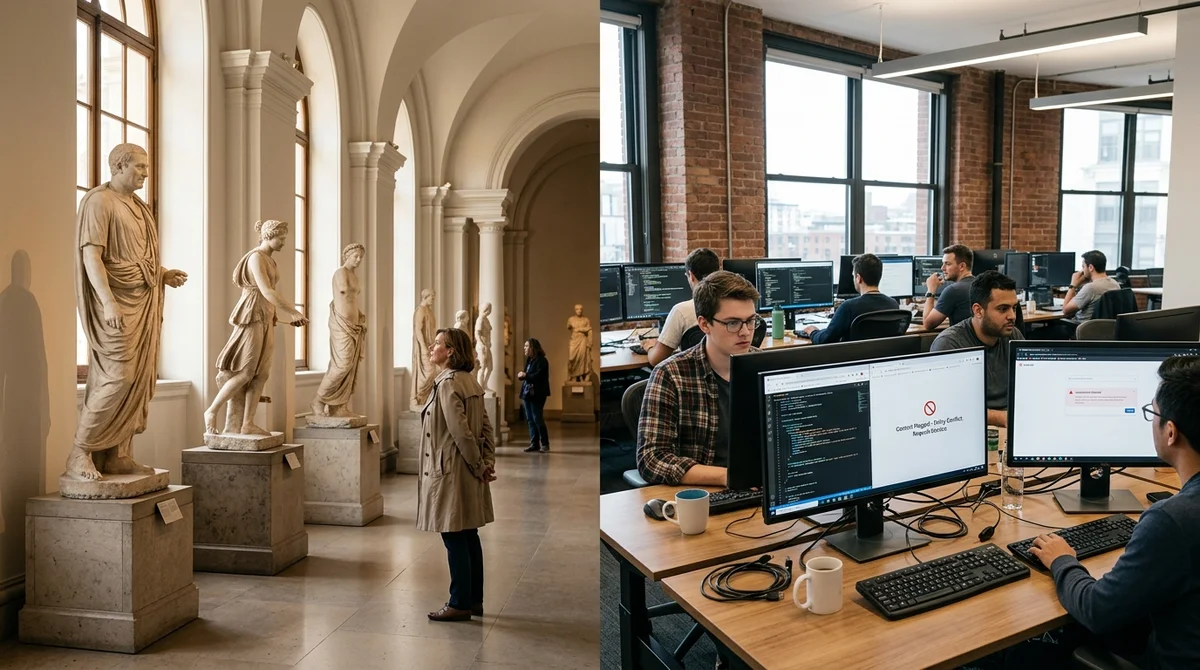
Why are generative neural networks forbidden from reproducing certain content, when it can be seen freely in museums, private spaces and teaching materials?
*Meta has been designated an extremist organization and is banned in the Russian Federation.
What restrictions apply to generative neural networks?
The nude human body is a classic subject in art history. It is used in museums and in medical and anatomy education, yet generative AI systems block it, which creates a paradox in how rules for artificial intelligence are established.
- Nov 2, 2026Meta's Muse assistant keeps dossiers on loved ones and gets root on Ubuntu by default
- Nov 2, 2026The Verge reviewer builds a $50 Meta Muse Charm alternative with Claude Code
- Nov 1, 2026MoneyGate safety layer blocked all 42 fraudulent requests to local AI models
- Oct 31, 2026Open-source LLM gateway KTMS 1.0 plugs your own GPUs into the cloud and survives outages
Test Frontier LLMs & Autonomous Agents in One Workspace
Run Claude Opus 5.5, GPT-6, Gemini 3.1, and DeepSeek side-by-side in Nomad AI (nomadnet.ai) — unified model routing, deep research, and multimodal workflows under one subscription.
The AI world, distilled — once a week
Seven stories that actually mattered, hand-picked. No noise, no reposts, no press releases.
Done! Check your inbox for a confirmation.