Klarna and Google: AI Agents Are Finally Learning to Spend Your Money
Swedish fintech giant Klarna has decided it is time to give AI agents a wallet. The company has endorsed two Google protocols: Universal Commerce Protocol (UCP) and Agent Payments Protocol (AP2). Today's neural networks are great at planning a vacation but stall when it comes to paying for the booking. The new standards are meant to create a "common language" between smart assistants and payment systems. For Klarna, it is a strategic move. After mass layoffs and shifting customer support to AI, the company is aiming to become the main financial backend for autonomous agents. If the standard catches on, the familiar routine of shopping by clicking through links may become a thing of the past.
AI-processed from AI News; edited by Hamidun News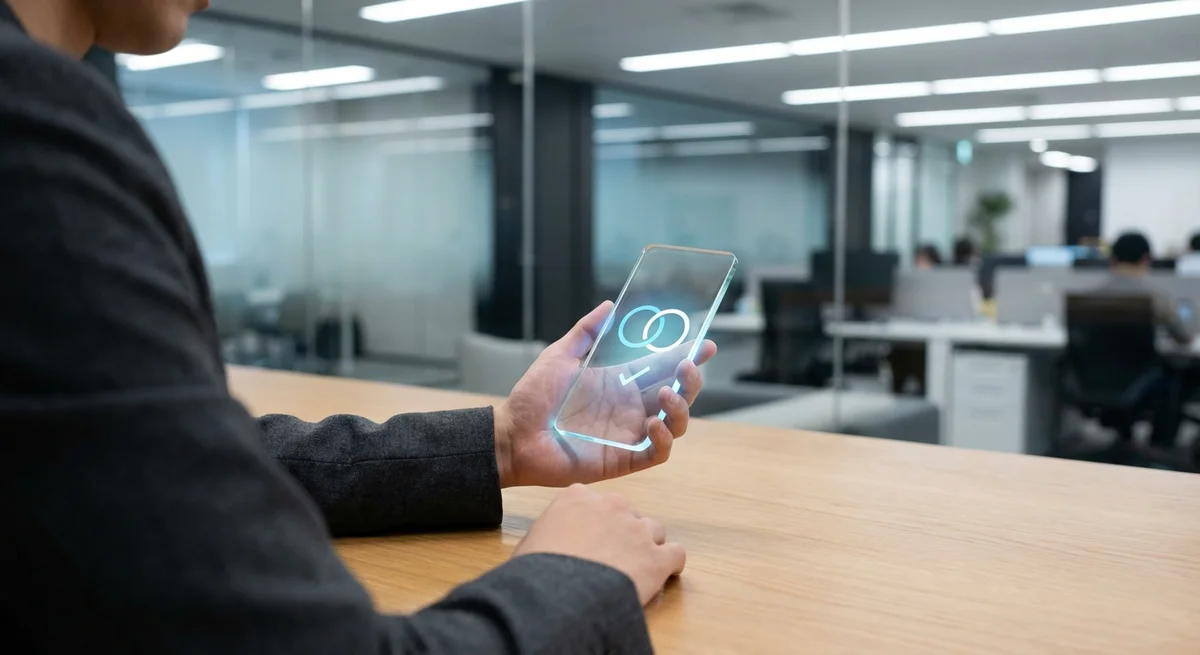
For a long time, our conversations about artificial intelligence sounded like talk about a brilliant but utterly helpless friend. It can write Python code, draft a workout plan and even argue about the meaning of life, but ask it to order a pizza or buy movie tickets and it immediately admits its own powerlessness. The problem is not that AI is dumb.
It is that it has no hands to pull the credit card out of your virtual pocket. Or rather, it did not until now. Swedish fintech giant Klarna, which has recently been aggressively reshaping its business model around the needs of neural networks, has announced support for Google's new protocols: Universal Commerce Protocol (UCP) and Agent Payments Protocol (AP2).
To grasp the scale of the news, it helps to recall what Klarna has become over the past year. From a simple "buy now, pay later" service, the company has turned into a testing ground for AI. It replaced hundreds of customer support employees with a single chatbot, cut marketing costs thanks to generative content, and is now taking the next logical step.
If the world is heading toward an "agentic economy," where autonomous programs act on our behalf, those programs need a single transaction standard. Google's UCP is an attempt to create that Esperanto of commerce, one that lets any AI agent seamlessly find products and, more importantly, pay for them without a human in every intermediate browser window.
Right now, buying through AI looks like one workaround stacked on another. You ask ChatGPT to find sneakers, it gives you a link, you click through to the site, enter your card details and choose delivery. That is not agent work; it is just advanced search. Klarna's support for Google's standards means the financial infrastructure is ready for a world where the buyer is an algorithm. An AI agent will be able to contact the payment gateway directly, confirm that funds are available and complete the purchase, using your preferences and budget limits. It is a fundamental shift in how e-commerce works: we are moving from a model built on "user attention" to one built on "algorithm efficiency."
Why does this matter right now? The LLM industry has hit a ceiling with plain text generation. Everyone wants actions. OpenAI, Anthropic and Google are actively working on agents that can control a browser. Without payment standardization, however, each such agent would have to "learn" from scratch how to deal with millions of different payment forms across websites. UCP addresses this fragmentation. For Google, it is a way to keep control over commerce flows; for Klarna, a chance to become the default bank for a new digital race of assistants. If you own the protocol that money moves through, you own the market.
Of course, this raises plenty of questions about security and ethics. How ready are we to trust a model that sometimes hallucinates with access to our bank account? Klarna and Google promise that the protocols will include strict authorization mechanisms, but the irony is that we are building a system in which the human becomes the weakest link in the chain of consumption. In the future, your fridge could negotiate a milk delivery with a store's AI agent, and Klarna would process the transaction while you sleep. That sounds like a utopia for the lazy and a nightmare for anyone used to controlling their spending.
The key question: will the Google–Klarna tandem become the gold standard, or will Apple and Amazon, with their closed ecosystems, push it aside?
- Nov 2, 2026Karpathy builds a YouTube clone with 6454 videos from Hacker News recommendations in two hours
- Nov 2, 2026Karpathy used Claude to build HackerTube from 6,454 videos recommended on Hacker News
- Nov 2, 2026Anthropic needs to grow revenue 32% a year to cover $850 billion in contracts
- Nov 2, 2026Bun creator uses Claude Code to port 750K lines from Zig to Rust in 11 days
Test Frontier LLMs & Autonomous Agents in One Workspace
Run Claude Opus 5.5, GPT-6, Gemini 3.1, and DeepSeek side-by-side in Nomad AI (nomadnet.ai) — unified model routing, deep research, and multimodal workflows under one subscription.
The AI world, distilled — once a week
Seven stories that actually mattered, hand-picked. No noise, no reposts, no press releases.
Done! Check your inbox for a confirmation.