SaaS Under Fire: Why AI Is Driving Investors Out of the Cloud
Traditional SaaS is facing an existential crisis. Investors are dumping cloud stocks en masse, afraid that generative AI will make classic software unnecessary. The core problem is the per-seat pricing model. If one AI agent can do the work of ten employees, software vendors' revenue will inevitably collapse. The market is demanding a shift to paying for results, but the old giants are not ready for it. This is not just a correction; it is the beginning of the end for the era of classic cloud subscriptions.
AI-processed from Bloomberg Tech; edited by Hamidun News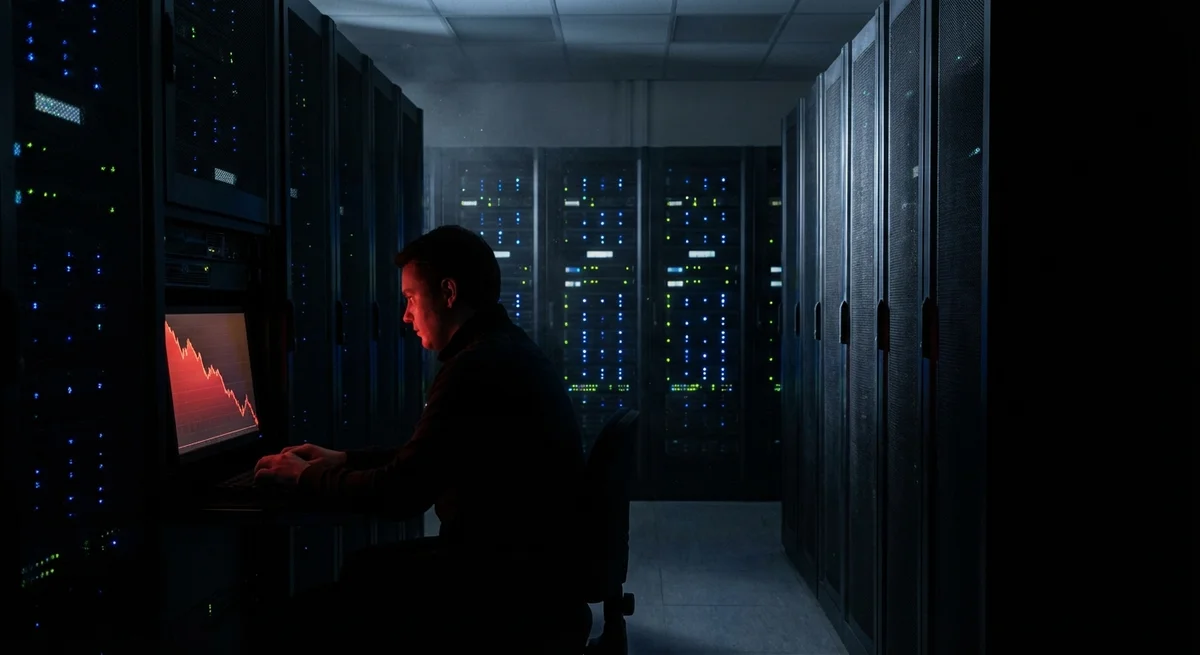
The cloud software market now looks like a party that the police have just burst into, switching off the music. For ten years we heard that software was eating the world and that the subscription model was a perpetual profit machine. But the latest reports from Salesforce, Workday and other sector giants sent investors running for the exits in terror.
Shares are falling by tens of percent in a day, and this is not just temporary weakness. We are watching a large-scale reassessment of values, in which the main threat has turned out to be the very artificial intelligence everyone was counting on. The context is simple: a decade of cheap money let companies bloat their headcount and buy hundreds of software licenses that often sat idle.
Now the rules of the game have changed.
The core problem lies in the DNA of modern SaaS: the per-user, or so-called per-seat, pricing model. This system worked perfectly as long as company growth meant hiring more people. More people meant more licenses, which meant higher vendor revenue.
But generative AI and autonomous agents break that logic over their knee. If processing inbound leads in a sales department used to take twenty people with CRM licenses, tomorrow one operator and a couple of smart scripts will handle it. For the customer that means efficiency and savings, but for Salesforce it means revenue falling tenfold.
Investors have finally realized that AI automation is a zero-sum game for traditional cloud services. The more effectively AI works, the fewer people the system needs, and the less money the software developer receives.
Companies like Klarna are already openly saying that they are freezing hiring and dropping part of their corporate software in favor of in-house AI solutions. That sets a dangerous precedent. Why pay millions of dollars a year for a heavyweight platform when you can build a custom agent on top of GPT-4 or Claude, tailored precisely to your processes? The old players are trying to defend themselves by embedding AI assistants in their interfaces, but it often looks like bolting a jet engine onto a cart. Customers do not want to pay for AI as an add-on; they want AI to simply solve their problems. That leads to an unavoidable shift from paying for access to paying for results.
For Wall Street's giants, moving to a consumption-based or outcome-based model looks like a nightmare. It makes revenue unpredictable and forces companies to answer for the actual value of their product. You can no longer sell a three-year contract and forget about the customer. Now your algorithm has to genuinely work and deliver profit. In this new reality, the advantage goes not to whoever has the longest feature list, but to whoever is most deeply integrated into workflows and holds unique data for training models. Vertical AI built for specific niches is starting to displace horizontal platforms that tried to be everything to everyone.
The main question now is whether the old cloud kings can restructure in time. So far their attempts look unconvincing. They are squeezed between the need to invest billions in AI infrastructure and the slowing growth of their core revenue. Investors see this and are shifting money into hardware and pure infrastructure, leaving application software in the "red zone." We are entering a period of great purge, in which only those who can prove their product is not just a convenient spreadsheet in the cloud but indispensable intelligence will survive. The era of easy money from subscriptions is officially over, and from here it will only get more interesting.
Bottom line: The per-user pricing model is dying under pressure from AI agents, and the market will have to learn anew how to value software.
- Nov 2, 2026Bun creator uses Claude Code to port 750K lines from Zig to Rust in 11 days
- Nov 2, 2026mcp-linter finds 18 undescribed parameters in Anthropic's filesystem server
- Nov 2, 2026The Verge reviewer builds a $50 Meta Muse Charm alternative with Claude Code
- Nov 2, 20268 Skills for video in Claude Code: from 244 pixel effects to rough-cut editing
Test Frontier LLMs & Autonomous Agents in One Workspace
Run Claude Opus 5.5, GPT-6, Gemini 3.1, and DeepSeek side-by-side in Nomad AI (nomadnet.ai) — unified model routing, deep research, and multimodal workflows under one subscription.
The AI world, distilled — once a week
Seven stories that actually mattered, hand-picked. No noise, no reposts, no press releases.
Done! Check your inbox for a confirmation.