India Is Buying the Future: 20 Years Tax-Free for Your Servers
India has decided that data sovereignty is worth more than tax revenue. The government is making international cloud providers an unprecedented offer: 20 years of tax breaks in exchange for building data centers inside the country. The goal goes beyond attracting capital. It is a strategic move to turn India into a global hub for training neural networks. With compute in short supply and the US and China locked in trade wars, Delhi is building a "safe harbor" for Big Tech. If the plan works, Asia's infrastructure landscape will change for good.
AI-processed from CNews AI; edited by Hamidun News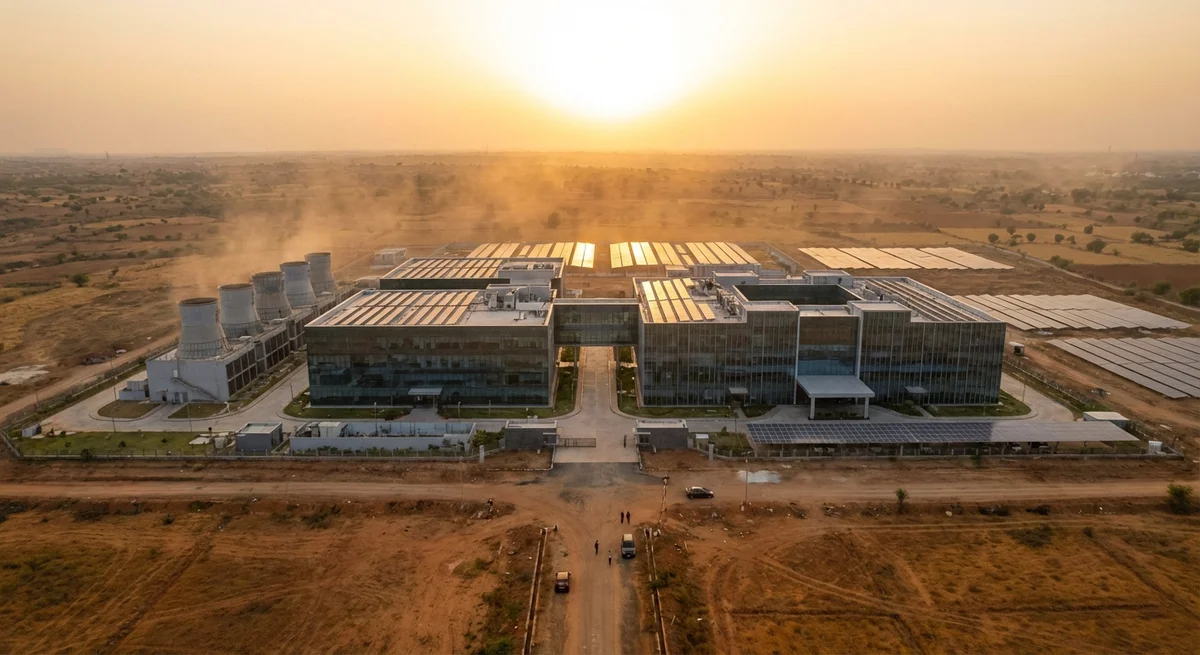
In tech, twenty years is close to an eternity. Two decades ago, we were just getting used to the idea that the internet could fit in a pocket; today we argue about whether an algorithm will replace us. The Indian government appears to be thinking on exactly that timescale. It has offered international cloud providers a tax deal that is very hard to refuse: a twenty-year tax holiday for anyone willing to build data centers in the country. This is neither a goodwill gesture nor a long-term play to fill the budget. It is an aggressive bet that data and compute will become the oil of the twenty-first century.
Consider the context. Europe is busy with endless regulation and GDPR compliance checks, while the US and China are stuck in a permanent tech cold war. India is looking for its own path. The country stopped being merely the "world's back office" staffed by cheap programmers long ago. Now Delhi wants to become the world's server room. Infrastructure has always been the problem: unreliable power, bureaucracy, and difficult logistics often scared off giants like Amazon Web Services and Microsoft Azure. An offer to forget about taxes for two decades is a powerful antidote to any investor concerns.
India understands one simple thing: artificial intelligence doesn't live in a vacuum. It needs physical servers, terawatts of energy, and cooling. If models are trained inside the country, India gets jobs, control over its citizens' data, and technological sovereignty. Now that "data sovereignty" has moved out of the textbooks and become a matter of national security, owning domestic compute is critical. Narendra Modi's government is clearly signaling that it will sacrifice short-term gains to become an indispensable link in the global AI supply chain ten years from now.
There are, of course, pitfalls. Building a data center is only half the job. It also needs uninterrupted power, which is no easy task given India's climate challenges. On top of that, incentives like these will inevitably raise questions among local players. Could foreign giants simply squeeze out domestic startups by exploiting preferences that no one else gets? Still, the stakes are high enough that the government considers these risks justified. India wants to jump onto the departing train of the AI revolution as the owner of the train, not a passenger.
What does this mean for the market? Expect compute capacity to migrate to South Asia faster. If Nvidia keeps dominating the chip market and India gives those chips tax-"free" homes, the balance of power in Big Tech could shift significantly. Microsoft, Google, and Amazon are already investing heavily in the region, but an incentive like this could push them to rethink their global roadmaps. It's essentially an invitation to a party where entry is free and the music will keep playing for the next twenty years.
The bottom line: India is shifting from exporting brains to importing hardware, using tax dumping as a geopolitical weapon. Can other countries offer anything comparable, or has Delhi already booked its spot as the decade's leading AI hub?
- Nov 1, 2026Google taught its StreamVibe video agent to decide when to step in on its own: +10.7%
- Nov 1, 2026OpenAI Rewrites GPT Behavior Rules: Five Values and a Chain of Command
- Nov 1, 2026Voice bots built on LLMs turn to Jev, a fast classifier, for decisions in 200–500 ms
- Nov 1, 2026Google admits AI Mode cuts search revenue, shares fall 15%
Test Frontier LLMs & Autonomous Agents in One Workspace
Run Claude Opus 5.5, GPT-6, Gemini 3.1, and DeepSeek side-by-side in Nomad AI (nomadnet.ai) — unified model routing, deep research, and multimodal workflows under one subscription.
The AI world, distilled — once a week
Seven stories that actually mattered, hand-picked. No noise, no reposts, no press releases.
Done! Check your inbox for a confirmation.