A Tax Haven in Delhi: India Offers Data Centers 20 Years of Quiet
India is going on the offensive. To become a leading hub for cloud computing and AI, the government is introducing an unprecedented 20-year tax holiday for foreign data center operators. This is a strategic move in an era of compute shortages, not just a bid for capital. While the US and China argue over sanctions, India is offering a quiet harbor with minimal costs. For NVIDIA, Google, and Microsoft, it's a chance to cut operating expenses dramatically. If the plan works, the center of gravity of the global internet will shift noticeably south, and India will lock in its status as a key player in the neural network race.
AI-processed from Bloomberg Tech; edited by Hamidun News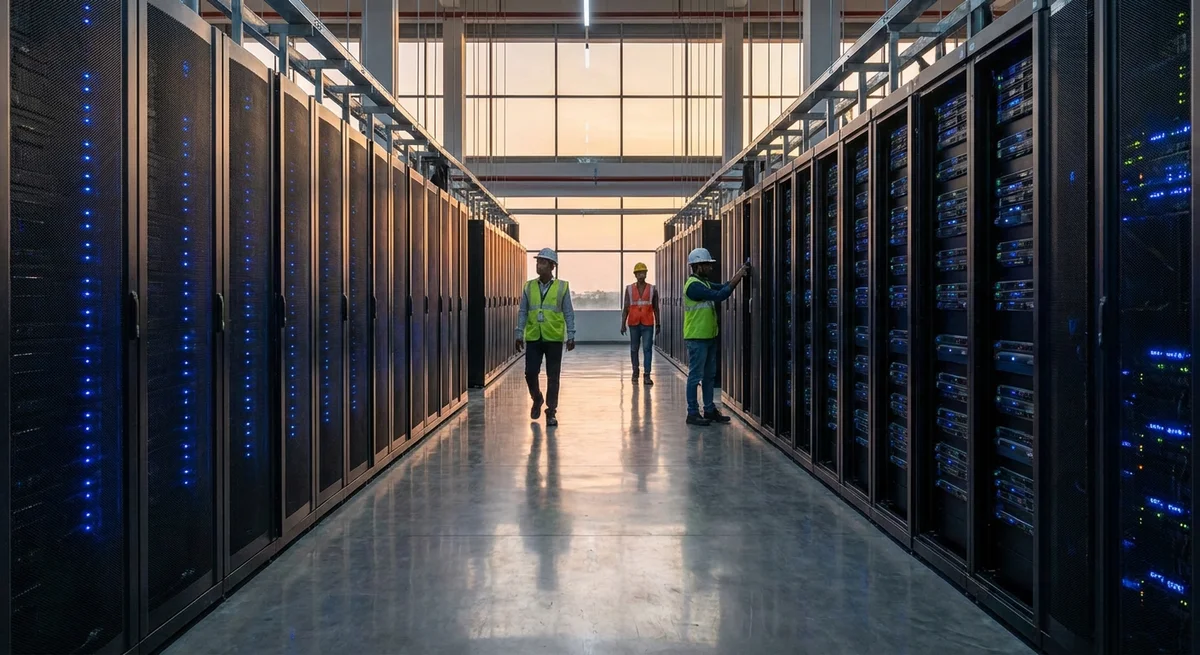
Imagine you're building a business, and the government tells you: "Don't pay us any taxes until your kids finish university." That's essentially the offer India has put on the table. The government has decided that the best way to become a digital superpower is to turn the country into one giant server farm. A 20-year tax holiday for foreign companies building data centers isn't mere generosity. It's an aggressive attempt to take the lead from Singapore and the UAE. In a world where every other startup is trying to train its own neural network, the question of where to put the servers matters more than what code to write.
India knows the timing is perfect. The whole world is obsessed with generative AI, which demands enormous amounts of compute. Training models and running them in production burn through electricity and budgets at an incredible pace. With energy prices in Europe still unpredictable and US infrastructure in some places simply unable to handle peak loads, Delhi's offer looks like an ideal harbor for Big Tech. The appeal goes beyond tax savings: companies get a chance to scale in a place where land and labor seem almost limitless.
Of course, the decision didn't come out of nowhere. For the past several years, India has steadily simplified the rules for tech giants, but bureaucracy and a complex system of levies remained a barrier. The problem was that even with cheap labor, taxes on equipment and operations ate up all the gains. Now the rules are changing radically: if you bring in technology and build physical infrastructure, the government literally steps aside for two decades. That's a direct signal to giants like Microsoft, Google, and AWS. They're already investing billions in the region, but now they can triple their capacity without worrying about tax filings.
What does India get out of it? The answer is simple: data is the new oil, and data centers are the refineries of the future. By hosting the physical servers that run the world's neural networks, the country gains not only thousands of engineering jobs but also enormous geopolitical influence. As questions of digital sovereignty grow more pressing, India wants to be the place where that data isn't just stored but also processed. That would turn the country from the "world's back office" into the "world's processor."
There is, however, a flip side. Critics and skeptics rightly point to problems with the power grid and with the reliability of the water supply, which is critical for cooling huge server halls. India is a country of contrasts, where cutting-edge tech parks can sit next to areas short on basic resources. Still, a tax incentive of this scale lets corporations budget for building their own energy solutions. We'll most likely see massive solar and wind farms spring up next to data centers, running fully independent of the public grid.
In essence, India is inviting corporations to build their own technology enclaves, as long as they secure the country's status as a key node in the global network. For the AI industry, this could mean lower cloud computing prices in the long run. If providers' operating costs fall because they pay no taxes, it could trigger a new round of price cutting in the API and GPU rental markets. Everyone would come out ahead, from developers in San Francisco to end users in Tokyo.
The bottom line: India is officially entering the major league of the AI infrastructure race. Will other regions be able to offer something comparable, or are we about to witness a great migration of servers to the East?
- Nov 1, 2026Google taught its StreamVibe video agent to decide when to step in on its own: +10.7%
- Nov 1, 2026OpenAI Rewrites GPT Behavior Rules: Five Values and a Chain of Command
- Nov 1, 2026Voice bots built on LLMs turn to Jev, a fast classifier, for decisions in 200–500 ms
- Nov 1, 2026Google admits AI Mode cuts search revenue, shares fall 15%
Test Frontier LLMs & Autonomous Agents in One Workspace
Run Claude Opus 5.5, GPT-6, Gemini 3.1, and DeepSeek side-by-side in Nomad AI (nomadnet.ai) — unified model routing, deep research, and multimodal workflows under one subscription.
The AI world, distilled — once a week
Seven stories that actually mattered, hand-picked. No noise, no reposts, no press releases.
Done! Check your inbox for a confirmation.