MIT's DiffSyn: Generative AI Writes a Cookbook for New Materials
Materials science has landed in a paradoxical spot. Models like Google's GNoME have told us about millions of potential materials, yet we have no idea how to make them. MIT researchers set out to close that gap with DiffSyn. DiffSyn is a generative model that outputs not just a theoretical structure but a concrete "recipe": which ingredients to mix, at what temperature and in what order. It analyzes the desired properties and proposes the shortest synthesis path, saving months of laboratory trial and error. If AI used to be the architect, it is now becoming the head chef.
AI-processed from MIT News; edited by Hamidun News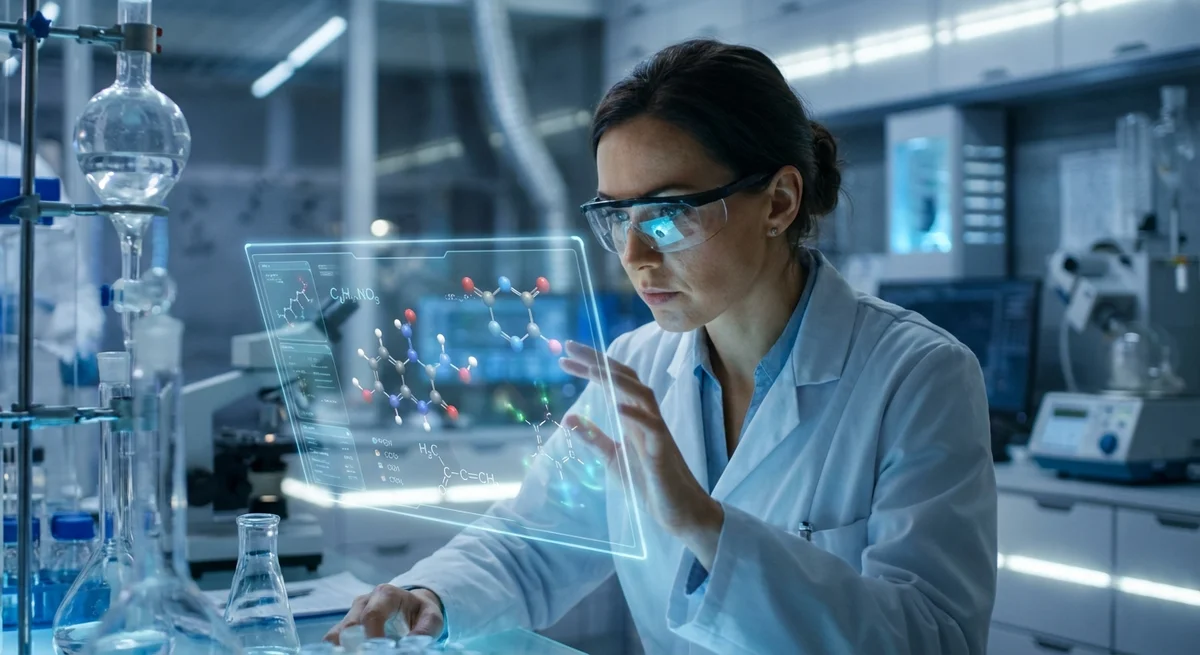
Let's be honest: modern materials science has developed a strange imbalance. Over the past couple of years, DeepMind and Microsoft have announced, with great fanfare, the discovery of millions of new crystals and compounds. Databases are bursting with theoretical materials that could change everything from batteries to solar panels. But there is a catch: they exist only on servers. In the real world, we simply don't know how to "cook" them.
It is this painful gap between theory and practice that researchers at MIT decided to attack. Their new development, the DiffSyn model, does not try to uncover yet another million hypothetical structures. It does the dirty work: it writes instructions for synthesizing them.
The problem DiffSyn tackles is as old as science itself. Imagine being shown a photo of a perfect cake and told: "Bake one just like it." Without a recipe, you would spend years mixing flour and eggs in different proportions and fiddling with the oven temperature. Labs face the same thing: scientists spend months selecting precursors and reaction conditions. DiffSyn works like an experienced chef who, looking at the "photo" (the material's structure), immediately sketches out the process card.
Technically, it is an elegant application of generative AI. The model is trained on huge datasets of chemical reactions and past successful syntheses. When it is fed a target material, it generates the sequence of steps needed to produce it. This is not just a database lookup: it generates a new synthesis route for compounds that nobody has ever held in their hands.
Why does this matter right now? Because the innovation bottleneck has moved. We have learned to predict material properties with AI faster than we can physically test those predictions. Labs are drowning in hypotheses. If DiffSyn can cut recipe development time by even half, it would speed up the arrival of new technologies on the market not by percentage points, but by multiples.
Of course, this does not mean chemists will be out of work tomorrow. AI can still make mistakes, suggesting explosive combinations or physically impossible conditions. But as a tool for weeding out synthesis paths that are clearly dead ends, it is a major step forward. Instead of a hundred experiments, a scientist would have to run five, and one of them would work.
The key point: AI in science is moving from the "look what I found" phase to the "look how to make it" phase. DiffSyn signals that the era of theoretical discoveries is giving way to an era of practical implementation.
- Nov 2, 2026Karpathy builds a YouTube clone with 6454 videos from Hacker News recommendations in two hours
- Nov 2, 2026Karpathy used Claude to build HackerTube from 6,454 videos recommended on Hacker News
- Nov 2, 2026Anthropic needs to grow revenue 32% a year to cover $850 billion in contracts
- Nov 2, 2026Bun creator uses Claude Code to port 750K lines from Zig to Rust in 11 days
Test Frontier LLMs & Autonomous Agents in One Workspace
Run Claude Opus 5.5, GPT-6, Gemini 3.1, and DeepSeek side-by-side in Nomad AI (nomadnet.ai) — unified model routing, deep research, and multimodal workflows under one subscription.
The AI world, distilled — once a week
Seven stories that actually mattered, hand-picked. No noise, no reposts, no press releases.
Done! Check your inbox for a confirmation.