Samsung and SK Hynix: Why Your AI Server Will Soon Run Short on Storage
Samsung and SK Hynix have decided it's time to move on from commodity hardware and switch to the heavy artillery. In the second quarter, both companies begin a large-scale conversion of production lines to turn out advanced NAND memory. Samsung plans to process up to 50 thousand silicon wafers a month so it can flood the market with ultrafast SSDs by next year. Why does this matter? Because neural networks are not only about compute, but also about enormous volumes of data that must be stored somewhere and read back quickly. Without this upgrade, infrastructure will simply choke. The Koreans are betting that demand for AI storage will grow many times over, and they want to be first in line for checks from Microsoft and Google.
AI-processed from 36Kr (36氪); edited by Hamidun News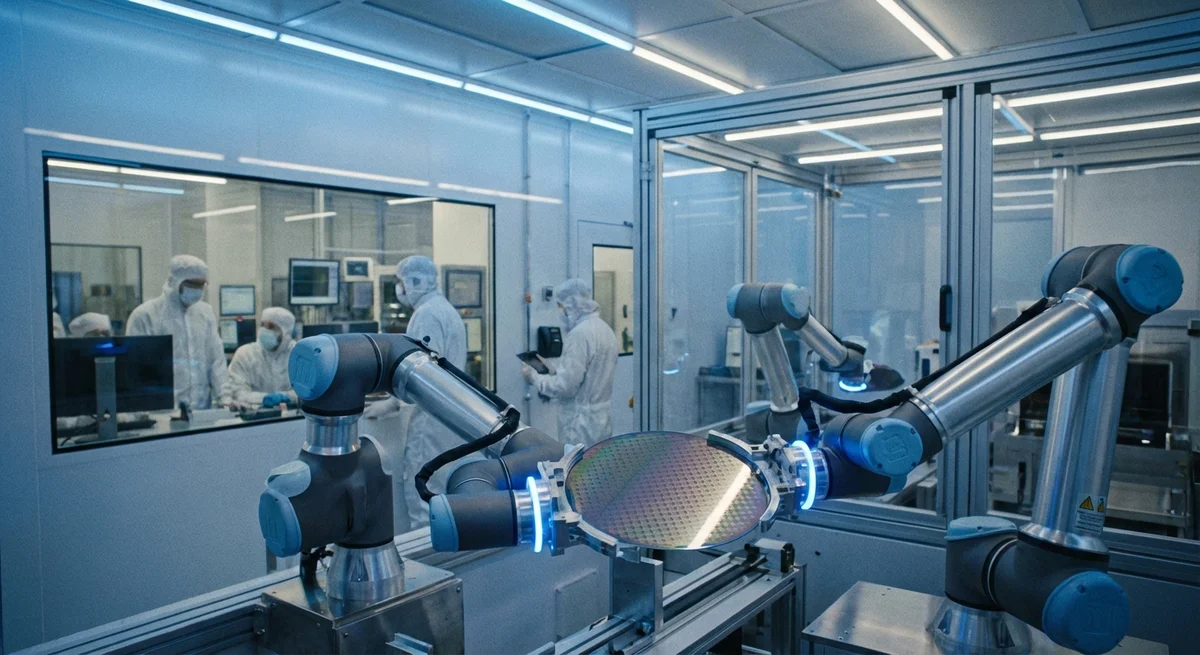
While the whole world goes crazy over NVIDIA GPUs and HBM memory, Korean giants Samsung and SK Hynix have decided to remind everyone that without fast "brains" for long-term data storage, any neural network is just a fast calculator with no memory. The industry has finally realized that training giant models takes more than fast computation: you also have to read terabytes of data back instantly.
That is why, in the second quarter of this year, the market leaders are starting a large-scale overhaul of their fabs. The move is toward production of so-called "NAND", advanced flash memory that will form the foundation of the next generation of server SSDs. Samsung is going big here: the company is discussing converting capacity of 40 to 50 thousand silicon wafers a month. This is not a cosmetic refit of the lines but a full-blown bet that in 2025, when this capacity reaches mass production, demand for storage in AI data centers will skyrocket.
Why now? Look back at last year. The memory market was in turmoil, warehouses were stuffed with old chips, and prices fell below reasonable levels. Then the sudden boom in generative AI upended everything. It turned out that good old SSDs for home laptops interest no one, while enterprise drives able to withstand brutal loads during LLM training became a scarce commodity. Samsung and SK Hynix are simply following the money, moving their fabs from "mass-market" products to high-margin ones.
Technically, this means moving to more layers in 3D NAND. Where we once celebrated 128 layers, the industry is now aiming for 236 layers and beyond. For AI this is critical: the higher the storage density, the less rack space a petabyte of data takes and the less energy it consumes. With data centers drawing electricity like small cities, memory energy efficiency becomes a matter of survival.
Interestingly, Samsung plans to start mass production of the updated memory as early as the beginning of next year. That suggests the Koreans see no signs of an AI "bubble" in the near term. On the contrary, they are preparing for infrastructure hunger to intensify. If you thought building a server was only about finding GPUs, you will soon find that getting a fast 30 or 60 terabyte drive is just as hard.
The link to earlier events is obvious. After SK Hynix effectively pulled ahead in the HBM race, Samsung found itself playing catch-up. The aggressive conversion of NAND lines is an attempt not just to hold market share but to seize the initiative in an adjacent segment. After all, if you can't sell the graphics card, sell the fastest drive in the world to go with it. The enterprise SSD market is growing faster than ever, and the Koreans have no intention of handing this slice of the pie to American or Chinese competitors.
Bottom line: The Koreans are betting on a long-term shortage of AI infrastructure. Will the market manage to absorb such volumes by 2025, or is another overproduction crisis and memory price collapse coming?
Ship AI Faster with Founders, Engineers & Weekly Architecture Reviews
Inside Vibe Club (hamidun.com/club) — weekly live masterminds with Zhemal Khamidun, Tech Radar, full LMS access, and 370+ production Claude Code skills.
The AI world, distilled — once a week
Seven stories that actually mattered, hand-picked. No noise, no reposts, no press releases.
Done! Check your inbox for a confirmation.