Tesla Optimus Gen 3: a million metal workers and the end of the manual labor era
Tesla has announced the third generation of its Optimus humanoid. Musk promises to rethink the design from scratch using a "first principles" approach. The headline feature: the robot now learns simply by watching what a human does, without anyone having to program every detail. The ambitions are sky-high: the production plan calls for a million units a year. This isn't a routine update but an attempt to turn Tesla from a carmaker into a leader in robotics. If the promises pan out, manufacturing faces a radical transformation in which robots become cheaper and more efficient than humans.
AI-processed from 36Kr (36氪); edited by Hamidun News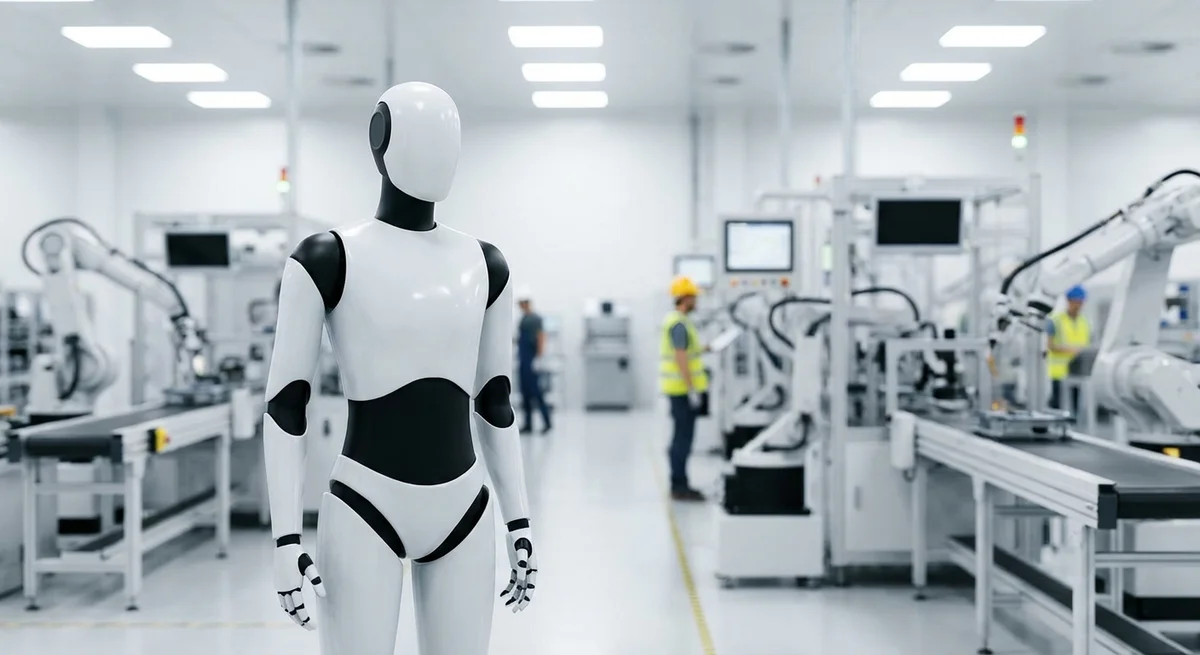
Remember that awkward moment in 2021 when a person in a skintight bodysuit walked onstage and started dancing, pretending to be a robot? Back then it looked like Elon Musk had finally gone too far playing futurist, and that Optimus was just a way to distract from Autopilot's problems. Yet here we are: the third generation of Tesla's humanoid is getting ready for its debut, and skeptics are nervously checking their retirement savings. Details of what to expect from Gen 3 recently leaked through the company's official channels, and it looks like the start of a new industrial era.
Musk is once again betting on his favorite method, "first principles." Translated from engineering speak into plain English, that means the Tesla team threw out its earlier work and designed the robot from a clean sheet. Why bother? To make the machine as easy as possible to mass-produce. If the second generation was a trial run and a showcase of finger dexterity, the third is being built with one goal: getting onto the assembly line. Tesla says it plans to produce up to a million units a year. That number sounds fantastical, given that humanoid robots today are assembled almost by hand, but the company has scaling experience it gained with the Model 3.
The most intriguing change involves the "brains." Gen 3 can learn simply by observing human actions. Previously, engineers had to write out every micro-command for every joint. Now the robot uses neural networks similar to those in Full Self-Driving. It watches video, analyzes the hand movements of a real worker, and repeats them, adapting to the real world. That removes the biggest barrier in robotics: the difficulty of programming for specific tasks. Now you can simply "ask" the robot to watch how boxes are stacked, and it will go do it.
Why does this matter right now? The humanoid market has suddenly gotten crowded. Startups such as Figure AI and 1X are already showing impressive results, and Tesla can't afford to be seen as playing catch-up. For Musk, Optimus isn't just a helper; it's the foundation of Tesla's future. He has said more than once that robotics will ultimately be worth more than the car business. If you can replace a factory worker who costs tens of thousands of dollars a year with a robot that costs about as much as a budget foreign car and never asks for vacation, the economics change for good.
Of course, given Elon's fondness for optimistic timelines, it's worth cutting his promises in half. A million robots a year would put enormous strain on supply chains, especially for specialized actuators and sensors. Still, the direction is clear. Tesla is turning from an EV maker into a company building a general-purpose AI platform, whether that's a machine on wheels or a two-legged machine on the factory floor. We're on the verge of the moment when the phrase "meatbags" stops being just an internet meme.
The bottom line: Tesla is betting on mass production and self-learning. If Optimus Gen 3 really does go into series production, the question isn't whether it will replace humans, but how quickly that will happen.
- Nov 1, 2026Pika Labs releases open video model H3 Flex: 6 steps instead of 50
- Nov 1, 2026Google's StreamVibe video agent beats other models by 10.7% on response timing and quality
- Oct 31, 2026AI cartoon series: a 24-second episode built ten ways, the best cost 162 credits
- Oct 31, 2026Anthropic: Fold Subagents Back Into a Single Loop — One Customer's Tasks Ran Twice as Fast
Test Frontier LLMs & Autonomous Agents in One Workspace
Run Claude Opus 5.5, GPT-6, Gemini 3.1, and DeepSeek side-by-side in Nomad AI (nomadnet.ai) — unified model routing, deep research, and multimodal workflows under one subscription.
The AI world, distilled — once a week
Seven stories that actually mattered, hand-picked. No noise, no reposts, no press releases.
Done! Check your inbox for a confirmation.