Qwen App: Alibaba burns through 30 billion on a Lunar New Year offensive
Alibaba has decided that the best Chinese New Year gift is AI on every smartphone. The company is investing 30 billion yuan (30) in a massive campaign to promote Qwen App. Starting February 6, the AI will be deeply integrated into the ecosystem's core services: Taobao, Damai, Feizhu, and Hema. The move goes beyond marketing: Alibaba wants to train hundreds of millions of users to handle everyday tasks through a chatbot. While competitors gear up for the holidays, Alibaba is building an end-to-end system where AI helps book hotels and buy groceries. The era of "just chatting" appears to be over. The fight is now about real-world use cases in people's daily lives.
AI-processed from 36Kr (36氪); edited by Hamidun News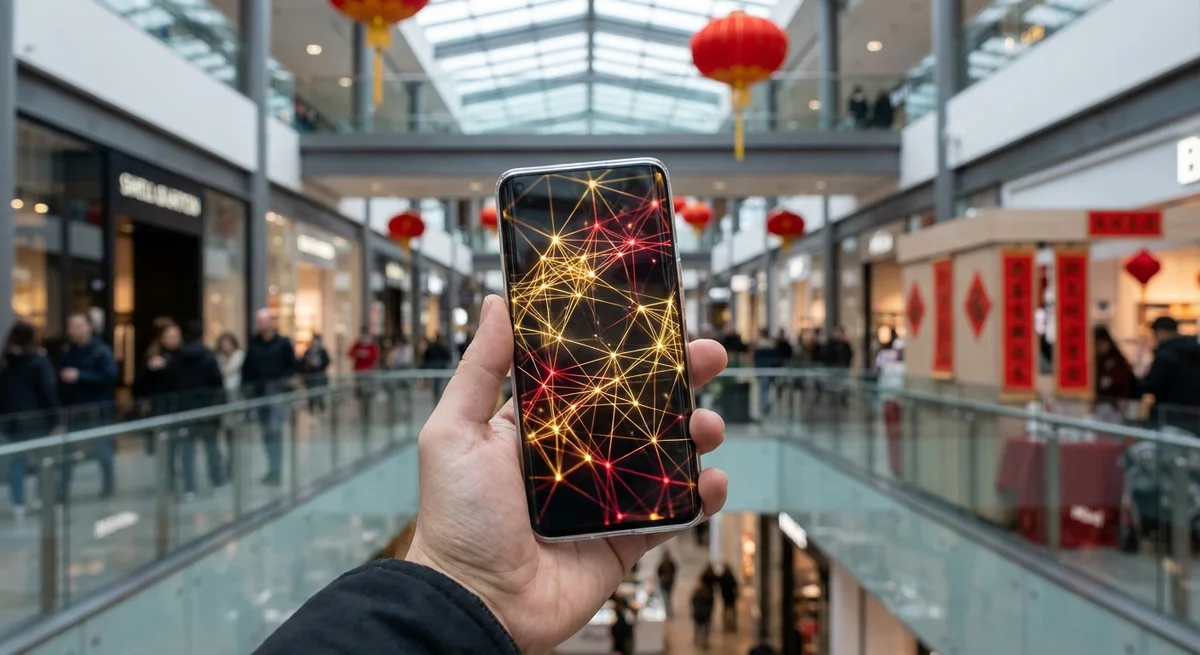
While the rest of the world talks about OpenAI's latest models, China is hosting a battle on an entirely different scale: the fight over who becomes the default digital assistant in the pocket of every person in the country. Alibaba Group isn't holding back and has announced a "spring offensive." The price tag is 30 billion yuan, which the company is pouring into promoting its Qwen App.
If you thought New Year discounts were the ceiling of marketing, Alibaba wants to show that the future lies in fully integrating artificial intelligence into everyday shopping and travel. The strategy is both simple and ambitious. Starting February 6, Qwen App stops being a standalone chatbot for geeks and becomes the connective tissue of Alibaba's vast ecosystem.
The AI will get direct access to Taobao for shopping, the Damai ticketing service, the Feizhu travel aggregator, and the Hema supermarket chain. Imagine that instead of spending half an hour comparing airfares or picking out fresh seafood, you simply ask an AI that already knows your preferences and has access to your wallet. That is exactly what the company's leadership is aiming for.
They understand that in the age of LLMs (Large Language Models), the winner won't be whoever has the most parameters, but whoever embeds the model into everyday life fastest. Why is this happening now? Chinese New Year is the largest mass migration of people on the planet and brings peak load to every consumer service.
For Alibaba, it's the perfect window to seize the initiative from Baidu and its Ernie Bot. After going through a major restructuring last year, the company badly needs a big win in the consumer market. The 30 billion (30) investment looks like an attempt to buy user loyalty at the moment people are most active and most willing to try new tools for planning their holidays.
What's interesting here is how Alibaba is changing its approach to AI. Previously, the focus was on cloud computing and developer support; now the emphasis has shifted to the end user. Integration with services like Feizhu means Qwen App won't just generate text — it will carry out real transactions.
That turns the language model into a full-fledged agent capable of operating in the physical world. In this light, the enormous marketing spend looks justified: if Alibaba can get millions of people used to ordering food or tickets through Qwen during the holiday rush, the habit will stick after the holidays end. Behind this festive show of generosity, though, lies fierce competition.
China currently has a glut of strong language models, and many of them are technically on par with Qwen. The gap between the leaders is narrowing, which means the only way to stay ahead is to build a "walled garden" where AI is seamlessly tied to payment and delivery infrastructure. Alibaba is betting that users will be too lazy to switch to competitors if Qwen already knows their delivery address and favorite kind of tea.
In the coming weeks, we'll see whether capital combined with an ecosystem can turn the tide of the AI race. The bottom line: Alibaba is done playing at pure science and is moving to aggressively capture the market through everyday use cases. Can Qwen App become the WeChat of the AI world, or will the 30 billion simply dissolve into the holiday noise?
- Nov 1, 2026Local AI models agreed to pay scammers, while simple rules blocked all 42 schemes
- Nov 1, 2026Hugging Face's BERT Tokenizer Gets a 50x Speedup by Skipping Needless Work on ASCII
- Nov 1, 2026ThinkJev Makes AI Think Only About Hard Questions: 28% Fewer Tokens
- Oct 31, 2026Open-source LLM gateway KTMS 1.0 plugs your own GPUs into the cloud and survives outages
Ship AI Faster with Founders, Engineers & Weekly Architecture Reviews
Inside Vibe Club (hamidun.com/club) — weekly live masterminds with Zhemal Khamidun, Tech Radar, full LMS access, and 370+ production Claude Code skills.
The AI world, distilled — once a week
Seven stories that actually mattered, hand-picked. No noise, no reposts, no press releases.
Done! Check your inbox for a confirmation.