The yuan is sliding: why China's AI sector is paying a 'dollar tax'
China's central bank set the yuan at 6.9695, down 17 points. In macroeconomic terms, that's a routine move. For China's AI industry, it's another warning sign. A weaker currency directly cuts into the margins of startups that buy scarce hardware through intermediaries. With sanctions in place and NVIDIA chips in short supply, any currency shift makes LLM training even more expensive. While Baidu and Alibaba work to replace their stack with domestic alternatives, the financial pressure on cloud computing keeps growing.
AI-processed from 36Kr (36氪); edited by Hamidun News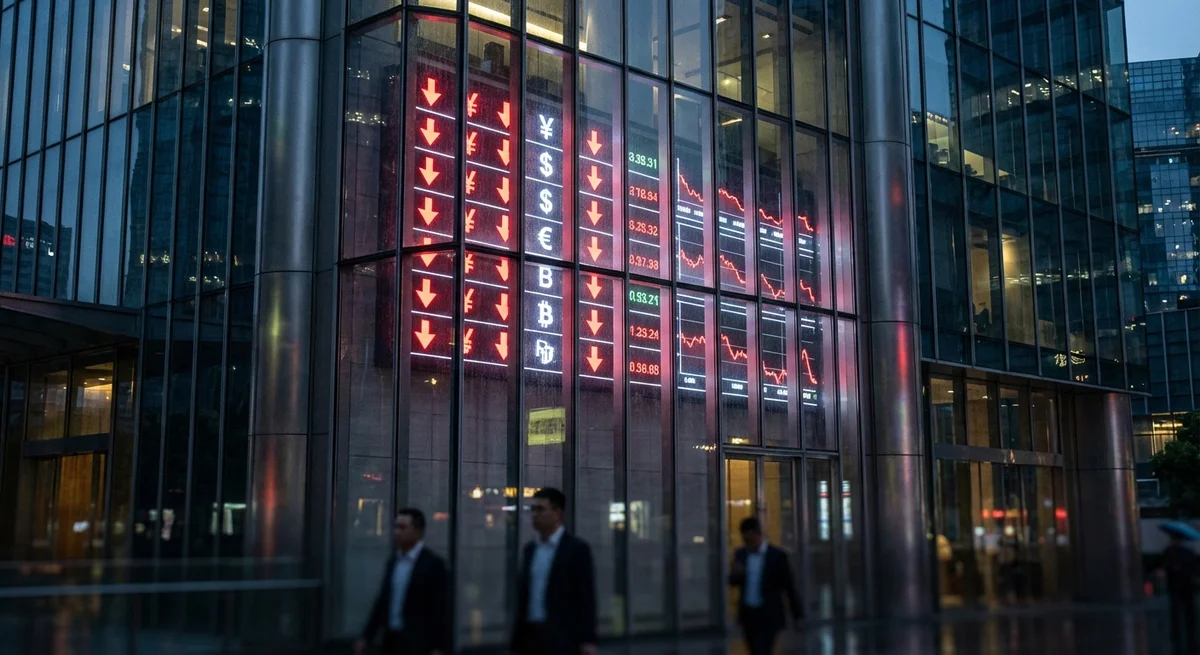
While the world holds its breath over new language model releases, officials at the People's Bank of China are quietly making decisions that affect the AI industry as much as new transformer architectures do. Today the regulator set the yuan's central parity rate against the dollar at 6.9695, down 17 points from the previous day.
The number looks trivial at first glance, but against the backdrop of the tech standoff, it signals hidden pressure on Chinese high tech. The modern AI race is, above all, a race for capital. The currency that matters here isn't just tokens, but the dollars used to buy silicon.
Despite all the import-substitution efforts, Chinese companies still depend critically on global supply chains. Even setting aside direct purchases from NVIDIA, which sanctions restrict, the secondary market and gray channels for H100 or A100 accelerators operate exclusively in US dollars. A weaker yuan means that for a hypothetical startup in Shenzhen, every new server rack gets more expensive simply by crossing the border.
This puts giants like Tencent and Alibaba in an awkward bind. On one hand, they have to keep up the pace of training their models so they don't fall behind GPT-4 or Claude 3. On the other, infrastructure costs are rising not only because of shortages but also because of exchange-rate losses.
Domestic cloud computing prices in China are fiercely competitive, and raising them now would slow AI adoption in the real economy. As a result, companies are forced to sacrifice margins, which shrinks their investment capacity over the long term. There's also a psychological and economic threshold to consider.
When the yuan approaches 7.0 to the dollar, investors always get nervous. For an AI sector that runs on expectations of future growth, any instability in the national currency makes it harder to attract international capital.
Dollar-denominated venture funds start pricing in additional risk, which makes valuations of Chinese "unicorns" less attractive. We've already seen similar swings force companies like Biren Technology to revisit plans to expand their R&D centers. Notably, the current yuan weakness comes as Beijing tries to stimulate domestic demand.
A weak currency usually helps exporters, but China's AI industry is currently in a phase of heavy consumption, not technology export. It needs lithography machines, it needs HBM3 memory, and it needs specialists whose salaries in Shanghai are already starting to compete with those in California. All of it has to be paid for with resources that get more expensive with every point the currency drops.
Ultimately, this dynamic will only fuel China's push for full technological self-sufficiency. If you can't control the cost of the tools for building the future because of currency volatility, the only way out is to build your own tools and your own financial ecosystem. But developing full-fledged alternative accelerators from Huawei or Moore Threads takes years, while electricity and imported components have to be paid for today.
While the yuan looks for footing, Chinese engineers are learning to squeeze every last bit of performance out of the hardware they've already managed to bring into the country. The bottom line: the weakening yuan is an invisible tax on Chinese innovation, and it may slow the training of new models more than the next round of US export controls. Will local chipmakers seize the moment and offer the market a cheaper alternative?
*Meta is designated an extremist organization and banned in the Russian Federation.
- Nov 2, 2026Bun creator uses Claude Code to port 750K lines from Zig to Rust in 11 days
- Nov 2, 2026mcp-linter finds 18 undescribed parameters in Anthropic's filesystem server
- Nov 2, 2026The Verge reviewer builds a $50 Meta Muse Charm alternative with Claude Code
- Nov 2, 20268 Skills for video in Claude Code: from 244 pixel effects to rough-cut editing
Test Frontier LLMs & Autonomous Agents in One Workspace
Run Claude Opus 5.5, GPT-6, Gemini 3.1, and DeepSeek side-by-side in Nomad AI (nomadnet.ai) — unified model routing, deep research, and multimodal workflows under one subscription.
The AI world, distilled — once a week
Seven stories that actually mattered, hand-picked. No noise, no reposts, no press releases.
Done! Check your inbox for a confirmation.