The Altman Effect: How AI Will Grind Inflation to Dust and Make Us Richer
OpenAI CEO Sam Altman is once again peering past the horizon, promising a world where money finally starts gaining value. His logic is simple: AI radically cuts the cost of intellectual labor, and paired with cheap energy, that will make prices collapse across the board. While we argue over the price of a ChatGPT subscription, Altman is planning an economy of abundance where scarcity disappears altogether. This isn't just a forecast; it's an attempt to justify massive investments in compute. If he's right, the familiar laws of capitalism will soon land in the dustbin of history, replaced by a new reality where purchasing power grows on its own.
AI-processed from Futurism; edited by Hamidun News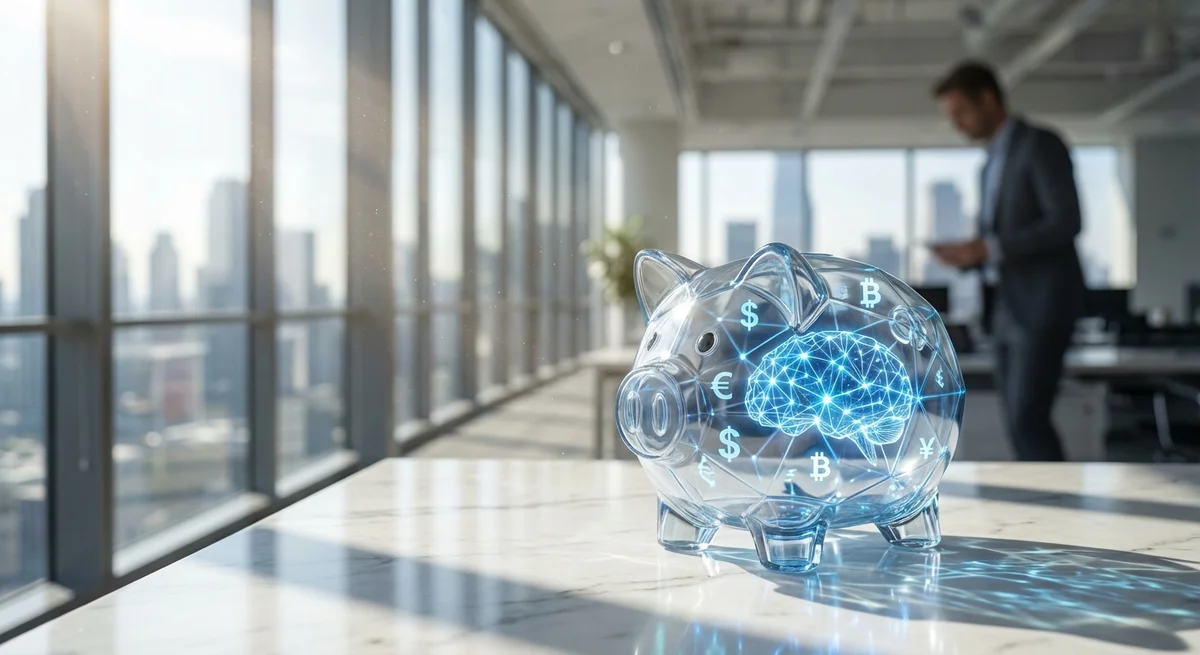
While the rest of us get used to every trip to the store costing more than the last, Sam Altman has traded the role of tech evangelist for that of economic prophet. The OpenAI CEO confidently claims that artificial intelligence will become the main cure for inflation by triggering large-scale deflation. His vision of the future rests on a fundamental rethink of what makes up the cost of any product or service. In Altman's world, the economy's two main pillars — intelligence and energy — trend toward zero cost, and that inevitably drags down the price of everything else.
This rhetoric didn't come out of nowhere. After he published his manifesto on the Intelligence Age, it became clear that OpenAI no longer wants to be just a company that builds chatbots. It is building the infrastructure for a new world. Altman argues that once AI can perform cognitive tasks faster and better than humans, the cost of labor in the value chain will start shrinking rapidly. Add his personal investments in nuclear fusion and energy startups, and the picture becomes crystal clear. He believes in a world where producing goods no longer depends on expensive man-hours and scarce fossil resources.
It's interesting to watch Altman tie technological progress to the personal wealth of everyone on the planet. In his view, deflation isn't an economic crisis, as last century's textbooks taught us, but a way to make money "more valuable." If a notional dollar buys you one apple today, in the era of ubiquitous AI it will buy you ten. It sounds like a digital utopia, but there's cold calculation behind the forecast. OpenAI is currently raising billions of dollars in investment, and the promise of global abundance is the best way to convince funds that their bets will pay off many times over — even if the company itself is still burning cash faster than it generates it.
There's one serious catch in this brave new world, though, and Altman prefers to mention it only in passing. Deflation driven by replacing human labor inevitably raises a question: where will people get the very money that's supposed to become more valuable? If AI does our work for us, the traditional model of earning a living breaks down. Altman often brings up universal basic income, but for now it looks like an attempt to put out a fire he himself is fanning. The transition from today's inflationary economy to a deflationary paradise could prove extremely painful for those whose professions AI devalues first.
It's also worth remembering that right now we're seeing the exact opposite. The cost of training models is growing exponentially, Nvidia keeps setting market-cap records on the back of the chip shortage, and data center electricity bills make even tech giants wince. For now, AI is an incredibly expensive toy that demands enormous resources. Altman is playing the long game, trying to convince regulators and the public that today's spending is just a temporary cost before the leap into a world where material goods become available to all. It's a bold claim, especially as OpenAI gradually transforms from a nonprofit into a full-fledged corporate money-making machine.
Ultimately, Altman's forecasts are an invitation to a future where artificial intelligence shoulders the burden of providing for humanity. It's a tempting prospect, one in which money regains its status as a reliable store of value. But behind this idyllic picture lies a tectonic shift in the distribution of power. Whoever owns "intelligence" and "energy" effectively holds the keys to the global economy. And while Altman promises us deflation, he is simultaneously building one of the most powerful monopolies in human history.
The bottom line: Sam Altman is selling us the dream of cheaper living to justify the colossal cost of building AI. Will the world get cheaper, or will we simply swap our dependence on oil for a dependence on compute?
- Nov 2, 2026Meta's Muse assistant keeps dossiers on loved ones and gets root on Ubuntu by default
- Nov 1, 2026Local models lose to Opus and Codex: 0.21 on a MacBook versus 1.00 for Codex
- Nov 1, 2026Kimi scores 96.2% on a 1C database analytics test and emerges as a fallback if Claude access is blocked
- Nov 1, 2026OpenAI Rewrites GPT Behavior Rules: Five Values and a Chain of Command
Test Frontier LLMs & Autonomous Agents in One Workspace
Run Claude Opus 5.5, GPT-6, Gemini 3.1, and DeepSeek side-by-side in Nomad AI (nomadnet.ai) — unified model routing, deep research, and multimodal workflows under one subscription.
The AI world, distilled — once a week
Seven stories that actually mattered, hand-picked. No noise, no reposts, no press releases.
Done! Check your inbox for a confirmation.