Generative UI: Why Chatbots Are an Evolutionary Dead End for Interfaces
The era of the simple chatbot is ending. Today's interfaces hide what agents actually do: planning, calling tools and updating state. Generative UI (GenUI) offers a fix: the agent creates the interface elements it needs, such as tables, charts or forms, depending on context. That turns working with AI from a conversation into real process control. We are moving from static applications to a dynamic AG-UI stack, where the frontend becomes as flexible as the language models themselves.
AI-processed from MarkTechPost; edited by Hamidun News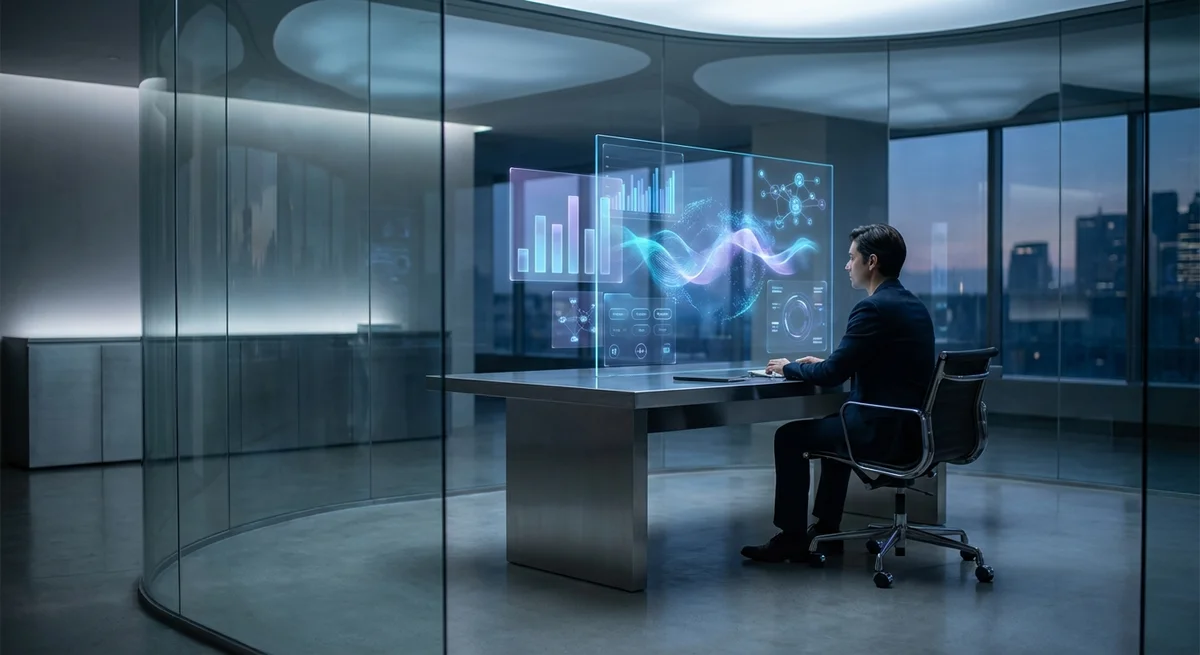
Look at almost any modern AI service and you will see the same picture: a rectangular chat window and a blinking cursor. We have grown so used to this paradigm that we no longer notice how much it limits the technology. A text interface was ideal for the first GPT versions, which simply predicted the next word, but for modern autonomous agents it is a cramped cage. When an agent plans a complex chain of actions, calls external APIs and juggles data, squeezing that whole process into text bubbles is like trying to fly a modern fighter jet by telegraph.
The problem with the chat-centric approach is that it hides the most important part from us. We see only the final result or, at best, a dull "Thinking..." line. Generative UI, or AG-UI (Agent-Driven User Interface), changes the rules fundamentally. The idea is simple and radical at once: instead of producing a wall of text, the model should generate or invoke specific interface elements in real time. If you ask an AI to analyze a budget, it should not describe the numbers in words. It should render an interactive table with filtering. If you are planning a route, a live map should appear in front of you, not a list of addresses.
This shift requires rebuilding the technology stack we are used to. In the classic web, the frontend is deterministic: a developer defines in advance where each button sits and what it does. In the world of Generative UI, the interface becomes probabilistic. The system must decide on the fly which component is most appropriate for the user right now. That creates a huge challenge for designers and developers, because they now have to design not individual pages but whole systems of rules by which the AI assembles an interface from ready-made blocks. We are heading toward a moment when the notion of an "application" as a static set of screens simply disappears.
Why does this matter right now? Because the industry has hit a ceiling of trust. Users often do not understand how an agent reached a given conclusion, and that breeds skepticism. A dynamic interface makes the AI's work transparent. When you see the agent build a form to confirm a transaction or visualize the stages of a task, your level of control rises many times over. These are not just "pretty pictures"; they make interaction with AI predictable and efficient. We are finally ceasing to play at imitating human conversation and starting to use neural networks as a powerful working tool.
Of course, the road is full of obstacles. The main one is latency. Generating an interface takes time, and users are used to instant response. There is also the risk of "hallucinations" not only in text but in controls: a button that leads nowhere, or a chart that shows the wrong data. Still, leading players in the market have already started moving in this direction. Artifacts in Claude from Anthropic are just a first, tentative attempt to find a new format. In the coming years we will see interfaces become as pliable as the thoughts of large language models.
The takeaway: the era of "just chats" has been officially declared a transitional period. Are you ready for the interface of your software to change every second depending on what you are doing?
- Nov 2, 2026Bun creator uses Claude Code to port 750K lines from Zig to Rust in 11 days
- Nov 2, 2026mcp-linter finds 18 undescribed parameters in Anthropic's filesystem server
- Nov 2, 2026The Verge reviewer builds a $50 Meta Muse Charm alternative with Claude Code
- Nov 2, 20268 Skills for video in Claude Code: from 244 pixel effects to rough-cut editing
Test Frontier LLMs & Autonomous Agents in One Workspace
Run Claude Opus 5.5, GPT-6, Gemini 3.1, and DeepSeek side-by-side in Nomad AI (nomadnet.ai) — unified model routing, deep research, and multimodal workflows under one subscription.
The AI world, distilled — once a week
Seven stories that actually mattered, hand-picked. No noise, no reposts, no press releases.
Done! Check your inbox for a confirmation.