Alienware 16 Aurora: Powerful Hardware for Local LLMs for Under $1,000
In an era when a graphics card alone can cost as much as a used car, Dell has gone on a generosity spree. The Alienware 16 Aurora has dropped below $1,000. For anyone who wants to run Llama 3 or Stable Diffusion locally without selling a kidney, that looks like a plan. A laptop with this kind of cooling and GPU is a rarity at this price. It is not just a "gaming rig" but an entry ticket to portable computing that usually costs twice as much.
AI-processed from ZDNet AI; edited by Hamidun News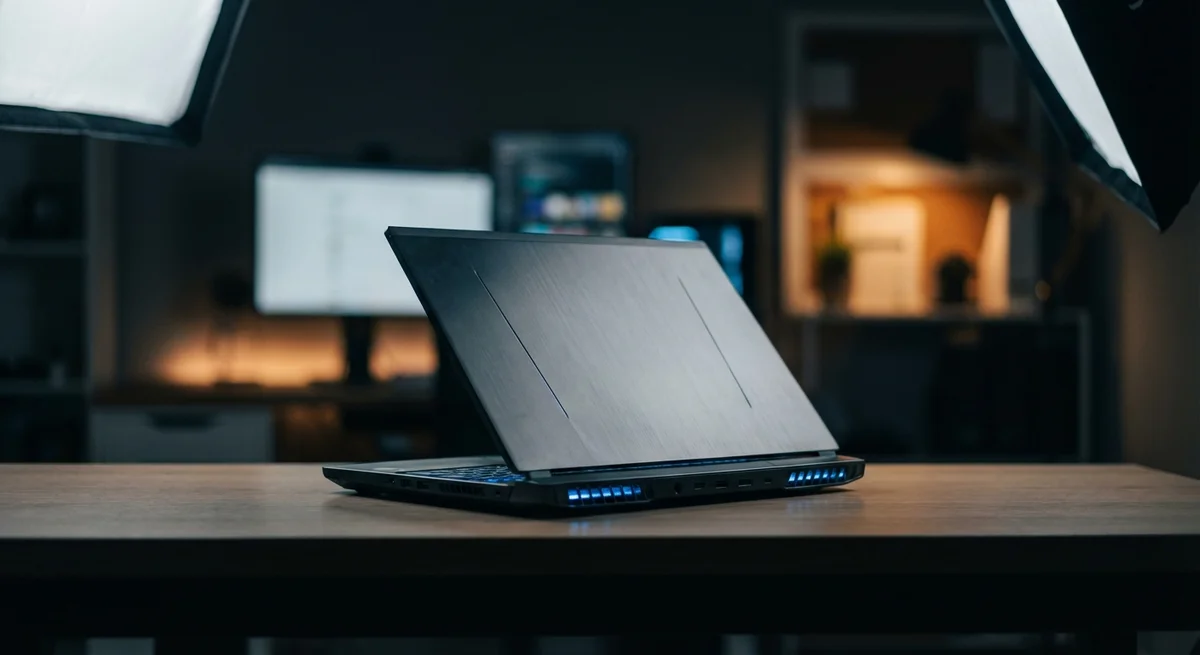
While we argue about whether GPT-5 will replace programmers, far more down-to-earth but equally important things are happening on the ground. Hardware. If you have tried to run a decent local model like Llama 3 on an ordinary office laptop, you know the pain: the fans howl like jet turbines, and text generation crawls along at one token per minute. In a world where a single top-tier graphics card costs more than a thousand dollars, Dell's offer looks almost like a database error. The Alienware 16 Aurora has fallen below the psychological threshold of one thousand dollars.
Let's be honest: Alienware has always been the "Apple of the gaming world" — needlessly expensive, excessively flashy and forever claiming to be premium. Usually we walk past such news and leave it to teenagers. But the context has changed. For anyone doing development, or who simply wants a powerful machine on hand for neural network inference, the question of hardware has never been more pressing. When you see a price tag like this for a full-fledged laptop in this line, it is worth stopping to take a look, even if you don't plan to play Cyberpunk on ultra settings.
What do we get for the money? Inside is not just a collection of components but an architecture originally designed for extreme loads. That matters a great deal, because training neural networks or long rendering sessions kill ordinary thin ultrabooks within six months through constant overheating. Alienware has traditionally been known for its cooling systems — massive, heavy, but effective. If you need a laptop to grind through data for three hours straight without turning into a lump of molten plastic, this is your option. In that sense, the model's "gaming" roots become its main advantage for an engineer.
Of course, for a thousand dollars you won't get a top-end RTX 4090 with a huge pool of video memory. Most likely it will be a solid mid-range part, but even that is enough to work comfortably with quantized models or run Stable Diffusion XL without waiting an eternity. With cloud computing getting more expensive and API subscriptions eating project budgets, having your own hardware is an investment in independence. You pay once and no longer depend on the whims of large corporations or on token prices in the next price-list update.
Why did Dell make this move right now? The PC market is feverish. On one hand, everyone is waiting for new chip lines with hardware-level AI features (NPU), which marketers shout about so loudly. On the other, warehouses are stuffed with excellent models from last year and this year that somehow need to be sold. For us this is an ideal moment: "yesterday's" technology is still more than enough for most tasks, and its price is falling to the level of budget office "printers."
Should you rush to buy? If your work depends on local computation and you are tired of waiting for answers from the cloud, then definitely yes. The Alienware 16 Aurora is a bulky, noisy and flashy machine that nonetheless earns every cent spent on it. In a world where software keeps getting heavier, spare power under the hood is never superfluous. This is a rare case where the gaming industry is unintentionally helping the AI community become a little more autonomous.
The bottom line: the era of affordable local computing is arriving from an unexpected direction. While NVIDIA books super-profits selling chips to data centers, ordinary users get the crumbs from the table in the form of discounts on gaming rigs. If you were waiting for a sign to start experimenting with your own neural networks without depending on the internet, this is it. Will your current computer be able to handle the next version of Llama without outside help?
- Nov 2, 2026Meta's Muse assistant keeps dossiers on loved ones and gets root on Ubuntu by default
- Nov 2, 2026The Verge reviewer builds a $50 Meta Muse Charm alternative with Claude Code
- Nov 1, 2026MoneyGate safety layer blocked all 42 fraudulent requests to local AI models
- Oct 31, 2026Open-source LLM gateway KTMS 1.0 plugs your own GPUs into the cloud and survives outages
Test Frontier LLMs & Autonomous Agents in One Workspace
Run Claude Opus 5.5, GPT-6, Gemini 3.1, and DeepSeek side-by-side in Nomad AI (nomadnet.ai) — unified model routing, deep research, and multimodal workflows under one subscription.
The AI world, distilled — once a week
Seven stories that actually mattered, hand-picked. No noise, no reposts, no press releases.
Done! Check your inbox for a confirmation.