A startup from a horse stable built a 175 cm humanoid in eight weeks and got government money
German student Christopher Helmke started out 3D-printing monitor mounts, then built the P0 humanoid robot in an old horse stable in eight weeks. The robot is 175 cm tall and weighs 82 kg. The government agency SPRIND saw a demo video on YouTube and signed a funding contract within a couple of weeks. The takeaway for hardware startups: a public video can unlock money faster than a year-long corporate procurement process.
AI-processed from TG: @hiaimedia (Hi, AI • Новости технологий); edited by Hamidun News
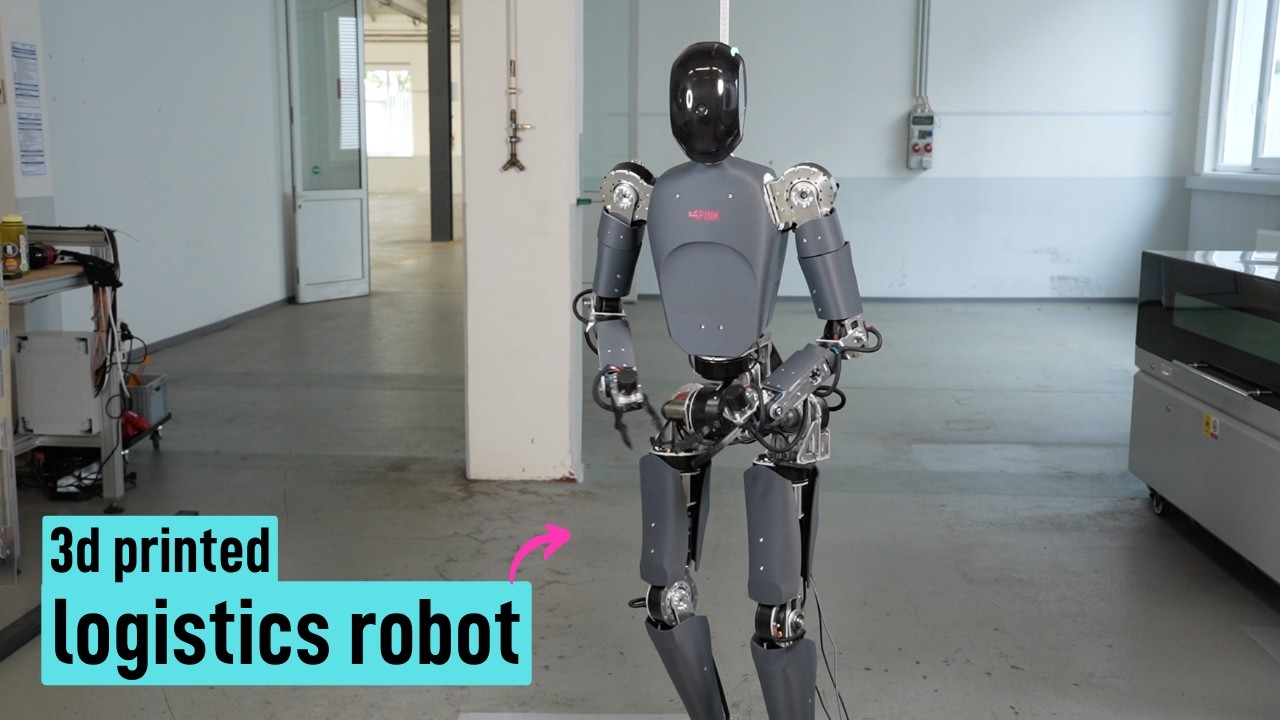
German engineering student Christopher Helmke built a humanoid robot in eight weeks in an old horse stable on his parents' farm. The prototype is called P0: 175 cm tall and 82 kg. The money for further development did not come from a corporate approval process. It came from SPRIND, a German government innovation agency, which saw a demonstration video on YouTube and signed a contract within a couple of weeks. The story is useful for anyone building hardware: it shows how to avoid getting stuck in long sales cycles and how a public demo can replace a pitch.
From monitor mounts to screw-counting machines
During the pandemic, Helmke got bored at home and started 3D-printing monitor mounts with a neighbor. Remote work created demand: in a couple of months, the students earned 60,000 euros.
To keep up with orders, Helmke built a "counting machine" in his apartment. It packed eight screws into each mount and took over the monotonous work. The development videos went up on YouTube: the first clip drew 20,000 viewers in a week, the second reached 200,000, and the full series of 15 videos about the machines gathered around 15 million views.
The company switched to equipment for counting fasteners and moved into the old stable. Buyers were found, but that didn't bring commercial success. The clients were US corporations, and approving a purchase with them took at least a year. For a startup with limited funds, such a sales cycle was far too long.
A bet on humanoids and a robot in eight weeks
In the spring, at an industrial trade show, Helmke noticed that only two companies in Germany were working on humanoid robots. The US and China have dozens. He decided to take the open niche himself.
The P0 prototype was built in eight weeks. According to the founder, not a single part had to be redesigned. This is Helmke's own claim, and the article contains no independent verification, but the pace is fast for a first humanoid.
The robot is being prepared to sort goods in a warehouse. The first customer is expected to be a German supermarket chain. The warehouse was chosen for a reason: the tasks there repeat, the environment is predictable, and an error costs less than it would, for example, in elder care.
Video instead of a pitch
A demonstration of the prototype operated by a human operator was also posted on YouTube. An important detail: in the video, a person controls the robot; it does not work autonomously. Such a video shows the construction and mobility, but not readiness for independent work in a warehouse.
SPRIND noticed the video just as the company was running out of money. Officials approved the project and signed a development funding contract within a couple of weeks. By comparison, US corporations took a year to approve equipment purchases. The amount of funding is not named in the original post.
Helmke expects that in five years, a million robots from his company will be working in Germany. That figure is very bold, and for now it should be treated as a marketing target rather than a forecast. Right now there is one prototype, an agreement with one retailer, and a government contract.
What this means in practice
First, a public demonstration works like a sales channel. The same YouTube channel first brought the startup customers for its machines, then led to a government investor.
Second, speed matters. If a corporate contract takes a year and the money only lasts a few months, it is better to look for buyers and funding with short decision cycles. In this case, that turned out to be a government agency that responded within a couple of weeks.
Third, a niche can be found where competitors have not yet settled. German humanoids remain a sparsely populated market, but the risks are clear: the distance from a prototype under operator control to mass-produced robots in warehouses is large. The real test will be the first pilot in a supermarket, not the number of views.
- Nov 25, 2026Google Released Four Gemini 4 Models: Neon Solves Tasks 32% Cheaper Than Carbon
- Nov 25, 2026Alice and GigaChat Haven't Replaced Claude: 21 of 71 Services Are Closed to Russia
- Nov 25, 20268 Tools That Break Down Someone Else's Viral Video Into a Shot List and Prompts
- Nov 25, 2026Boris FX Releases Silhouette 2027: AI Cuts Out Objects From Video, From $545 a Year
Key Questions Answered
What are the key details on From monitor mounts to screw-counting machines?
During the pandemic, Helmke got bored at home and started 3D-printing monitor mounts with a neighbor. Remote work created demand: in a couple of months, the students earned 60,000 euros. To keep up with orders, Helmke built a "counting machine" in his apartment. It packed eight screws into each mount and took over the monotonous work.
What are the key details on A bet on humanoids and a robot in eight weeks?
In the spring, at an industrial trade show, Helmke noticed that only two companies in Germany were working on humanoid robots. The US and China have dozens. He decided to take the open niche himself. The P0 prototype was built in eight weeks. According to the founder, not a single part had to be redesigned. This is Helmke's own claim, and the article contains no independent verification, but the pace is fast for a first humanoid. The robot is being prepared to sort goods in a warehouse.
What are the key details on Video instead of a pitch?
A demonstration of the prototype operated by a human operator was also posted on YouTube. An important detail: in the video, a person controls the robot; it does not work autonomously. Such a video shows the construction and mobility, but not readiness for independent work in a warehouse. SPRIND noticed the video just as the company was running out of money. Officials approved the project and signed a development funding contract within a couple of weeks.
Test Frontier LLMs & Autonomous Agents in One Workspace
Run Claude Opus 5.5, GPT-6, Gemini 3.1, and DeepSeek side-by-side in Nomad AI (nomadnet.ai) — unified model routing, deep research, and multimodal workflows under one subscription.
Daily 60-sec AI Voice Brief + Weekly Production AI Agent Playbook
Listen to a 60-second AI news brief every morning and get a weekly hands-on playbook for shipping AI agents to production — tools, MCP servers and patterns that work. Curated by Jemal Hamidun, Head of AI at Alpina Digital.
