Director made the 8-minute AI film “Cock-a-Doodle-Doo” in two months without a script
Director Alexandra Bychkova has released “Cock-a-Doodle-Doo,” an AI film running 8 minutes and 37 seconds. It is an absurdist drama about the lonely Mark in a world where humans live alongside chicken-people. There was no script: each scene grew out of the one before it. Production took around two months and involved around ten tools, from Seedance to Premiere Pro.
AI-processed from TG: @cgevent (Метаверсище и ИИще); edited by Hamidun News
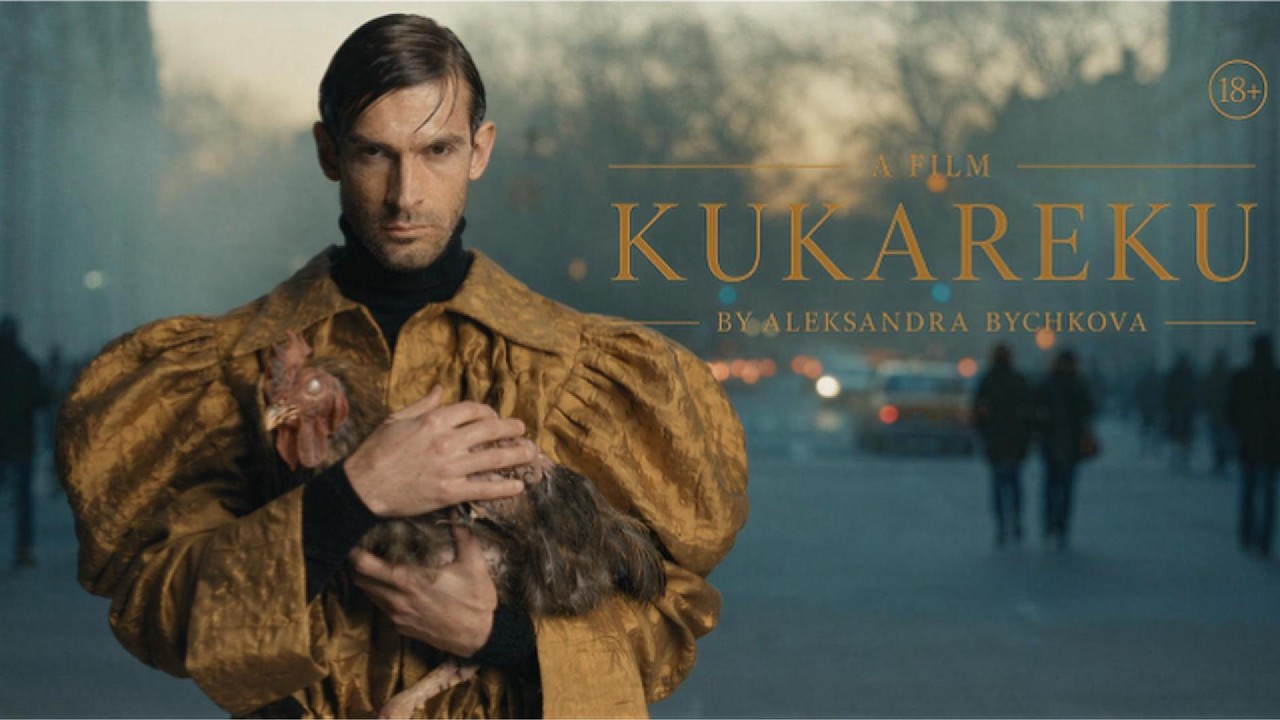
Eight and a half minutes of coherent AI video is no longer a party trick. It is a craft, and that craft is finding its masters. Director and screenwriter Alexandra Bychkova has released “Cock-a-Doodle-Doo,” an absurdist drama in which humans and chicken-people live side by side. What matters here is less the poultry itself than how the production works: what the AI does, what remains in human hands, and how long it all takes.
What the film is about and how it took shape
The protagonist is called Mark. He has lost his zest for life and cares little about anyone around him, but unexpectedly encounters love and genuine friendship. Meanwhile, the world has changed following a strange incident: chicken-people now live alongside ordinary humans. According to the filmmaker, beneath the outward weirdness lies a thoroughly human story.
The most intriguing part is the method. There was no finished script; each scene grew out of the previous one. For Alexandra herself, this is unusual, but for generative video, the approach feels almost natural. It resembles iterative development: instead of planning everything six months ahead, you look at what the model produces and decide where to go next. Each take is cheap, so the plot can adapt to successful discoveries. The risk is equally clear: without a plan, it is easy to end up with a collection of beautiful sequences instead of a story. Here, the filmmaker’s judgment is the only safeguard.
What makes up the pipeline
The post lists the stack in detail:
- Recraft V4 and Seedream 5 Pro — images and characters;
- Seedance 2.0 and 2.5 — video scene generation and animation;
- FLUX 3.0 — video subsequently used with a voice track (the filmmaker’s wording);
- Photoshop 2026 — compositing and retouching;
- Premiere Pro and CapCut — editing and color correction;
- ElevenLabs Music and Suno 5.5 — music and sound design.
The logic will be familiar to anyone who has assembled a product from multiple services. First come still images of the characters and their world, then animation, then sound, then editing. There is no “make a film” button. There is a production line in which each model handles a narrow task, with a human bringing everything together.
One detail deserves attention: the filmmaker made most of the shots in Seedance 2.0, then remade some scenes when Seedance 2.5 came out. The practical lesson is simple: models get updated before projects are finished, and time for regeneration needs to be budgeted in advance. If you have saved your references, prompts, and settings, reworking the material takes days. If not, it is almost like starting from scratch.
What proved hardest
The filmmaker identifies the chicken-people as the biggest headache. The anthropomorphic characters, dressed in distinctive outfits, were built in stages. This is the classic consistency problem: a model can easily draw one chicken in one frame, but maintaining the same appearance, costume, and proportions across dozens of shots is much harder. Building in stages—first the base character, then the clothing, then the scene—remains the most reliable workaround today.
What to take away
First, the timeline. Around two months for 8 minutes and 37 seconds, with the film made by a single creator. A conventional shoot involving actors, costumes, and locations would have required a crew and considerably more time.
Second, the limitations of this case. The post gives no budget, generation count, or proportion of discarded takes, so the real cost of such a project cannot be assessed. This is the creator’s account, rather than an independent benchmark.
Third, the lesson for product managers and studios considering AI video for advertising or trailers. Today’s working model looks like this: a small team with directorial judgment and rigorous selection of material, rather than one-click automation. Selection and editing determine quality.
If you are building a product around generative video, look at the bottlenecks the filmmaker herself identified: character consistency and regeneration when switching model versions. These are precisely the problems users are willing to pay to solve. As for the film itself, it is best watched on YouTube: that is the quickest way to assess where the line between an experiment and finished cinema currently lies.
- Nov 12, 2026Google opens preorders for Gemini glasses starting at $395 and blocks covert recording
- Nov 12, 2026Samsung Is Preparing a Paid Galaxy AI Subscription: From $4.99 a Month and Credits Instead of Unlimited Use
- Nov 12, 2026Adobe showcases four AI prototypes at Max: 3D from photos, a sound square, and copy-and-paste edits
- Nov 12, 2026Instagram launches prompt-based filter creation for users aged 18+ in the US
Key Questions Answered
What the film is about and how it took shape?
The protagonist is called Mark. He has lost his zest for life and cares little about anyone around him, but unexpectedly encounters love and genuine friendship. Meanwhile, the world has changed following a strange incident: chicken-people now live alongside ordinary humans. According to the filmmaker, beneath the outward weirdness lies a thoroughly human story. The most intriguing part is the method. There was no finished script; each scene grew out of the previous one.
What makes up the pipeline?
The post lists the stack in detail: Recraft V4 and Seedream 5 Pro — images and characters; Seedance 2.0 and 2.5 — video scene generation and animation; FLUX 3.0 — video subsequently used with a voice track (the filmmaker’s wording); Photoshop 2026 — compositing and retouching; Premiere Pro and CapCut — editing and color correction; ElevenLabs Music and Suno 5.5 — music and sound design. The logic will be familiar to anyone who has assembled a product from multiple services.
What proved hardest?
The filmmaker identifies the chicken-people as the biggest headache. The anthropomorphic characters, dressed in distinctive outfits, were built in stages. This is the classic consistency problem: a model can easily draw one chicken in one frame, but maintaining the same appearance, costume, and proportions across dozens of shots is much harder. Building in stages—first the base character, then the clothing, then the scene—remains the most reliable workaround today.
Test Frontier LLMs & Autonomous Agents in One Workspace
Run Claude Opus 5.5, GPT-6, Gemini 3.1, and DeepSeek side-by-side in Nomad AI (nomadnet.ai) — unified model routing, deep research, and multimodal workflows under one subscription.
The AI world, distilled — once a week
Seven stories that actually mattered, hand-picked. No noise, no reposts, no press releases.
Done! Check your inbox for a confirmation.