Memory Shortage: RAM Prices Soar as AI Companies Soak Up Supply
Memory makers such as Samsung and Micron have shifted to supplying AI companies, creating a RAM shortage. Prices for computers, smartphones and other devices are rising. Analysts forecast that the shortage will last until 2027.
AI-processed from The Verge; edited by Hamidun News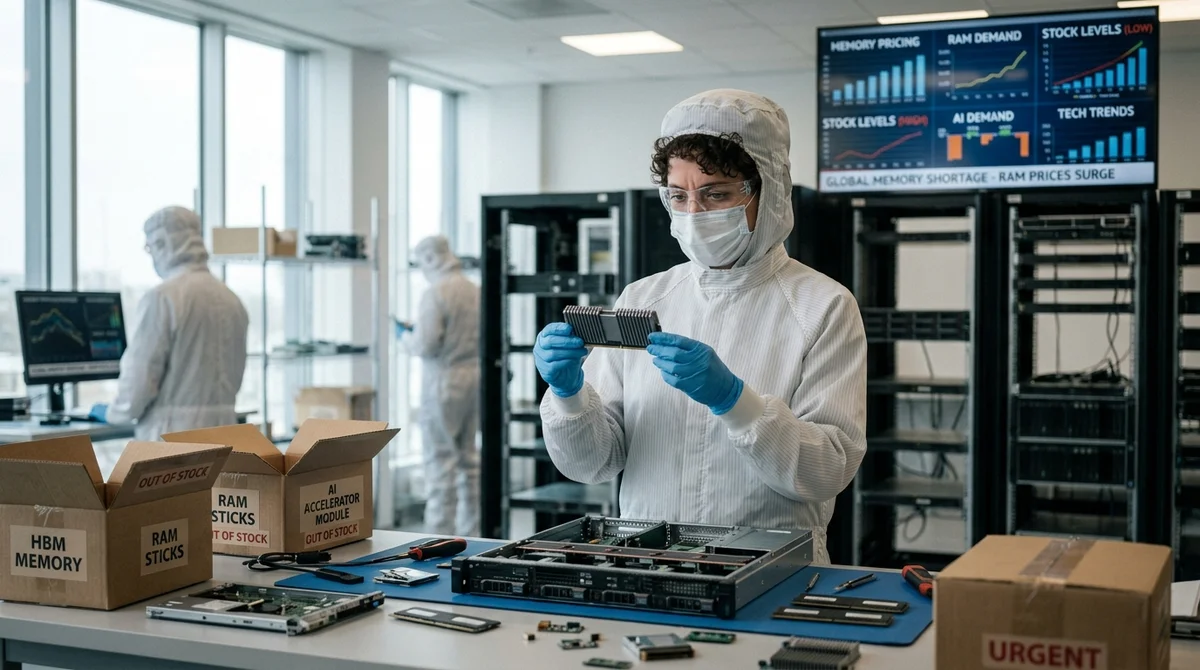
The tech world has run into a new problem: a sharp rise in the price of random-access memory (RAM). The component, which nearly every electronic device needs, from smartphones to servers, has suddenly become scarce. The cause is the growing appetite of AI companies such as OpenAI, Anthropic, Google and Meta*, whose enormous data centers demand more and more memory.
The largest RAM makers, including Samsung, SK Hynix and Micron, responded to this surge in demand by redirecting their production capacity to more lucrative contracts with AI giants. That cut RAM supply to the consumer market, and prices reacted immediately. The cost of RAM kits for PC builders, as well as for makers of laptops, smartphones and game consoles, has jumped.
Some companies, such as Raspberry Pi and Framework, have already announced price increases for their products. Others, including Dell, Asus, Acer, Xiaomi and Nothing, are warning that increases are coming. The situation is made worse by forecasts from analysts at International Data Corporation (IDC), who say the RAM shortage may last until 2027. That means consumers should prepare for further rises in electronics prices.
Micron's decision to shut down Crucial, its consumer-focused brand, is another sign of the trend. The company says the move is meant to "help" consumers, but it is evident that Micron simply wants to redirect its resources to a more profitable segment: supplying RAM and SSDs to AI companies. The decision will certainly not go unnoticed and will affect the consumer electronics market.
The impact of the shortage is being felt everywhere. Prices for RAM kits have tripled in just three months. Some stores have even started selling "ready-made" PCs without RAM to keep the price down somehow. The situation is so serious that some people compare buying RAM to buying lobster, a hint that the component has become a delicacy.
For users, this means upgrading a computer or buying a new smartphone will cost significantly more. Device makers will have to raise prices to offset higher RAM costs. In the long run, this may slow the growth of the consumer electronics market, as buyers put off purchasing new devices because of high prices.
In conclusion, the global RAM shortage, caused by manufacturers pivoting to AI companies, is a serious problem for consumers and electronics makers alike. In the coming years, expect further increases in RAM prices and, as a result, in the price of every device that uses it. The situation highlights the growing importance of the AI industry and its influence on other sectors of the economy.
*Meta has been designated an extremist organization and is banned in Russia.
- Nov 2, 2026NC State's AICG Framework Cuts MAE by 50.3% on Math Answer Grading
- Nov 2, 2026Я устроил допрос 6 нейросетям про себя и своё ИП глазами заказчика: как ИИ выдумал мне бизнес на Amazon в США и слил смету из закрытого КП
- Nov 2, 2026TJ Digital: 23% of AI-cited pages open with a direct answer, versus 14% of uncited ones
- Nov 2, 2026Arca gives AI agents finance tasks lasting up to 10 days, but leaves the trades to humans
Test Frontier LLMs & Autonomous Agents in One Workspace
Run Claude Opus 5.5, GPT-6, Gemini 3.1, and DeepSeek side-by-side in Nomad AI (nomadnet.ai) — unified model routing, deep research, and multimodal workflows under one subscription.
The AI world, distilled — once a week
Seven stories that actually mattered, hand-picked. No noise, no reposts, no press releases.
Done! Check your inbox for a confirmation.