Nvidia CEO: AI Will Create New Jobs for Plumbers and Electricians
Nvidia CEO Jensen Huang says the development of AI will not cause mass job losses. Instead, he argues, it will open up new opportunities for skilled workers such as electricians and plumbers. He explained that demand for these specialists will grow.
AI-processed from Bloomberg Tech; edited by Hamidun News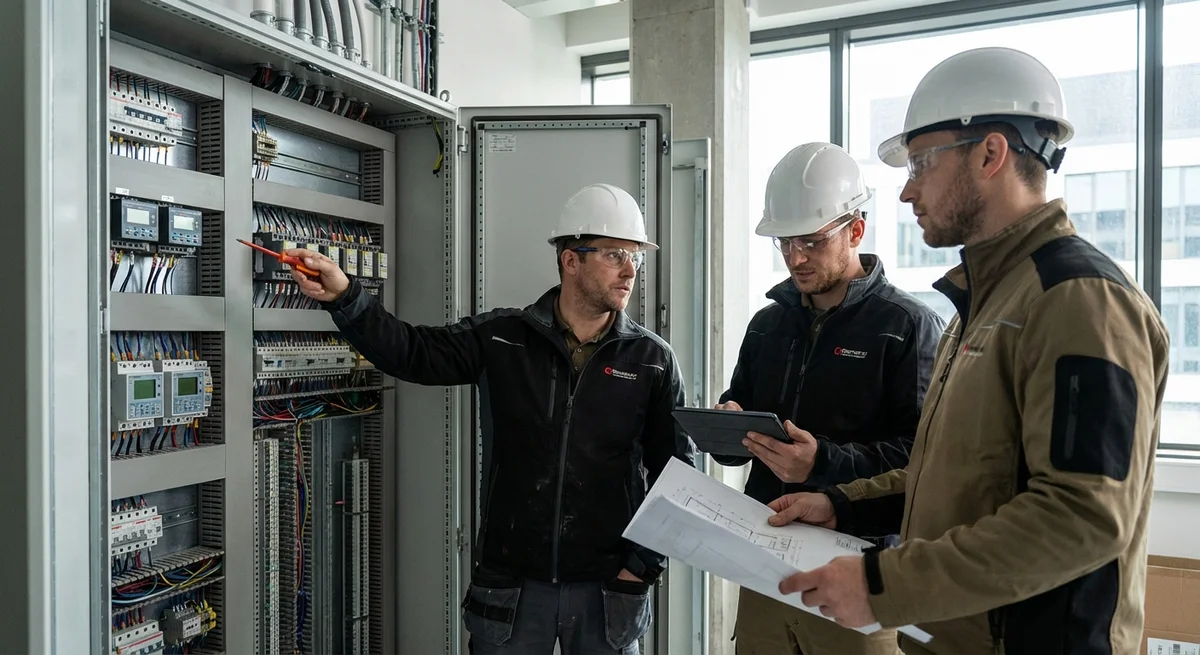
While the world debates how artificial intelligence might affect the labor market, Nvidia CEO Jensen Huang has offered an unexpected view. He believes AI will not only fail to destroy jobs but will create new opportunities, especially for skilled tradespeople such as electricians and plumbers. The statement comes amid growing fears that automation and AI will lead to mass unemployment.
But why electricians and plumbers specifically? Huang explains that building out AI and automation requires creating and maintaining complex infrastructure. Running that infrastructure takes skilled workers who can install, maintain and repair power grids, water supply systems and other utilities. In other words, the more AI spreads through our lives, the greater the need for people who keep it running without interruption.
This view contrasts with the widespread belief that AI will replace routine, low-skilled jobs. Huang acknowledges that some professions may indeed disappear, but he is confident that new ones will emerge, requiring different skills and knowledge. It is worth noting that he does not deny the need for retraining and adaptation to new labor market conditions. Rather, he stresses that the value of professions built on physical work and practical skills should not be underestimated.
Huang's statement has several important implications. First, it highlights the importance of investing in vocational education and training. We need to prepare specialists who can work with new technologies and maintain the complex infrastructure that AI development requires. Second, it suggests that the future labor market will be more diverse than many assume. Alongside programmers and data analysts, skilled workers who can solve practical problems will be in demand.
For users and consumers, this means AI development may improve quality of life. More efficient water supply, power supply and other utility systems would make our lives more comfortable and safer. It could also help create new jobs and raise living standards overall. However, that requires active investment in education and retraining so people can adapt to the new labor market.
In conclusion, Jensen Huang's statement is not just an optimistic forecast but a call to action. We need to rethink our ideas about the future of work and start preparing for the new challenges and opportunities that artificial intelligence brings. It is important to understand that AI is not a threat but a tool that can be used to improve people's lives, but only with competent management and investment in human capital.
- Nov 2, 2026Anthropic needs to grow revenue 32% a year to cover $850 billion in contracts
- Nov 2, 2026TensorFold 1.2.0 boosts Qwen3.8-27B throughput on M3 Ultra by 44.2% at 16 streams
- Nov 1, 2026Local models lose to Opus and Codex: 0.21 on a MacBook versus 1.00 for Codex
- Nov 1, 2026Habr author fine-tunes YOLOv8l on dental X-rays and pushes mAP50 to 0.642
Test Frontier LLMs & Autonomous Agents in One Workspace
Run Claude Opus 5.5, GPT-6, Gemini 3.1, and DeepSeek side-by-side in Nomad AI (nomadnet.ai) — unified model routing, deep research, and multimodal workflows under one subscription.
The AI world, distilled — once a week
Seven stories that actually mattered, hand-picked. No noise, no reposts, no press releases.
Done! Check your inbox for a confirmation.