Hyundai overtakes GM on the back of robots: a new era of automation?
Hyundai Motor has overtaken General Motors to become the world's fourth most valuable automaker. The rise is tied to its push into robotics, in particular the unveiling of a new Atlas robot. Analysts link the move to the outlook for automation and the future of transport.
AI-processed from Bloomberg Tech; edited by Hamidun News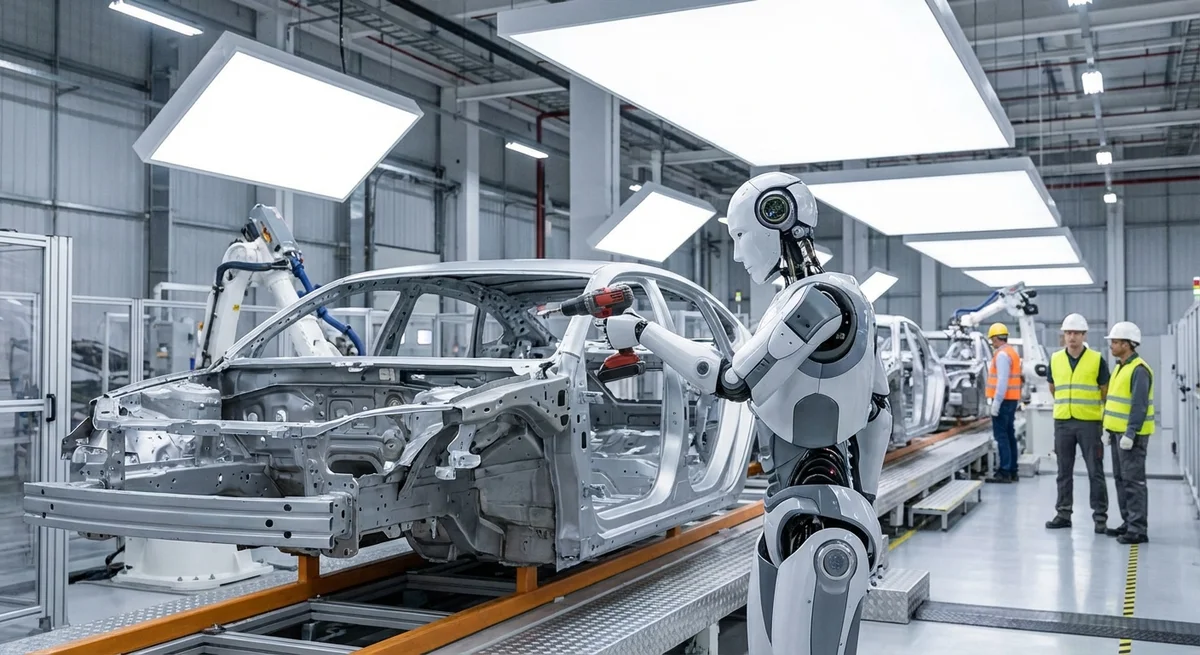
Hyundai Motor Co. has made an impressive leap, overtaking General Motors to take fourth place among the world's most valuable automakers. The climb owes as much to its robotics push as to its traditional car business, and it set off a sharp rally in the company's shares. The unveiling of the new Atlas robot, which can perform complex tasks, became a catalyst for investors who saw major potential in it.
The context is growing interest in automation and robotics across every area of life. The auto industry is no exception, and Hyundai wants to take a leading position in the field. Robotics investment is seen as a long-term strategy that lets the company diversify its business and prepare for a future in which robots will play a key role in manufacturing, logistics and even in building the cars themselves.
The Atlas robot Hyundai unveiled is not just a showcase of technological capability. It is a sophisticated piece of engineering that can handle tasks requiring high precision and coordination. It can be used in a range of industries, from manufacturing to logistics, and even in rescue operations. Developing such robots demands huge investment in research and development, but Hyundai sees it as a promising direction that could bring significant profit in the future.
Hyundai's surge has important implications for the entire auto industry. It shows that the future of car companies is not limited to making cars. Investment in new technologies such as robotics is becoming increasingly important for staying competitive and attracting investors. Other automakers will likely follow Hyundai's lead and increase their investment in robotics and automation.
For consumers, this means cars will be built more efficiently and to higher quality in the future. Robots will be able to take on routine and dangerous tasks, freeing people for more creative and intellectual work. Robotics may also lead to new types of transport and logistics systems that are more efficient and more environmentally friendly.
In short, Hyundai's surge and its lead in robotics are an important signal for the whole auto industry. Companies that do not invest in new technology risk being left behind. The future of the auto industry belongs to automation, robotics and innovation, and Hyundai appears firmly determined to take a leading position in that future.
Test Frontier LLMs & Autonomous Agents in One Workspace
Run Claude Opus 5.5, GPT-6, Gemini 3.1, and DeepSeek side-by-side in Nomad AI (nomadnet.ai) — unified model routing, deep research, and multimodal workflows under one subscription.
The AI world, distilled — once a week
Seven stories that actually mattered, hand-picked. No noise, no reposts, no press releases.
Done! Check your inbox for a confirmation.