China has built tens of thousands of intelligent factories: what does that mean?
China is pushing digital technology deep into manufacturing. According to the Ministry of Industry and Information Technology, the country has already built 35,000 intelligent factories across different levels of automation, including 15 cutting-edge ones.
AI-processed from 36Kr (36氪); edited by Hamidun News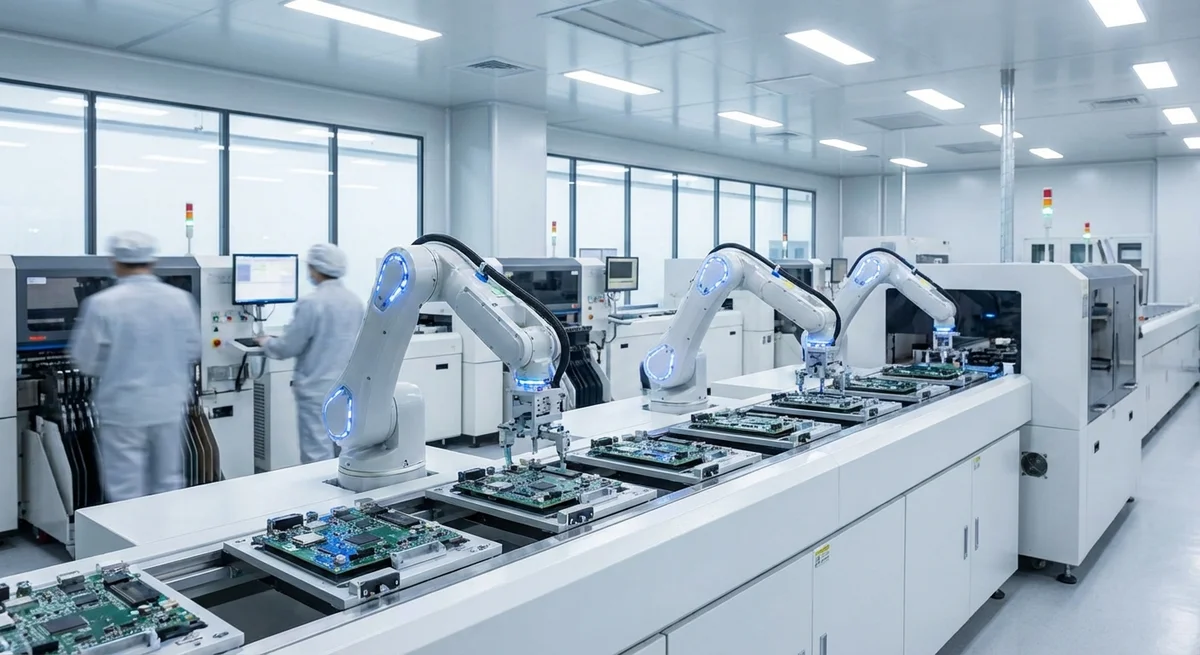
China keeps investing heavily in digitizing its manufacturing base. At a press conference held by the State Council Information Office, officials announced major progress in building intelligent factories. According to the figures presented, more than 35,000 such facilities are already operating across the country at varying levels of automation and digitalization.
Specifically, China has built more than 35,000 basic-level factories, over 8200 advanced-level factories, more than 500 excellence-level factories, and 15 factories classified as "leading." The initiative is part of a large-scale program to modernize Chinese industry and make it more competitive on the global market. So what exactly is an intelligent factory?
It is a plant that makes heavy use of artificial intelligence, the Internet of Things (IoT), big data, and cloud computing to optimize production, raise efficiency, and cut costs. Intelligent factories can automate routine operations, tighten quality control, streamline logistics, and make production more flexible. The different tiers reflect how far digital technology and automation have been adopted.
At the basic level, a factory introduces individual automation and digitalization components. The advanced level involves comprehensive use of digital technology and a high degree of automation. Excellence-level factories are cutting-edge operations with deep integration of digital technology and automation, while leading factories set the pace in their industries and showcase best practices in digitalization and automation.
The rollout of intelligent factories has far-reaching consequences for China's economy and for global industry. It lets China become more competitive globally, reduce its reliance on imported technology, and create new high-tech jobs. It also helps grow new industries such as robotics, artificial intelligence, and the Internet of Things.
Still, adopting intelligent factories comes with real challenges. These include the need to invest in infrastructure, train staff, and ensure cybersecurity. The social consequences of automation also have to be taken into account, including job losses and the need to retrain workers.
In short, building tens of thousands of intelligent factories is an important step in China's digital transformation of industry. It will help China strengthen its position as a global leader in manufacturing and high technology. Pushing further will require solving a range of technical, economic, and social problems, but the prospects that intelligent factories open up look very promising.
Ship AI Faster with Founders, Engineers & Weekly Architecture Reviews
Inside Vibe Club (hamidun.com/club) — weekly live masterminds with Zhemal Khamidun, Tech Radar, full LMS access, and 370+ production Claude Code skills.
The AI world, distilled — once a week
Seven stories that actually mattered, hand-picked. No noise, no reposts, no press releases.
Done! Check your inbox for a confirmation.