South Korea to Create Future Fund From Semiconductor Boom Tax Revenue
South Korea is creating a "future response fund" from surplus tax revenues of the semiconductor boom. The funds will be directed toward AI, advanced manufacturing, and strategic technologies. Presidential chief of staff Kang Hoon-sik described this as a way to convert cyclical gains into investments for future generations.
AI-processed from TNW; edited by Hamidun News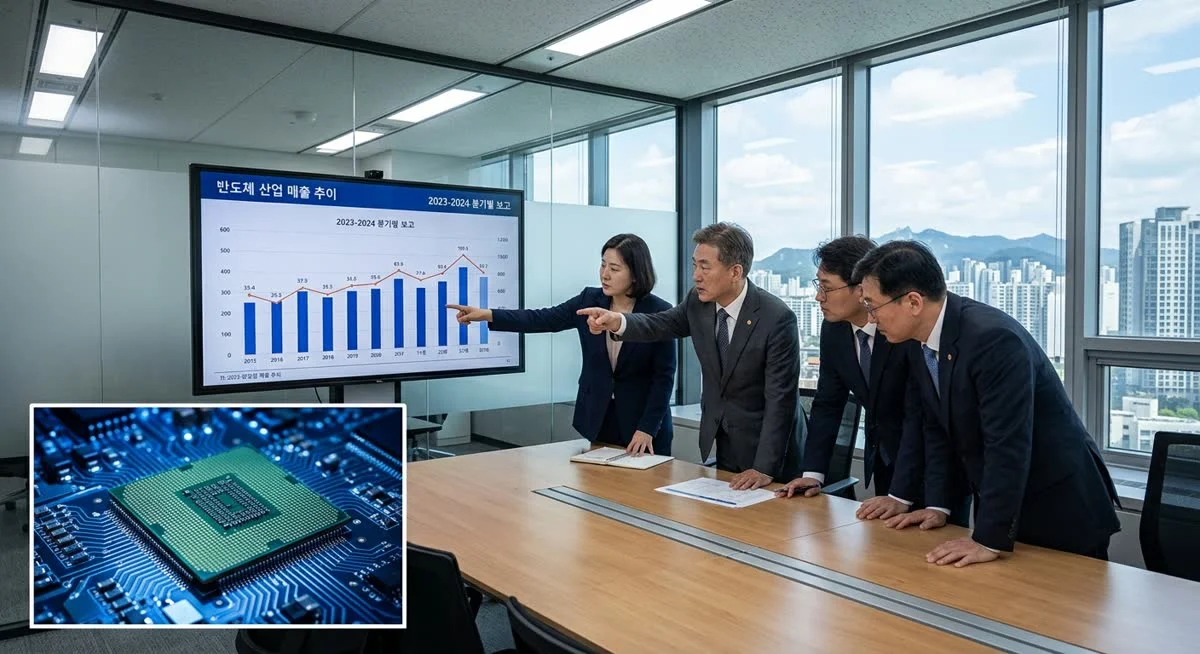
South Korea intends to form a "future response fund" filled with windfall tax revenues from the semiconductor boom. Kang Hoon-sik, head of the presidential administration, in July 2026 named the initiative a way to transform a cyclical tax bonus into long-term investments for future generations — primarily in artificial intelligence and advanced manufacturing.
Where the Tax Bonus Came From
Global demand for AI chips — from server GPUs to specialized memory for large language models — has pushed profits of South Korean semiconductor manufacturers to record levels. The two largest market players, Samsung Electronics and SK Hynix, are recording multiple-fold income growth. SK Hynix in particular has become one of the world's leading suppliers of HBM (High Bandwidth Memory) chips, without which no modern AI accelerator operates.
HBM was the key driver of the rise: each NVIDIA AI accelerator uses several packages of this type of memory, and SK Hynix controls approximately half of global HBM supplies. Sales growth in this segment has many times exceeded industry analysts' forecasts.
Growth in corporate profits translates into windfall tax revenues for the state budget. The government faced a difficult question: how to use cyclical revenues without tying long-term spending commitments to a cyclical market — the semiconductor industry historically experiences sharp upswings and equally sharp downturns.
Where the Funds Will Be Directed
Kang Hoon-sik announced a mechanism that would accumulate windfall revenues in a special investment fund. According to the statement, funds will be directed along three key areas:
- Artificial Intelligence — support for domestic AI development, data infrastructure and startups
- Advanced Manufacturing — investments in microelectronics, robotics and adjacent high-tech industries
- Long-term Growth Drivers — a broad category covering fundamental R&D and strategic technology directions
Details — the fund's volume, launch timeline, management mechanism, project selection criteria — were not officially disclosed at the time of publication. Information citing Kang's statement was distributed by the Yonhap news agency.
Why Korea Is Acting Now
South Korea occupies a unique position in the global AI supply chain: the country produces a significant share of the world's DRAM and NAND memory chips for data centers and is a key supplier of components for AI accelerators. This creates direct dependency: the faster the AI computing market grows, the more tax revenues flow into the state budget.
However, the competitive environment continues to tighten. Taiwan's TSMC is ramping up advanced process capacity, the US CHIPS and Science Act is directing massive subsidies to manufacturing localization, and China is accelerating development of its own semiconductor technologies. In these conditions, Seoul seeks to lock in its leadership right now — while the "rent" from the chip supercycle is still flowing.
At the same time, South Korea is accelerating the formation of its own AI ecosystem: NAVER and Kakao companies are developing domestic language models, while Samsung and LG are investing in AI applications for industry. The new fund could serve as an additional financing lever for this ecosystem.
Creating a sovereign investment instrument for AI-related activities fits into a global trend: similar state mechanisms already operate or have been announced in the US, EU countries, Japan, and the UAE.
What This Means
The "future fund" initiative is an attempt to convert a temporary competitive bonus from the chip supercycle into a long-term bet on AI. If the fund is created and operates transparently, South Korea will gain one of the few sovereign mechanisms in the Asia-Pacific region for targeted AI development financing, independent of annual budget negotiations. The real scale of the initiative will become clear after official legislative steps.
Need AI working inside your business — not just in your newsfeed?
I build production AI for companies — custom CRM, internal tools, autonomous agents, workflow automation. Owned by you, shaped to your process, no per-seat tax. Built by Zhemal Khamidun, CPO of AlpinaGPT (AI platform, 6,000+ users).
The AI world, distilled — once a week
Seven stories that actually mattered, hand-picked. No noise, no reposts, no press releases.
Done! Check your inbox for a confirmation.